
Decluttering a senior’s home is critical to prevent tripping hazards, but throwing away possessions can cause severe emotional distress. To declutter successfully, do not use the word “throw away.” Instead, use the “Keep, Donate, Gift” method, focus purely on clearing main walking pathways first, involve the senior in all decisions, and frame the process as “right-sizing” their home to keep them safe and independent.
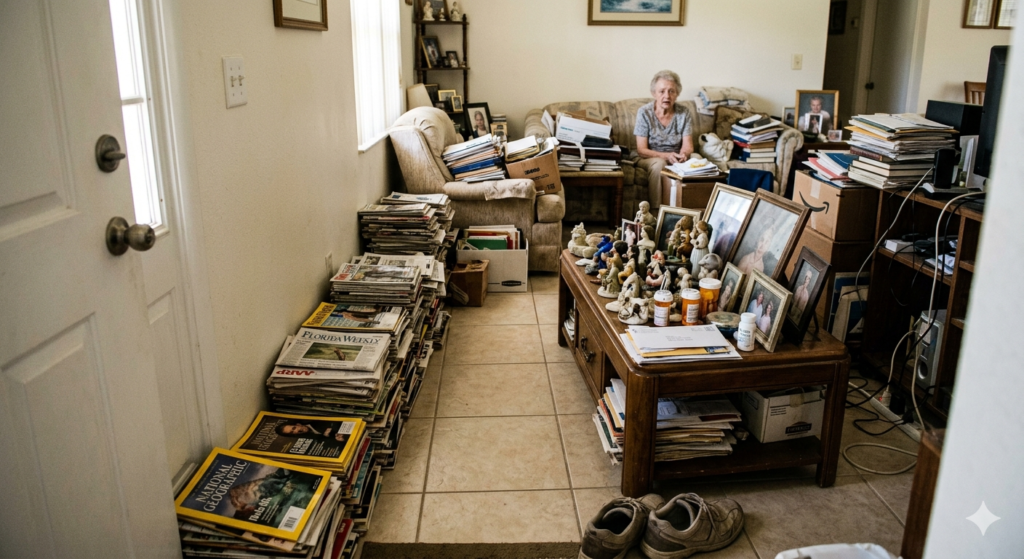
You walk into your aging parent’s home in Southwest Florida, and your heart sinks. There are stacks of old magazines on the floor, the coffee table is buried under knick-knacks, and the hallway is so narrow you can barely walk through it.
To you, it looks like a massive tripping hazard. It is a fall waiting to happen. So, you grab a trash bag and say, “Mom, we need to throw some of this junk away.” Instantly, she becomes defensive, angry, and tearful. The wall comes up, and the decluttering process is over before it even begins.
Clearing out a senior’s home is one of the most fraught, conflict-heavy tasks adult children face. If you approach it purely as a cleaning project, you will fail. You must approach it as an emotional transition.
Why do seniors hold onto 20-year-old magazines, broken appliances, or clothes they haven’t worn since the 1990s?
- The Depression-Era Mindset: Many seniors were raised by parents who survived the Great Depression. They were taught never to waste anything because “you might need it someday.” Throwing something perfectly good away feels morally wrong to them.
- Loss of Control: Aging involves losing control over your health, your driving, and your friends. Often, controlling their physical environment (their “stuff”) is the only area of autonomy they have left.
- Physical Memories: As short-term memory fades, physical objects become anchors to the past. A chipped teacup isn’t just a cup; it is a physical connection to their late husband or their childhood.
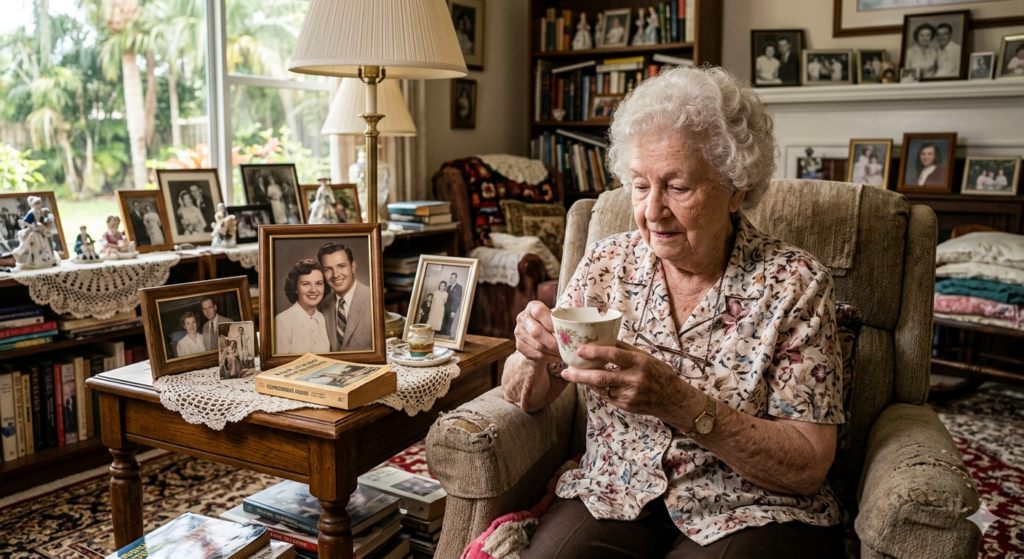
When you throw away their items, they feel like you are throwing away pieces of their identity.
Words matter. If you call their possessions “junk,” “trash,” or “clutter,” you are insulting their life choices.
- The Reframe: Do not use the word “declutter.” Use the word “Right-Sizing” or “Safety-Proofing.”
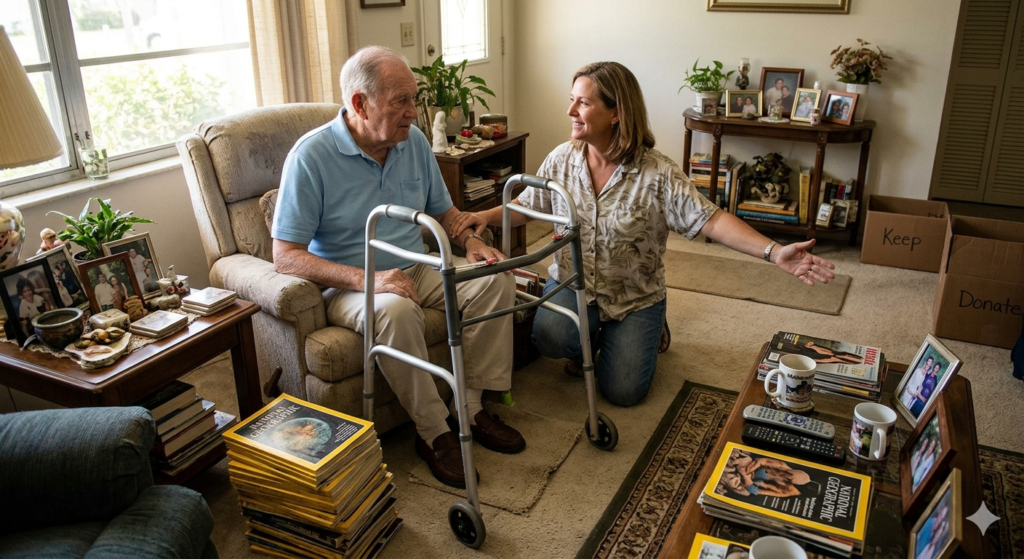
- The Goal: Tell them, “Dad, my only goal is to make sure you don’t trip and end up in the hospital. I want to organize this room so you can use your walker easily and stay in this house forever.” Frame the project as a way to preserve their independence, not strip their home bare.
You do not need to clean the entire house in one weekend. You only need to secure the dangerous zones.
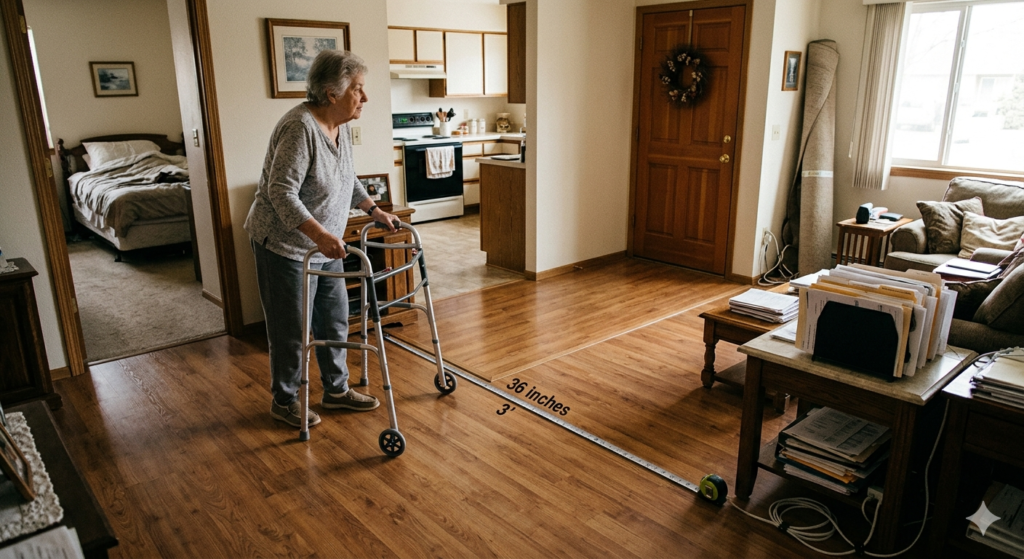
- The 36-Inch Rule: Focus exclusively on the main walking pathways: from the bed to the bathroom, from the bathroom to the kitchen, and to the front door. Ensure these paths are at least 36 inches wide to accommodate a walker and are completely free of cords, rugs, and stacked papers.
- Fire Safety: Remove any stacks of paper or clothing near the stove, space heaters, or blocking exit doors.
- Leave the Closets Alone (For Now): If a closet is packed to the ceiling but the door closes safely, leave it. It is not an immediate fall hazard. Pick your battles.
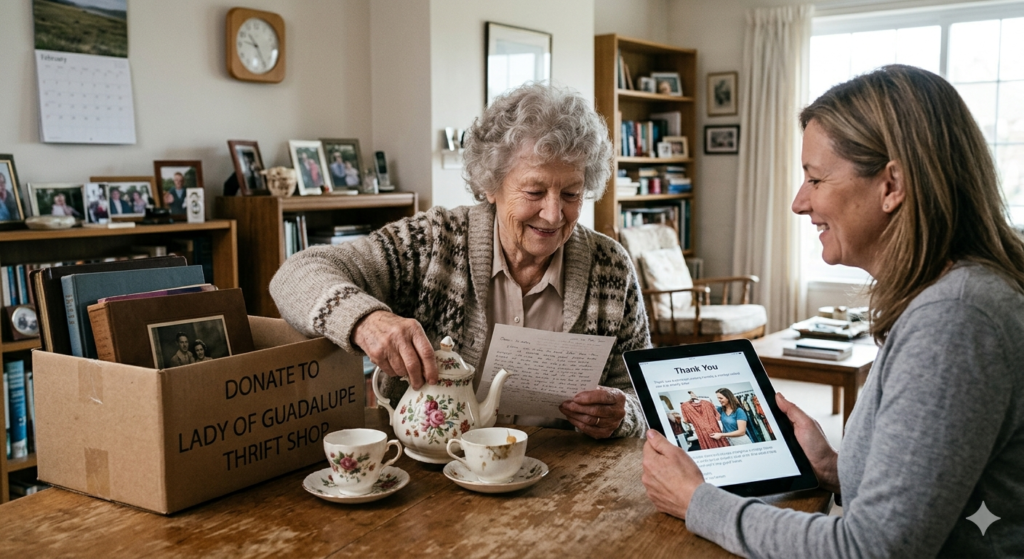
Seniors hate the idea of something going to a landfill. If you can prove the item is going to a “good home,” they are much more likely to part with it.
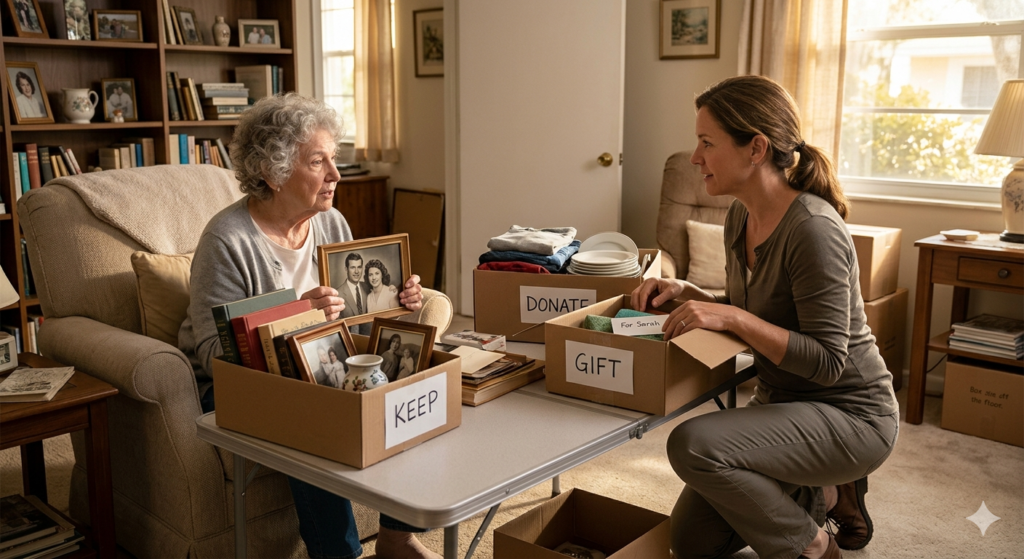
Set up three boxes:
- Keep: Items they use daily or hold immense, immediate sentimental value.
- Donate (The “Helping Others” Box): Frame this as charity. “Mom, there are young families starting out who would love this set of dishes. Let’s donate it to the local women’s shelter.” They will often gladly give items away if they feel they are helping someone in need.
- Gift (The Legacy Box): Ask them to “gift” items to family members now, rather than leaving them in a will. “Dad, Jimmy would love to have these old tools now for his new house. Can we box them up for him?”
Decision-making is incredibly draining for an aging brain. Going through a single box of memories can cause “decision fatigue” within 30 minutes.
- Short Sessions: Only declutter for 1 to 2 hours at a time. Stop before they get tired and cranky.
- The “Maybe” Box: If they are agonizing over throwing away a specific sweater, put it in a “Maybe” box. Seal the box and put it in the garage. If they don’t ask for the sweater in 6 months, you can quietly donate the box.
- Take Photos: If they are clinging to a massive piece of furniture or an old collection just for the memory, take a high-quality photo of the item, print it out, and put it in a small photo album. They get to keep the memory without the physical bulk.
Once you successfully safety-proof the home, the challenge is keeping it that way. Clutter has a way of magically reappearing.
At Shal We Home Care, serving Lee, Collier, and Hendry counties, our caregivers provide Light Housekeeping as part of our daily routine.
- We ensure the mail is sorted daily so it doesn’t form dangerous stacks on the floor.
- We do the dishes, take out the trash, and keep the main walking pathways permanently clear of tripping hazards.
- We act as a neutral third party, gently maintaining the organization without the emotional baggage of a family argument.
- Acknowledge the Emotion: Understand that “stuff” represents memories and control; treat their possessions with respect.
- Change the Goal: Frame the project as “safety-proofing” to keep them out of a nursing home, not just cleaning.
- Clear the Paths First: Prioritize clearing wide walking paths from the bed to the bathroom and kitchen before tackling closets.
- Donate, Don’t Trash: Seniors are more willing to part with items if they know they are being donated to a good cause or gifted to family.
- Avoid Fatigue: Work in short, 1-hour sessions to prevent the senior from becoming emotionally and physically overwhelmed.
Is clutter creating a fall hazard in your loved one’s home?
Once you clear the paths, let us help you keep them clear. Contact Shal We Home Care today to learn how our light housekeeping and companion services maintain a safe, organized environment.