
Bringing an aging parent home from the hospital? Prevent dangerous readmissions with our ultimate hospital-to-home discharge checklist for Florida families.

A successful hospital-to-home discharge requires meticulous planning to prevent readmission. Families must conduct a thorough discharge meeting to understand new care requirements, perform a “medication reconciliation” to safely combine new prescriptions with old ones, prepare the physical home environment by clearing tripping hazards and securing medical equipment, and arrange for 24/7 supervision (often through a professional home care agency) during the critical first 48 hours at home.

The day your aging parent is discharged from a Southwest Florida hospital whether after a planned hip replacement at Lee Memorial or a sudden bout of pneumonia at NCH is a day of massive relief. They are finally coming home.
But the relief is often short-lived. The transition from the highly monitored, 24/7 care of a hospital bed to the independence of a private home is the most dangerous phase of recovery. According to Medicare data, nearly 1 in 5 seniors are readmitted to the hospital within 30 days of discharge.
These readmissions are rarely caused by a sudden medical failure. They are almost always caused by a logistical breakdown at home: the senior trips over a rug and falls, they take the wrong dose of a new blood thinner, or they become too weak to prepare a nutritious meal and suffer from dehydration.
To ensure your loved one’s recovery is permanent, you cannot “wing it.” You need a structured, aggressive plan. Here is the ultimate Hospital-to-Home Discharge Checklist.
The discharge process shouldn’t happen as you are walking out the door. Demand a formal discharge meeting with the doctor, the discharge planner (or social worker), and the physical therapist at least 24 hours before leaving.
Checklist Questions to Ask:
- [ ] What is the exact diagnosis and prognosis? (Ensure you understand exactly what happened and what the expected recovery timeline is).
- [ ] What are the physical limitations? Can they walk up stairs? Can they lift more than 5 pounds? Are they allowed to shower, or just sponge bathe?
- [ ] What equipment is needed? Do they need a walker, a shower chair, or a hospital bed? Crucial: Demand that the hospital orders this Durable Medical Equipment (DME) and has it delivered to the house BEFORE the patient arrives.
- [ ] What home health services have been ordered? Has the doctor prescribed a visiting Medicare nurse or physical therapist? When is their first visit scheduled?
- [ ] Who do I call at 2:00 AM? Get a direct contact number for a nurse or on-call doctor in case a symptom flares up in the middle of the night.

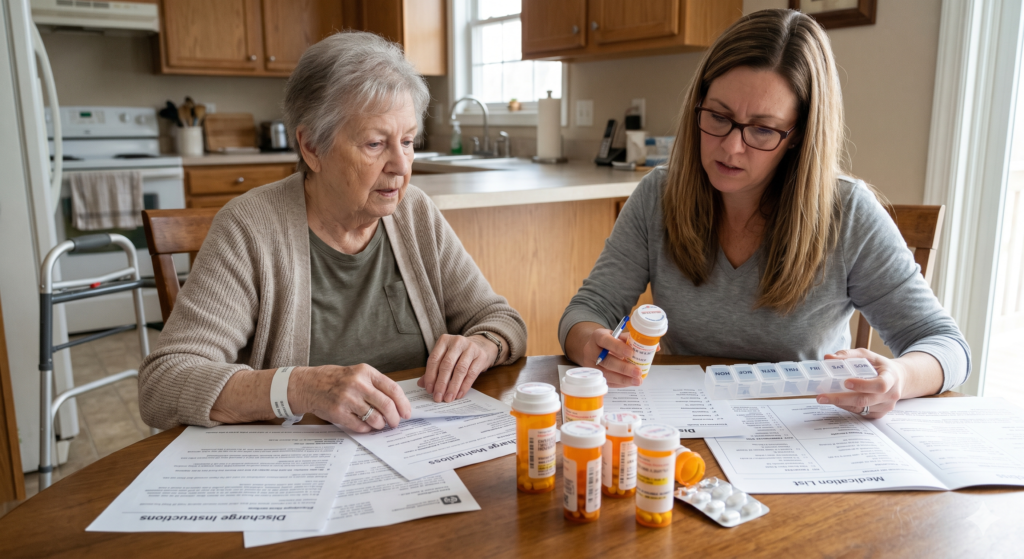
Medication errors are the leading cause of post-hospital complications. When your parent leaves the hospital, they will likely be handed a stack of new prescriptions (antibiotics, painkillers, blood thinners).
- [ ] The Reconciliation: You must sit down with the hospital pharmacist and physically compare the new discharge medications against the old medications your parent was taking before the hospital.
- [ ] Check for Duplicates: Did the hospital prescribe a generic blood pressure pill that is identical to a brand-name pill your parent already has in their cabinet? Taking both is lethal.
- [ ] Check for Contraindications: Ensure the new painkillers do not interact dangerously with their existing heart medication.
- [ ] Fill Before Home: Do not take your parent home and then go to the pharmacy. Fill all prescriptions at the hospital pharmacy or a drive-thru on the way home so there is zero gap in pain management.
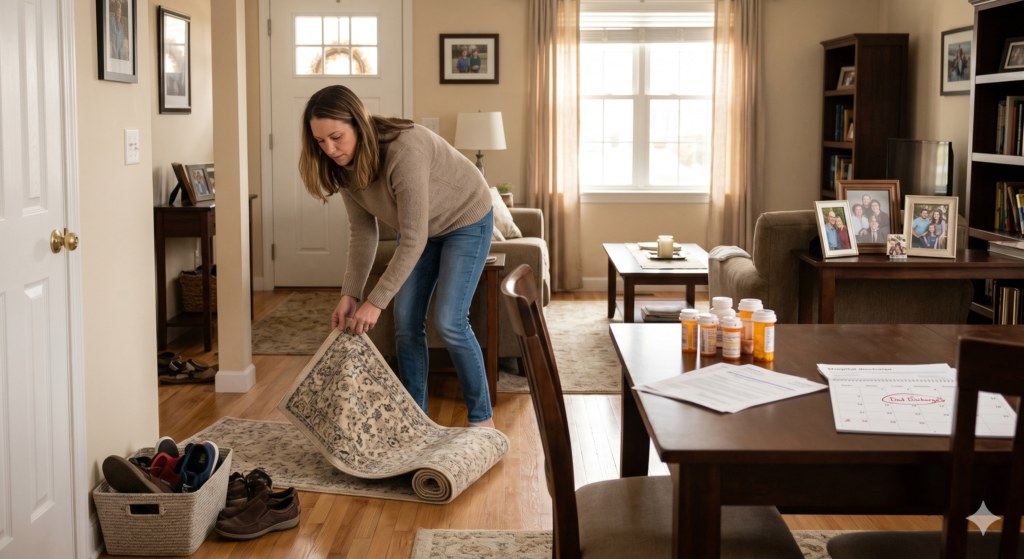
Before the patient walks through the front door, the home must be secured. If possible, an adult child should go to the home the day before discharge to prep it.
- [ ] Clear the Runways: Remove all throw rugs, electrical cords, and clutter from the main pathways. If they are using a walker for the first time, they need wide, unobstructed paths.
- [ ] Secure the Bathroom: Ensure the shower chair is assembled and stable. Place non-slip mats inside and outside the shower. Ensure fresh, clean towels are easily reachable without bending.
- [ ] The “Recovery Command Center”: Set up their primary resting spot (usually a recliner or the bed). Within arm’s reach, place: a phone, TV remotes, a large pitcher of water, their medications, a trash can, and reading glasses. They should not have to stand up to get essentials.
- [ ] Stock the Fridge: The senior will not have the energy to cook. Stock the fridge with high-protein, easy-to-digest foods: yogurts, pre-cut fruit, soups, and ready-to-drink protein shakes.
The first two days are exhausting. The senior is usually in pain, disoriented from hospital lack of sleep, and struggling with the new physical limitations of their body.
- [ ] 24/7 Supervision: A recovering senior cannot be left alone for the first 48 hours. They will overestimate their strength and attempt to walk to the bathroom unassisted, resulting in a fall. If family cannot be there around the clock, you must hire professional overnight care.
- [ ] Track Everything: Keep a notebook on the table. Write down exactly what time every pill is taken, what they ate, and if they used the bathroom. When the visiting nurse arrives, this log is invaluable.

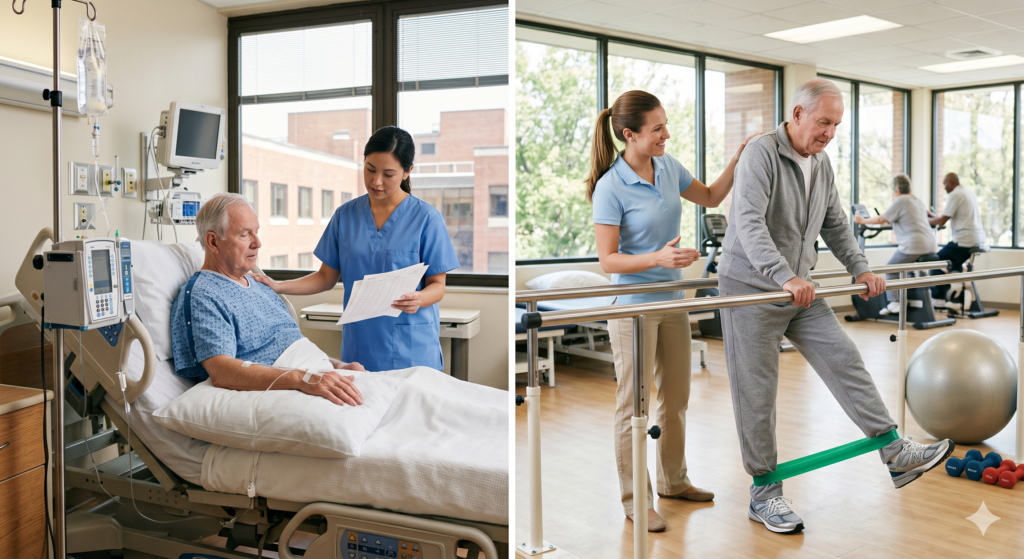
The hospital is just the acute phase; recovery happens in the clinics and through daily exercise.
- [ ] Schedule the Follow-Up: Most surgeons or primary care doctors require a follow-up visit within 7 to 14 days of discharge. Ensure this is on the calendar and transportation is secured.
- [ ] Enforce the PT: If the physical therapist leaves a packet of exercises to be done three times a day, they must be done three times a day. Skipping exercises leads to muscle stiffness and failed recoveries.
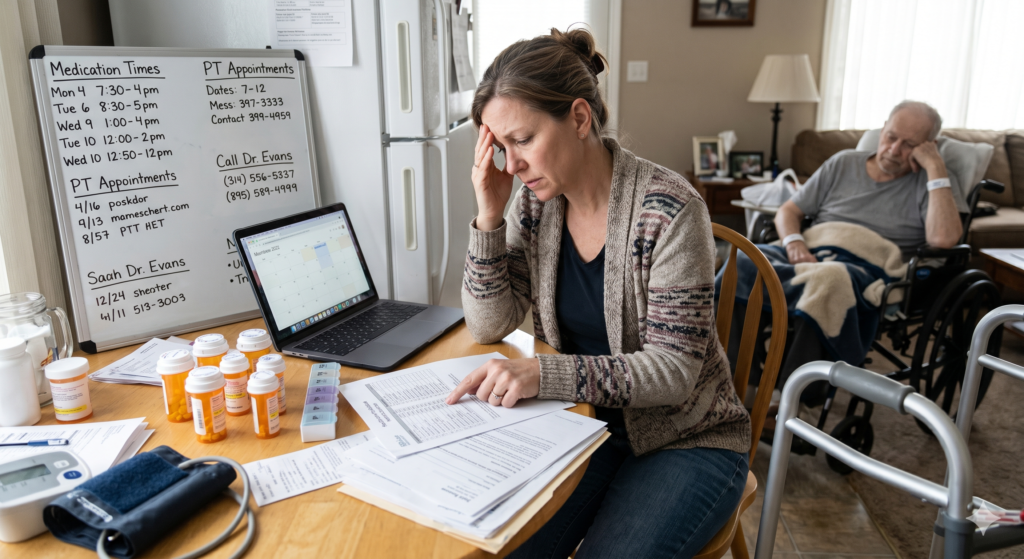
Managing a hospital discharge requires the logistical skills of a project manager and the physical stamina of a nurse. Family caregivers often burn out within the first week, leading to mistakes that send the senior right back to the emergency room.
At Shal We Home Care, we provide specialized Transitional Care designed specifically for this high-risk period in Lee, Collier, and Hendry counties.
- Pre-Discharge Prep: We can stock the fridge, clear the tripping hazards, and prepare the home before your parent arrives.
- The First 48 Hours: We can provide 24/7 or overnight awake care during the most critical window, ensuring they never walk to the bathroom alone.
- Medication & Nutrition: We manage the complex new medication reminders and cook nutrient-dense meals to promote rapid tissue healing.
- Therapy Coaching: We act as the daily cheerleader, ensuring those vital physical therapy exercises are completed safely on the days the medical therapist isn’t there.
- Demand a Meeting: Never leave the hospital without a formal discharge plan and all required medical equipment already ordered.
- Reconcile Meds: Compare new prescriptions against old ones to prevent fatal double-dosing.
- Prep the Home: Clear all rugs and set up a “Command Center” with water and phone in arm’s reach.
- Do Not Leave Them Alone: The first 48 hours require 24/7 supervision to prevent immediate falls.
- Hire Transitional Help: Utilize a professional agency to manage medication reminders, cooking, and overnight safety to ensure the recovery is permanent.
Facing a hospital discharge soon? Don’t wait until discharge day to figure out the logistics.
Contact Shal We Home Care today to build a Transitional Care plan that guarantees a safe, comfortable, and permanent return home.