
Music therapy has profound effects on seniors with Alzheimer’s. Learn the science behind music and memory, and how to create a therapeutic playlist for your loved one.
Music therapy is highly effective for Alzheimer’s patients because the brain regions responsible for musical memory are often the last to be damaged by the disease. To create a therapeutic playlist, caregivers should select deeply familiar songs from the senior’s “reminiscence bump” (typically music from their teens and twenties), avoiding unfamiliar or overly complex modern music. Playing this personalized music can instantly reduce agitation, spark moments of clarity, and improve mood in neurodivergent seniors.
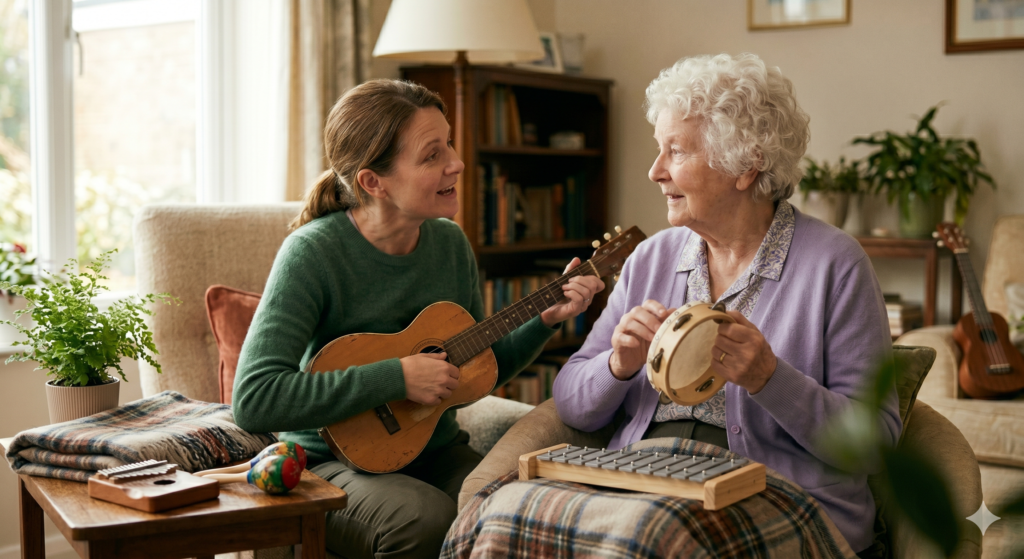
If you have ever cared for a loved one in the moderate-to-severe stages of Alzheimer’s disease, you know the heartbreak of the “fade.” Words become scarce, eye contact diminishes, and the person you love seems to retreat behind an impenetrable wall of cognitive fog.
But then, a miracle happens. A specific song comes on the radio perhaps a Frank Sinatra classic or an old gospel hymn. Suddenly, your loved one’s eyes brighten. They sit up straighter. A senior who hasn’t spoken a coherent sentence in weeks might suddenly start singing along, hitting every single lyric perfectly.
In the dementia care community, this phenomenon is often referred to as an “awakening.” It feels like magic, but it is actually deeply rooted in neuroscience.
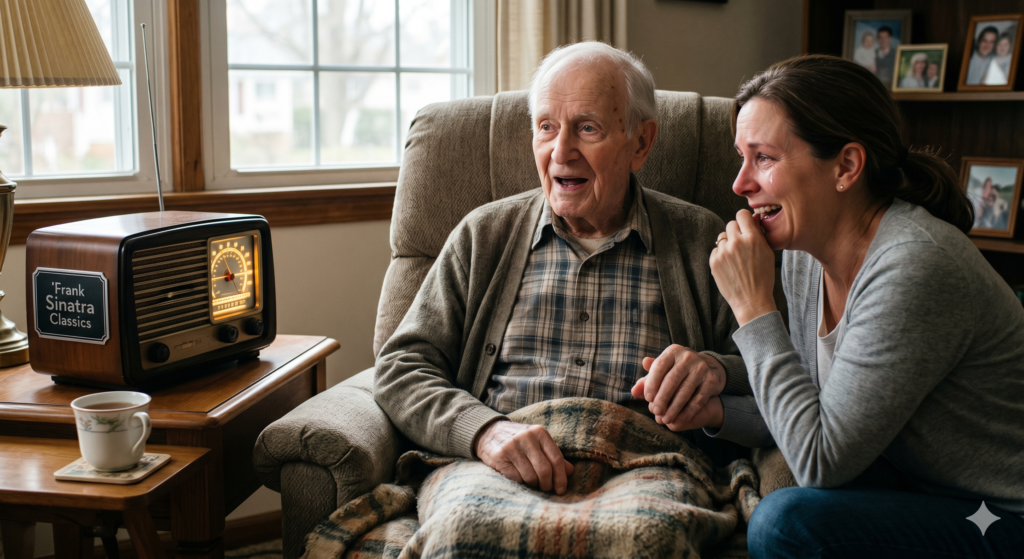
For families in Southwest Florida navigating the heavy emotional toll of memory care, music is one of the most powerful, free, and accessible tools available. At Shal We Home Care, our caregivers utilize music daily to bridge the communication gap, reduce anxiety, and bring joy back into the home. Here is how you can harness the power of music for your aging parent.
Alzheimer’s disease is devastating because it attacks the hippocampus the part of the brain responsible for forming new memories and retrieving recent ones. This is why your mother might forget what she had for breakfast five minutes ago but can remember the address of her childhood home.
However, musical memory operates on a completely different neural pathway. According to neuroscientists, memories associated with music and intense emotion are not stored in just one area; they are distributed widely across the brain.
More importantly, the regions of the brain responsible for “musical muscle memory” (the supplementary motor area and the cerebellum) are remarkably spared by Alzheimer’s disease until the very final stages. This means that long after a senior has forgotten the names of their grandchildren, their brain still perfectly retains the rhythm, lyrics, and emotional feeling of their favorite songs.

If you play a current Top 40 pop song for a senior with dementia, it will likely just sound like annoying noise. The secret to a therapeutic playlist is hitting the “Reminiscence Bump.”
The reminiscence bump is a psychological phenomenon where older adults have the most robust, vivid memories of the events that occurred between the ages of 15 and 25. This is the era when they were experiencing first loves, driving their first car, getting married, and establishing their independence. The music they listened to during this decade is permanently hardwired into their emotional core.
- If your parent is 85 today: They were born around 1940. Their reminiscence bump occurred between 1955 and 1965. Therefore, you should be looking for artists like Elvis Presley, Chuck Berry, Ella Fitzgerald, early Motown, and classic country stars from that specific decade.
- Do the Math: Subtract 65 to 75 years from the current year to pinpoint the exact musical era that will trigger the strongest memories for your loved one.
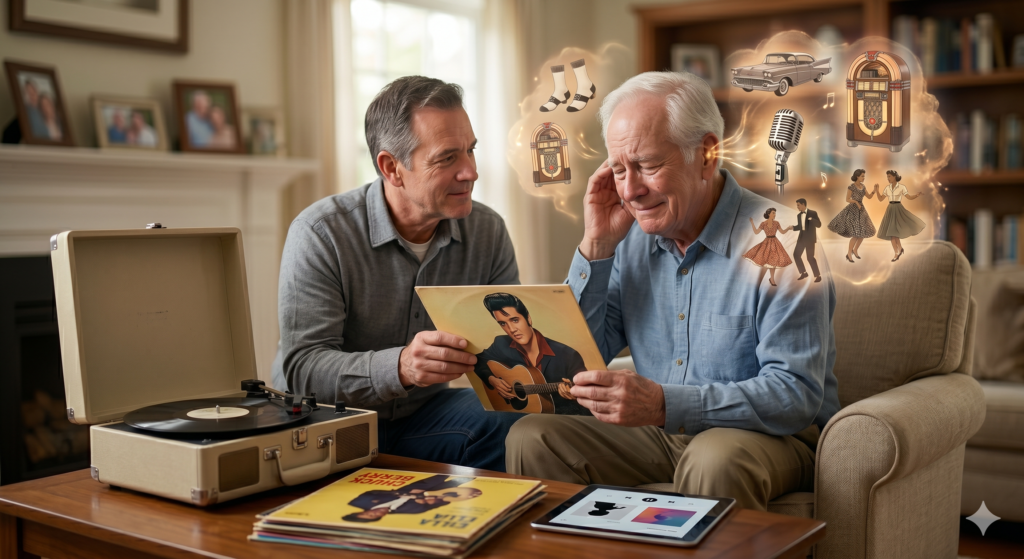
Do not just turn on a random “Oldies” radio station. Commercials, jarring DJ voices, and unfamiliar songs can cause sensory overload and anxiety. You must curate a specific, controlled playlist.
Step 1: Gather the Classics Use Spotify, Apple Music, or YouTube. Ask siblings or older relatives what your parent used to listen to in the car or play on the record player when you were a child.
- Look for specific genres: Big Band, Swing, Classic Country, Jazz, or traditional Hymns.
Step 2: Create Different Playlists for Different Moods Music is a mood manipulator. You should have at least two distinct playlists:
- The “Uplifting” Playlist: Upbeat, happy, toe-tapping songs. Use this when the senior is feeling lethargic, depressed, or needs motivation to get out of bed or take a shower.
- The “Calming” Playlist: Slow, soothing, gentle ballads or instrumental tracks. Use this to lower their heart rate during stressful times.
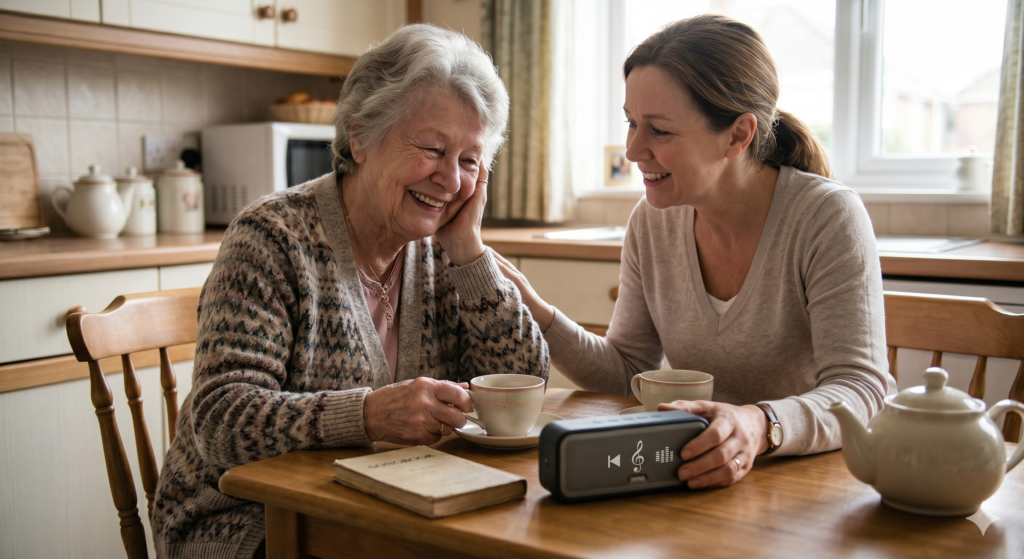
Step 3: Keep the Tech Simple If your parent is living alone or you are managing their care, do not expect them to operate a smartphone app. Invest in a “Dementia-Friendly Music Player.” These are simple, retro-looking radios with just one giant button (On/Off) that automatically play pre-loaded playlists, eliminating the frustration of complex technology.
Music is not just for entertainment; it is a clinical tool for behavioral intervention.
Managing Sundown Syndrome: Late afternoon agitation (sundowning) is the hardest part of the day for dementia caregivers. As the sun goes down, the senior becomes intensely anxious, paces the house, and may become argumentative.
- The Intervention: About 30 minutes before the agitation usually begins, dim the harsh overhead lights and turn on the “Calming” playlist. The familiar, rhythmic sound creates an auditory blanket of safety, significantly reducing the severity of the sundowning episode.
Assisting with ADLs (Activities of Daily Living): Bathing is often a terrifying experience for someone with dementia. The bathroom is cold, the water feels harsh, and they feel vulnerable.
- The Intervention: Bring a small, waterproof Bluetooth speaker into the bathroom. Play their favorite upbeat songs. Sing along with them. The music distracts the brain from the sensory discomfort of the shower and turns a combative chore into a joyful, shared activity.
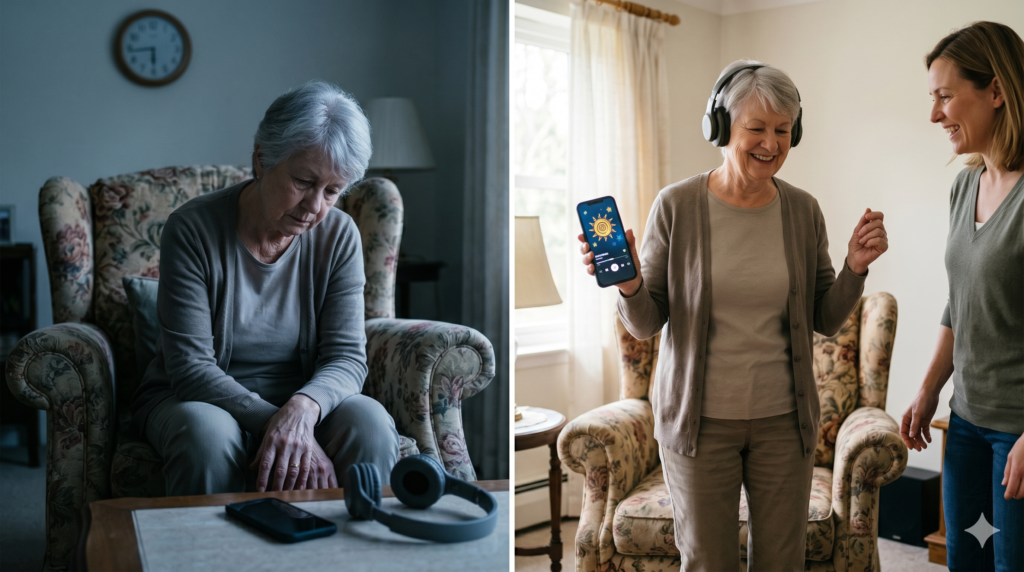
While music is highly therapeutic, it must be applied correctly to avoid negative reactions.
- Avoid High Volume: Aging ears are highly sensitive to loud, jarring noises. Keep the volume at a moderate, conversational level. If it hurts your ears, it is causing them severe anxiety.
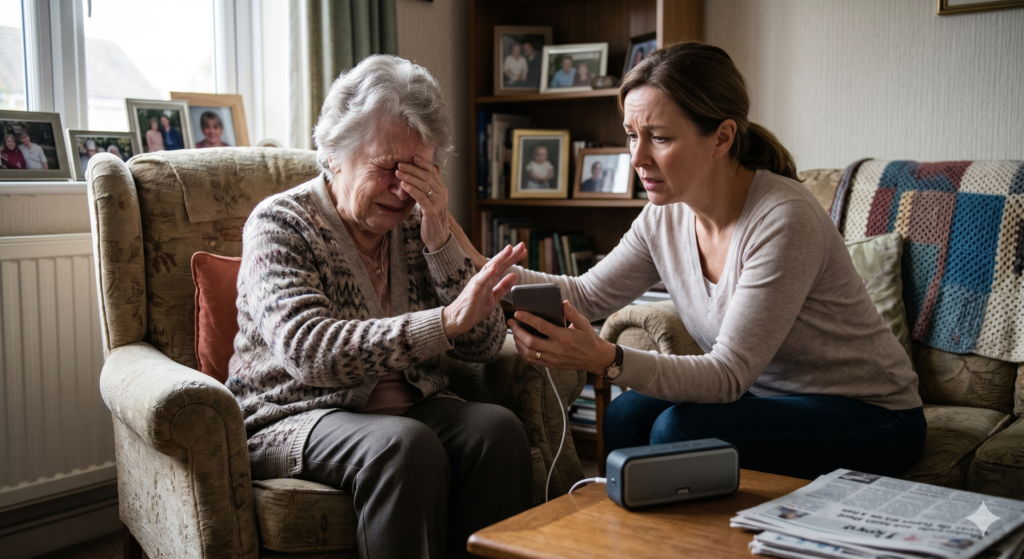
- Avoid Emotional Triggers: Pay attention to their reaction. While a certain song might be from their favorite era, it might also be the song that played at a tragic funeral or a painful breakup. If a song causes them to cry inconsolably or become agitated, remove it from the playlist immediately.
- Avoid Constant Noise: Do not leave music playing 24/7. The brain needs quiet time to rest. Continuous noise, even pleasant music, eventually becomes sensory overload. Use music purposefully for 30 to 60-minute intervals.
At Shal We Home Care, our memory care professionals in Lee, Collier, and Hendry counties do not just perform chores; we focus heavily on the quality of the day.
During our initial assessments, we always ask families about the senior’s musical preferences. Our caregivers use these preferences as daily therapeutic tools. Whether it is humming a favorite hymn while assisting with a transfer, or putting on a Sinatra playlist to calm an anxious afternoon, we use the power of music to foster connection, reduce reliance on anti-anxiety medications, and bring genuine joy to your loved one’s day.
- Musical Memory Survives: The brain retains musical memories long after short-term memory has faded.
- Find the Bump: Curate music from their “reminiscence bump”the decade they were 15 to 25 years old.
- Two Moods: Create one upbeat playlist for motivation and one slow playlist for calming anxiety.
- Use for Transitions: Play music to ease stressful transitions, like bathing or the onset of late-afternoon sundowning.
- Avoid Sensory Overload: Do not play music constantly, keep the volume moderate, and strictly avoid commercial radio stations.
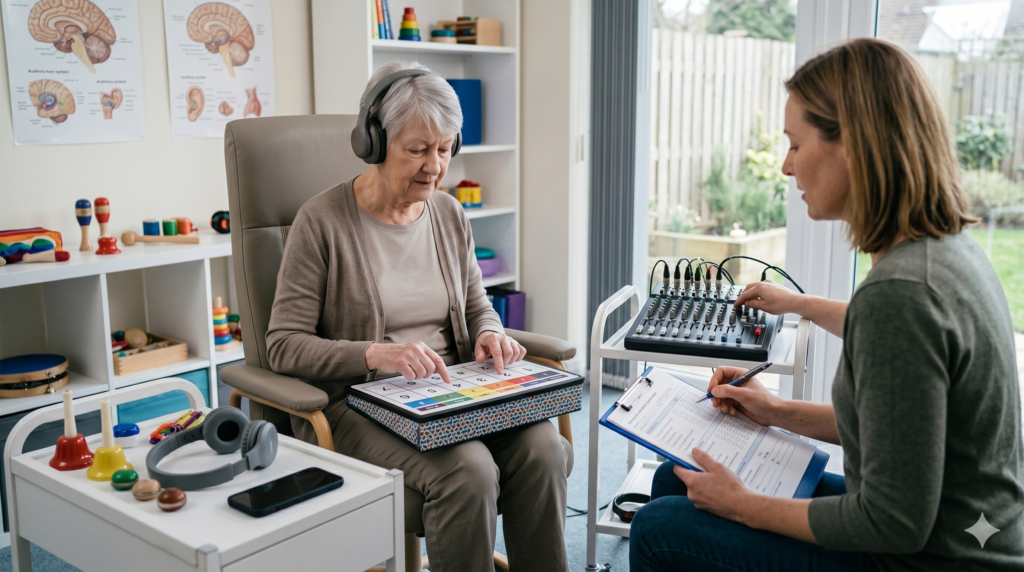
Looking for compassionate, innovative memory care? Music is just one of the many tools we use to support seniors with dementia. Contact Shal We Home Care today for a free assessment, and let us help bring the rhythm and joy back into your loved one’s life in Southwest Florida.
Categories & Tags
Categories: Dementia & Alzheimer’s, Therapy & Wellness, Behavioral Management, Caregiver Tips Tags: Music Therapy for Dementia, Alzheimer’s Playlist Ideas, Managing Sundowning with Music, Shal we Home Care Florida, Memory Care Strategies, Reminiscence Bump Seniors.