
In late-stage dementia, words fail. Discover how the neuroscience of therapeutic touch can reduce anxiety, communicate love, and bridge the gap with your aging parent.
As Alzheimer’s disease enters the late stages, individuals lose the ability to speak or comprehend language (aphasia). However, the human nervous system retains the ability to process positive tactile input. Caregivers and family members can communicate safety, love, and comfort through therapeutic touch such as gentle hand massages, softly brushing the hair, or providing deep-pressure hugs which lowers cortisol levels and bridges the emotional gap when verbal communication is no longer possible.
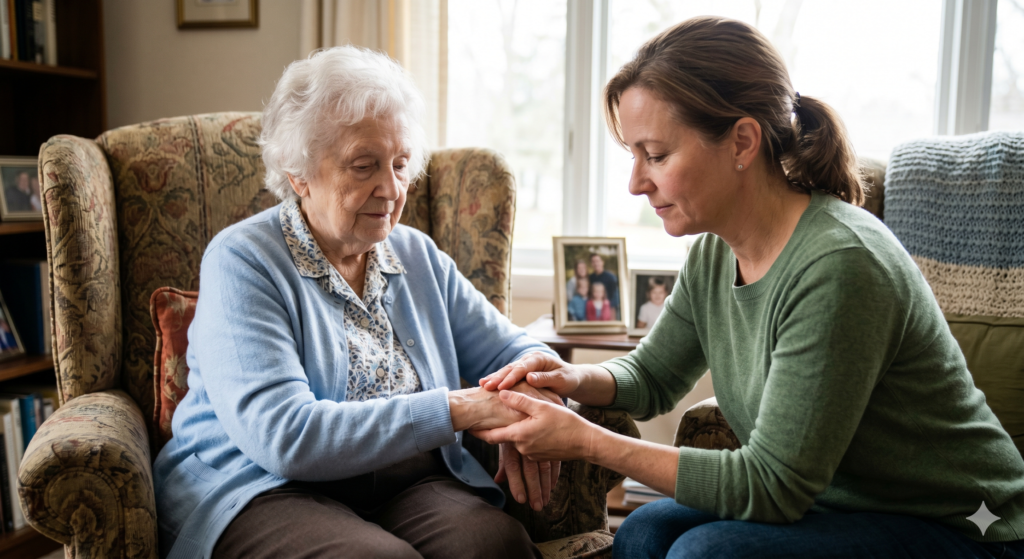
One of the cruelest realities of caring for a loved one with late-stage Alzheimer’s or dementia is the gradual silencing of their voice.
In the earlier stages of the disease, you adapt. When they forget a name, you supply it. When they repeat a story, you listen with patience. But as the disease progresses into Stage 6 and Stage 7, a condition known as aphasia sets in.
Aphasia destroys the language centers of the brain. First, they lose the ability to string coherent sentences together (expressive aphasia). Eventually, they lose the ability to understand the words you are saying to them (receptive aphasia). You sit next to your mother or father, holding a cup of tea, and you realize you have entirely lost your primary method of connecting with them.
But human connection does not end when vocabulary fails. When the ears and the voice can no longer process love, the skin takes over. Communicating through intentional, therapeutic touch is the most powerful tool family caregivers in Southwest Florida have to reach their loved ones in the final chapters of the disease.
Why is touch so effective when nothing else works? It comes down to basic human biology.
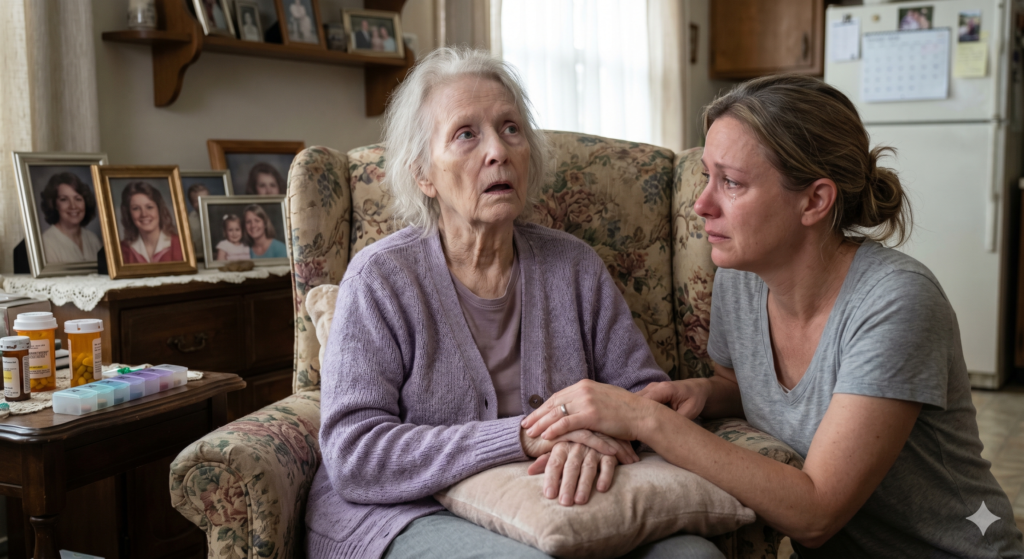
The skin is the largest organ in the body, and it is wired directly to the deepest, most primal emotional centers of the brain. When we receive positive, safe physical contact like a hug, a stroke of the arm, or holding hands the brain instantly releases a massive dose of oxytocin (the “bonding” or “love” hormone) and endorphins. Simultaneously, it shuts down the production of cortisol (the stress hormone).
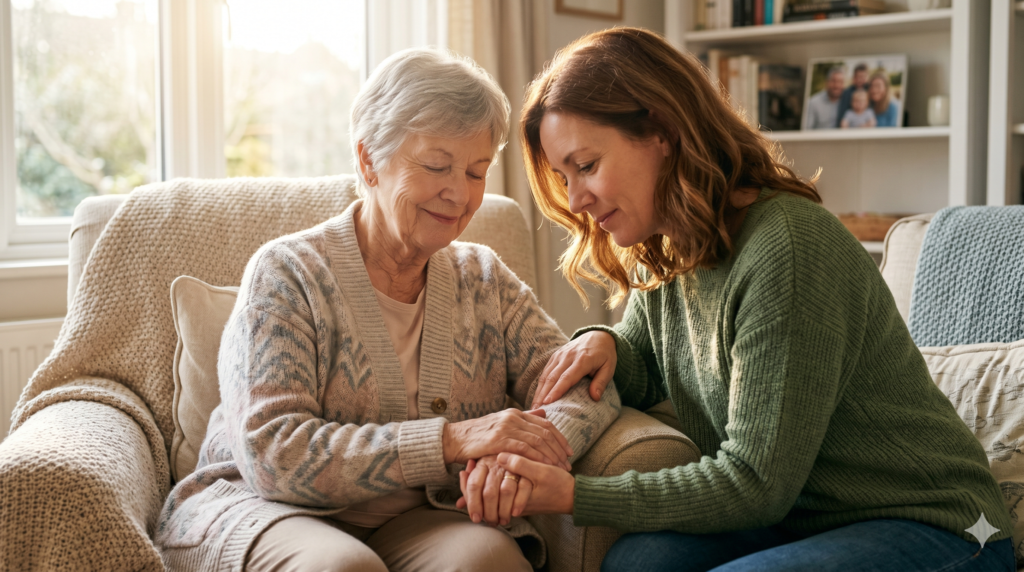
For a senior with advanced dementia, the world is a terrifying, confusing place. They may not know where they are, and they may not recognize the face of the person sitting next to them. This causes chronic, severe anxiety.
A gentle, reassuring touch bypasses the damaged, confused logic centers of the brain and speaks directly to their nervous system, delivering a clear, undeniable message: “You are safe. You are not alone.”
Sadly, as seniors age and become frail, they often experience “Touch Deprivation.”
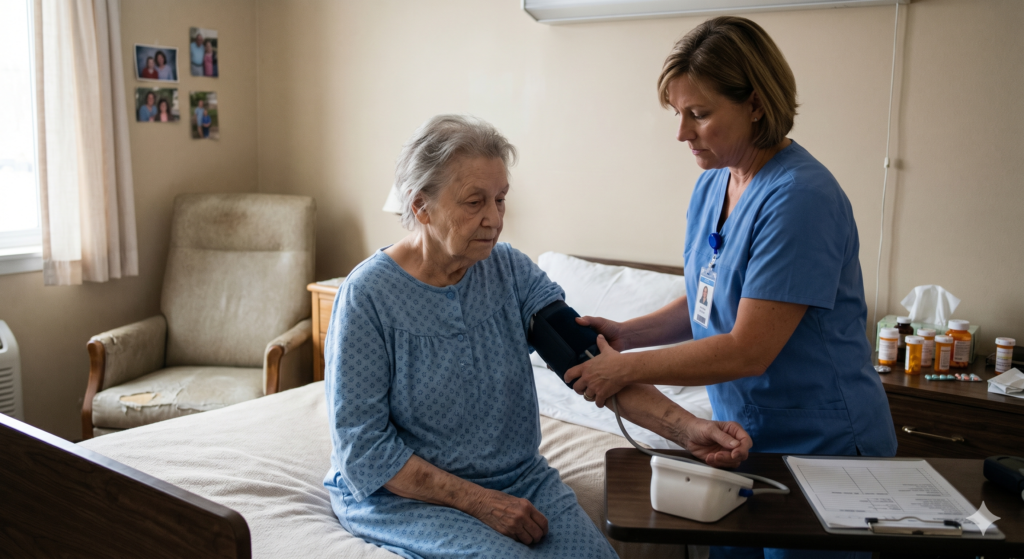
Spouses pass away. Friends stop visiting because the senior can no longer hold a conversation. The only touch the senior receives is clinical, functional, and hurried: a nurse checking a blood pressure cuff, a caregiver rushing to change an adult brief, or a doctor shining a light in their eyes.
When human beings are deprived of warm, non-clinical touch, they wither. Touch deprivation exacerbates depression, increases agitation, and can actually weaken the immune system. Providing therapeutic touch is an active medical intervention to improve their quality of life.
You do not need to be a massage therapist to provide comfort. Here are simple, profound ways to connect through touch.
1. The Hand Massage This is often the most accepted and least threatening form of touch.
- How to do it: Warm a small amount of lightly scented (or unscented) lotion in your hands. Sit facing them, maintain soft eye contact, and gently but firmly rub the palms, fingers, and back of their hands. The hands of seniors are often cold due to poor circulation; the warmth and friction are incredibly soothing.
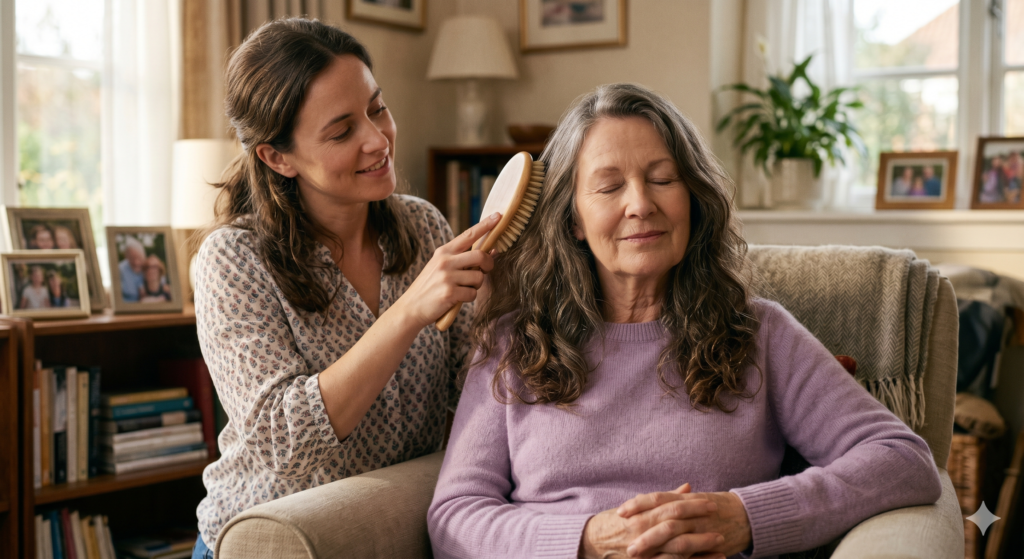
2. Hair Brushing The scalp contains thousands of nerve endings. For many women (and men) who took pride in their appearance, having their hair gently brushed is a deeply comforting, familiar sensation that harkens back to childhood or salon visits.
- How to do it: Use a soft-bristled brush. Move slowly and rhythmically.
3. Deep Pressure (Proprioceptive Input) Light, ticklish touches can be irritating or startling to a damaged nervous system. Deep pressure is grounding.
- How to do it: Instead of patting their shoulder lightly, place your hand firmly and warmly over theirs. If they enjoy hugs, give a firm “bear hug” to provide deep-pressure therapy to the joints, which signals the brain to calm down.
4. The “Hand-Under-Hand” Technique Pioneered by dementia expert Teepa Snow, this is a way to hold a senior’s hand that makes them feel secure, not trapped. Instead of intertwining fingers, slide your hand under theirs so your palms are touching, with your thumb wrapped around the top of their hand. It provides a feeling of walking together and allows you to gently guide their movements without forcing them.
Even in late-stage dementia, you must always seek consent before touching someone. Because they cannot say “Yes” or “No,” you must read their body language.
- Approach from the Front: Never approach a senior from behind or touch them without warning. Their peripheral vision is severely limited. Approach from the front, make eye contact, and smile before initiating touch.
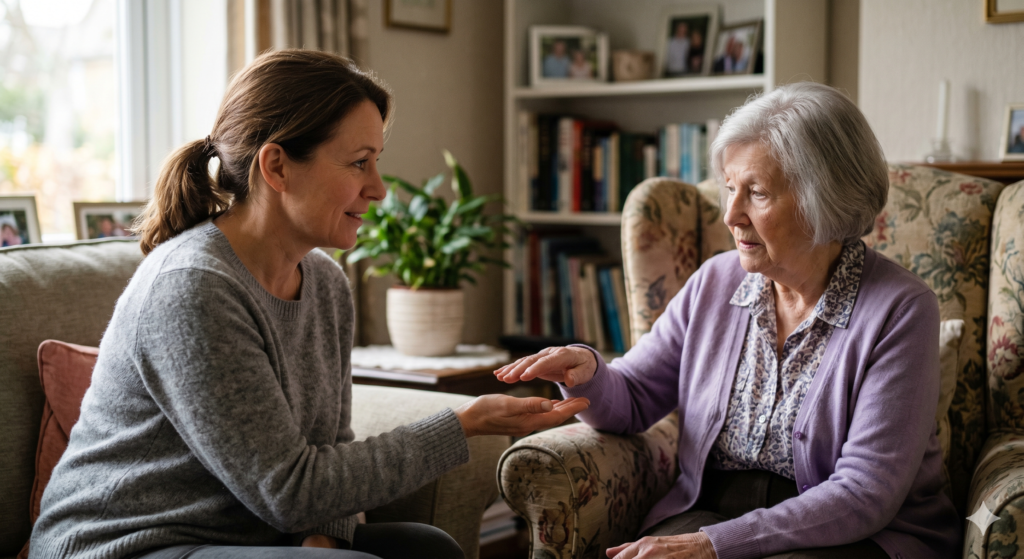
- Watch for Withdrawal: Offer your hand palm up. If they reach out, proceed. If they flinch, pull their hand away, turn their head, or become rigid, stop immediately. Their sensory system may be overloaded at that moment, and touch will only increase their panic. Try again later.
Certain types of touch will trigger the “fight or flight” response in a brain that is already on edge.
- Restrictive Touch: Never grab a senior by the wrists or pull them by the arm to lead them somewhere. To them, this feels like an attack, and they will fight back physically.
- Light, Feathery Touch: Very light touches on the arms or back can feel like bugs crawling on the skin, causing severe agitation.
- Patting the Head: This can feel patronizing or demeaning to an adult.
At Shal We Home Care, serving Lee, Collier, and Hendry counties, our caregivers understand the immense power of non-verbal communication.
When our clients enter the later stages of memory loss, our caregivers pivot their approach. We move from verbal instructions to physical connection. We hold hands during walks to prevent falls and provide security. We use warm, firm touch during bathing to reduce the intense fear seniors feel in the shower.
By combining clinical safety with profound, empathetic touch, our caregivers ensure that your loved one never feels abandoned in the silence.
- Language Fails, Touch Remains: When aphasia destroys the ability to speak, therapeutic touch becomes the primary language of love and comfort.
- Reduces Anxiety: Firm, safe touch releases oxytocin and lowers the stress hormone cortisol, acting as a natural anti-anxiety intervention.
- Use Deep Pressure: Avoid light, ticklish touches. Opt for firm hand massages, gentle hair brushing, and solid hand-holding.
- Read the Body Language: Always approach from the front and watch for physical signs of rejection or sensory overload before proceeding.
- Combat Touch Deprivation: Ensure the senior is receiving warm, non-clinical touch every day to preserve their emotional health.
Are you struggling to connect with a parent in late-stage dementia? You don’t have to face the silence alone.
Contact Shal We Home Care today. Let our specialized dementia caregivers bring peace, dignity, and profound connection to your loved one’s daily routine in Southwest Florida.