
“What happens to my special needs child when I die?” Discover how to build a circle of support, set up special needs trusts, and plan for the future in Florida.
To ensure a secure future for an adult child with special needs, aging parents must build a “Circle of Support” consisting of legal, financial, and personal safety nets. This involves creating a special needs trust to protect their government benefits (like SSI and Medicaid), drafting a comprehensive letter of intent detailing their exact daily routines, establishing a “microboard” of trusted friends and siblings to oversee their care, and gradually introducing professional in-home caregivers to ease the transition before the parents are no longer able to provide care.

If you are the parent of an adult with severe autism, cerebral palsy, Down syndrome, or another developmental disability, there is a question that haunts you every single day. It keeps you awake at 3:00 AM, and it shadows every birthday your child has.
“What happens to them when I get too old to lift them? What happens when I die?”
For decades, you have been their advocate, their chef, their nurse, and their protector. You know exactly how they like their toast, what triggers their meltdowns, and how to decode their non-verbal cues. The idea of handing that immense, complex responsibility over to someone else feels impossible.
But hope is not a strategy. If you do not proactively plan for the future, your adult child will become a ward of the state of Florida during a crisis, often resulting in them being placed in an emergency group home or institution entirely unsuited to their needs.
You must begin building a circle of support today. Here is the step-by-step roadmap to securing your child’s future.
The biggest mistake parents make is leaving money to their special needs child in a standard will or naming them as a beneficiary on a life insurance policy.
If an individual with a disability inherits more than $2,000 in cash or assets, they will instantly lose their eligibility for government benefits, including Medicaid and Supplemental Security Income (SSI). In Florida, losing Medicaid means losing access to the iBudget Waiver, which pays for their daily care programs.
If you were to pass away tomorrow, how would the next caregiver know that your son needs to wear his blue socks on Tuesdays or that your daughter is terrified of loud ceiling fans?
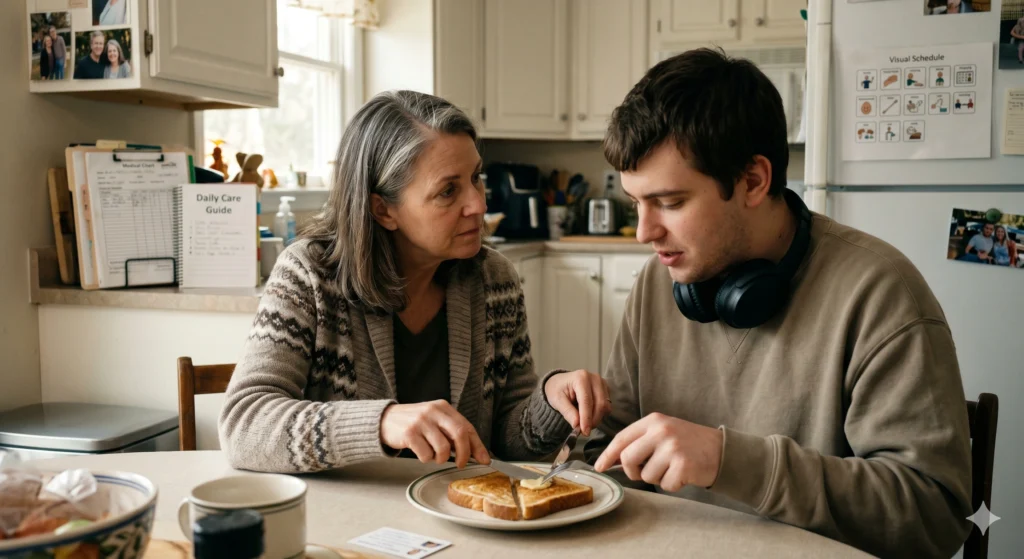
A Letter of Intent (LOI) is a comprehensive, non-legally binding document that acts as an “instruction manual” for your child’s life. It should be updated annually and shared with your family and trust executors.
- Medical: Every doctor, medication, allergy, and past surgery.
- Routine: A detailed breakdown of a typical day, from wake-up to bedtime.
- Communication: How do they signal pain? How do they say “yes” or “no”?
- Preferences: What are their safe foods? What are their favorite movies? What triggers a meltdown?
- Dislikes: What are they terrified of? (e.g., “Do not ever use the vacuum cleaner while he is in the room.”)
You cannot rely on just one person (like a sibling) to replace you. You need a team.
A microboard is a formalized, nonprofit organization created by family and friends to support one specific individual with a disability. Even if you don’t incorporate it legally, the concept is the same: build a circle of 3 to 5 people who know your child and commit to overseeing their life when you are gone.
- This team might include a sibling, a trusted aunt, a close family friend, and a financial advisor.
- They meet a few times a year now to discuss the plan, ensuring that when the time comes, a team steps in, not just a terrified, overwhelmed individual.
Adult siblings of individuals with special needs often live under a cloud of silent pressure. They assume they will have to eventually take their sibling into their own home, which may cause immense strain on their marriages and careers.
Have a transparent conversation with your neurotypical children now.
- Do not demand they become full-time, hands-on caregivers.
- Instead, ask them to be the Advocate and Care Manager. Their job shouldn’t be to physically bathe their brother every morning; their job is to oversee the Special Needs Trust and hire professional agencies to provide the daily care. This protects their sibling relationship and prevents burnout.
If you wait until you have a stroke or a severe illness to bring a caregiver into your home, your special needs child will experience massive trauma. They will lose their parent and be forced to deal with a stranger simultaneously.
You must introduce care while you are still healthy.
Begin by hiring a professional respite caregiver for just 4 hours a week. Let your child get used to this new person playing games with them or making their lunch while you are still in the house. Over a period of years, as you age, gradually increase the caregiver’s hours.
By the time you can no longer provide physical care, the caregiver is no longer a stranger; they are an established, trusted part of your child’s routine.
At Shal We Home Care, serving Lee, Collier, and Hendry counties, we specialize in long-term relationship building for families with special needs.
- The Gradual Introduction: We work closely with aging parents to slowly introduce our trained caregivers into the home environment, moving at a pace that keeps the neurodivergent adult completely comfortable.
- Learning from the Experts (You): While you are still the primary caregiver, our staff shadows you. We read your letter of intent, we learn the exact way you prepare their meals, and we learn their unique communication style.
- Peace of Mind: When the day comes that you can no longer provide the care, you will have absolute peace of mind knowing that the Shalwe team is already in place, fully trained, and deeply bonded with your child.
- Protect the Money: Never leave assets directly to a special needs child; use a Special Needs Trust (SNT) to protect their Medicaid eligibility.
- Write the Manual: Draft a comprehensive letter of intent detailing your child’s exact daily routines, triggers, and preferences.
- Build a Team: Don’t put the entire burden on one sibling. Build a “microboard” of trusted family and friends to oversee their life.
- Introduce Care Early: Do not wait for a crisis. Introduce professional caregivers while you are healthy to prevent transition trauma.
- Partner with Professionals: Use a licensed agency to provide the hands-on care, allowing siblings to act as loving advocates rather than exhausted nurses.
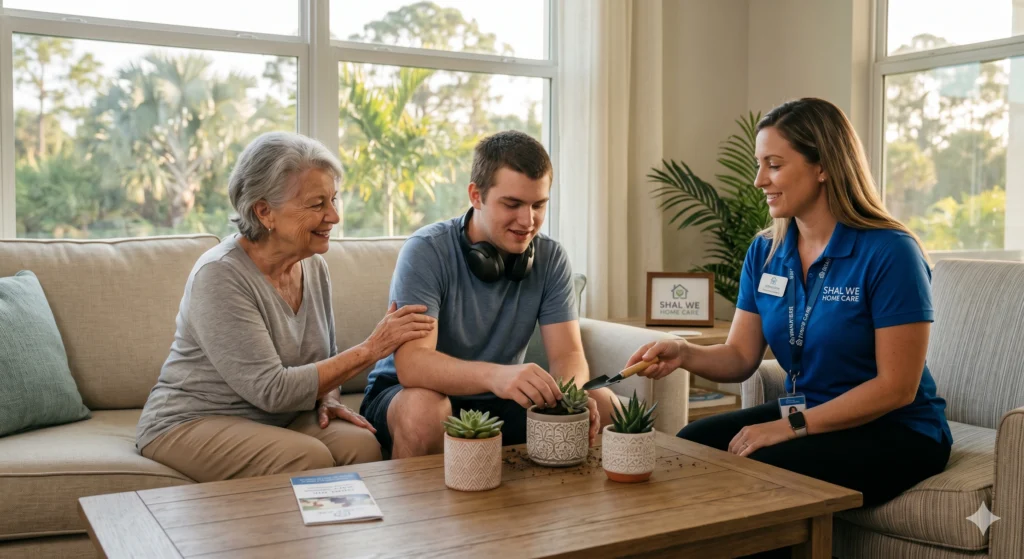
Are you losing sleep over your child’s future? The best time to start planning is today.
Contact Shal We Home Care to discuss how we can begin building a trusted, gradual relationship with your special needs adult child in Southwest Florida.