
When an autistic adult ages out of school, the loss of routine can cause severe depression. Learn how to create purposeful days, build visual schedules, and find joy at home.
To prevent depression and regression in autistic adults after they age out of the school system, families must proactively create purposeful daily routines at home. This involves building strict visual schedules that mimic a work day, assigning meaningful household responsibilities (like laundry or pet care) to build self-worth, strictly limiting unstructured screen time, and utilizing specialized companion caregivers to facilitate safe community outings and volunteering in Southwest Florida.
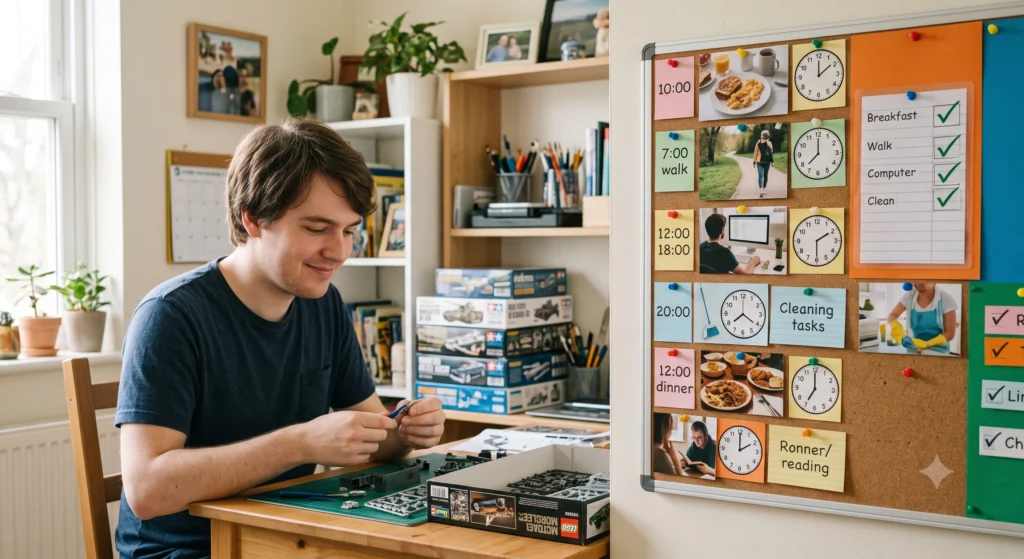
For individuals with Autism Spectrum Disorder (ASD) or intellectual disabilities, the public school system provides more than just education; it provides the absolute foundation of their lives: Structure.
From age 5 to age 22, their days are perfectly mapped out. The bus arrives at 7:30 AM. Math is at 9:00 AM. Lunch is at 11:30 AM. Their neurodivergent brains thrive on this predictable, unvarying rhythm.
But what happens the day after they age out of the school system? If the family has not secured a spot in an Adult Day Training (ADT) program or secured supported employment, the autistic adult wakes up to an empty calendar. We call this the “Post-Graduation Void.”
Without a reason to wake up, a place to go, or a job to do, autistic adults often experience a rapid, devastating decline. Their sleep schedules reverse. They become deeply depressed and isolated. Previously mastered behaviors regress, and meltdowns increase due to the anxiety of a formless day.
To keep your adult child thriving in Southwest Florida, you cannot just let them “hang out” at home. You must actively engineer a life of purpose.
When there is no schedule, the default activity is almost always a screen. An autistic adult might retreat to their bedroom and watch the same YouTube videos, play video games, or scroll through an iPad for 12 hours a day.
- The Problem: Screens provide massive dopamine hits without requiring any physical or social effort. It creates an addictive loop that makes transitioning to any other activity feel agonizing.
- The Solution: Screen time must be scheduled, not limitless. It should be used as a “reward” or downtime activity (e.g., “From 2:00 PM to 3:30 PM is iPad time”), rather than the background noise of their entire life.
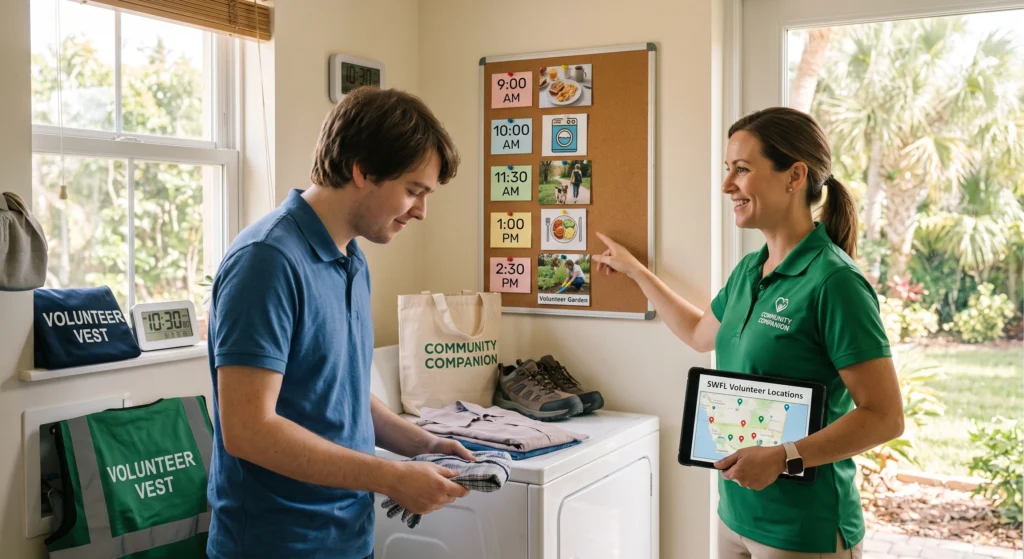
You must replace the structure of school with the structure of a “workday,” even if that work is happening entirely inside your house.
- Use Visual Schedules: Do not rely on verbal commands. Create a large, highly visible whiteboard or laminated chart in the kitchen.
- Segment the Day: Break the day into distinct blocks.
- 9:00 AM: Hygiene and Breakfast
- 10:00 AM: Household Responsibility (Work block)
- 11:00 AM: Fitness/Movement (Walk or stretching)
- 12:00 PM: Lunch and Social Time
- 1:00 PM: Community Outing or Hobby Time
- Enforce Wake-Up Times: Just because they don’t have a bus to catch doesn’t mean they can sleep until noon. Maintaining a strict circadian rhythm is vital for mood regulation.
Everyone needs to feel like a contributing member of their “tribe.” If you do everything for your adult child, you are unintentionally robbing them of their self-worth.
Assign them specific, meaningful household responsibilities. Do not call them “chores”; call them their “jobs.”
- Laundry Duty: Teaching them to sort colors, load the washer, and fold towels builds immense fine motor and executive function skills.
- Pet Care: Assign them the strict responsibility of feeding the family dog at 8:00 AM and 5:00 PM. Taking care of another living creature provides a profound sense of purpose and empathy.
- Meal Prep Assistant: Have them wash vegetables, set the table, or empty the dishwasher.

Staying inside the house 24/7 breeds isolation. A purposeful life must include the outside world.
If competitive employment isn’t an option, look for structured community engagement in Lee, Collier, or Hendry counties:
- Volunteering: Many local animal shelters, food pantries, or libraries welcome neurodivergent volunteers, especially if they are accompanied by a companion or job coach. Sorting cans at a food bank provides physical activity and civic pride.
- Routine Errands: Make running errands a structured event. Tuesday is the day we go to Publix to buy the specific brand of cereal we like. Thursday is the day we go to the library to return books.
Autistic individuals often have intense “special interests” (e.g., a fascination with trains, weather patterns, historical dates, or specific animals).
Do not view these interests as obsessions to be squashed; view them as engines for engagement.
- If they love animals, schedule a weekly trip to the Naples Zoo or the local humane society.
- If they love trains, build a complex model train set together, which requires fine motor skills, focus, and reading instructions.
- Channel their passion into a structured hobby that requires interaction with the physical world, rather than just watching videos about it on a screen.
It is incredibly difficult for a parent to be the sole provider of structure 365 days a year, especially if the parent is still working a full-time job.
This is where Shal We Home Care becomes an invaluable partner for special needs families in Southwest Florida.
- The “Job Coach” Proxy: Our specialized caregivers act as mentors and companions. We arrive at the home to enforce the visual schedule, ensuring the individual gets out of bed, completes their hygiene routine, and does their “household jobs.”
- Community Escorts: We provide the safe transportation and physical supervision needed to take your adult child to volunteer at the local library, go to the park, or run errands, ensuring they remain socially engaged and active.
- Breaking the Parent-Child Friction: Often, an autistic adult will fiercely resist doing chores for a parent but will happily complete tasks for an objective, cheerful caregiver.
- Nature Abhors a Vacuum: When school ends, you must immediately build a new, highly structured daily routine to prevent severe depression and regression.
- Limit the iPad: Restrict screen time to specific, scheduled blocks of the day to prevent dopamine addiction and isolation.
- Assign Jobs, Not Chores: Give them meaningful household responsibilities (like pet care or laundry) to foster self-worth and life skills.
- Get Out of the House: Schedule weekly volunteering or community errands to maintain social integration.
- Use Companion Care: Hire specialized caregivers to facilitate community outings and enforce routines while giving parents a necessary break.

Is your adult child struggling to find purpose after graduation? Don’t let them fade into the background.
Contact Shal We Home Care today. Let our specialized companion caregivers help your neurodivergent adult build a vibrant, structured, and joyful life in Southwest Florida.