
Pets provide immense mental health benefits for seniors, but walking and feeding them can become dangerous. Learn how in-home caregivers help seniors keep their beloved pets safely.
Pet ownership provides seniors with profound mental health benefits, including reduced loneliness, lower blood pressure, and a sense of daily purpose. However, as mobility declines, tasks like walking dogs, changing litter boxes, and lifting heavy pet food become significant fall and injury hazards. To safely keep their pets, seniors should adopt older, low-energy animals, use ergonomic pet care tools, and utilize professional in-home caregivers to manage the physical demands of pet maintenance, ensuring the human-animal bond remains unbroken.
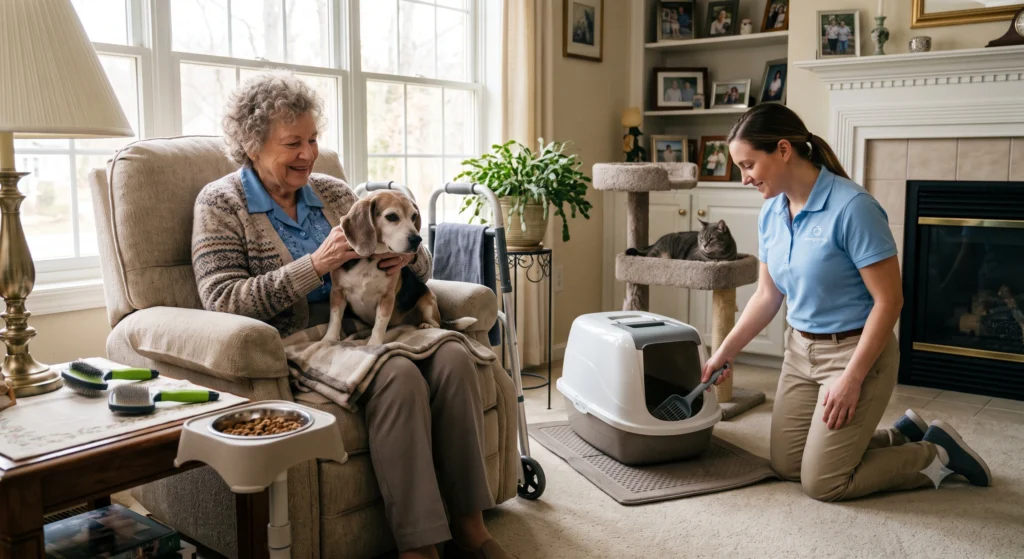
For many seniors living independently in Southwest Florida, the house can become incredibly quiet. As spouses pass away and adult children move out of state, the rhythm of daily life slows down. In these quiet homes, a dog or a cat is rarely just a pet; they are a roommate, a confidant, and often the primary source of daily interaction.
The bond between an older adult and their animal companion is profound. It is built on years of shared history and unconditional, non-judgmental love. However, a heartbreaking dilemma frequently arises as a senior begins to age in place. The physical demands of caring for an animal, walking, bending, cleaning, and lifting, can suddenly become a severe threat to the senior’s own safety.
Family members often worry, wondering if Mom or Dad should give up their beloved dog to prevent a fall. But removing a pet from a senior’s life is a traumatic event that can trigger rapid mental and physical decline. The goal should not be to remove the pet, but to modify the environment and bring in support so the senior can enjoy the benefits of ownership without the physical risks.
The benefits of pet ownership for seniors are not just emotional; they are documented medical facts.
- Combating the Loneliness Epidemic: Loneliness in older adults is linked to cognitive decline and a weakened immune system. A pet provides a constant, comforting presence, completely changing the atmosphere of an empty house.
- Cardiovascular Health: Studies consistently show that simply petting a dog or a cat releases oxytocin (the bonding hormone) and lowers cortisol (the stress hormone). This interaction actively lowers blood pressure and heart rate.
- The Power of Routine: Depression often strips seniors of their motivation to get out of bed. A pet, however, demands a routine. They must be fed, let outside, and interacted with. This requirement gives a senior a profound sense of purpose and a reason to start the day.
- Social Lubricant: For seniors who are still mobile, walking a dog in their Fort Myers or Naples neighborhood forces them to interact with neighbors, preventing total social withdrawal.
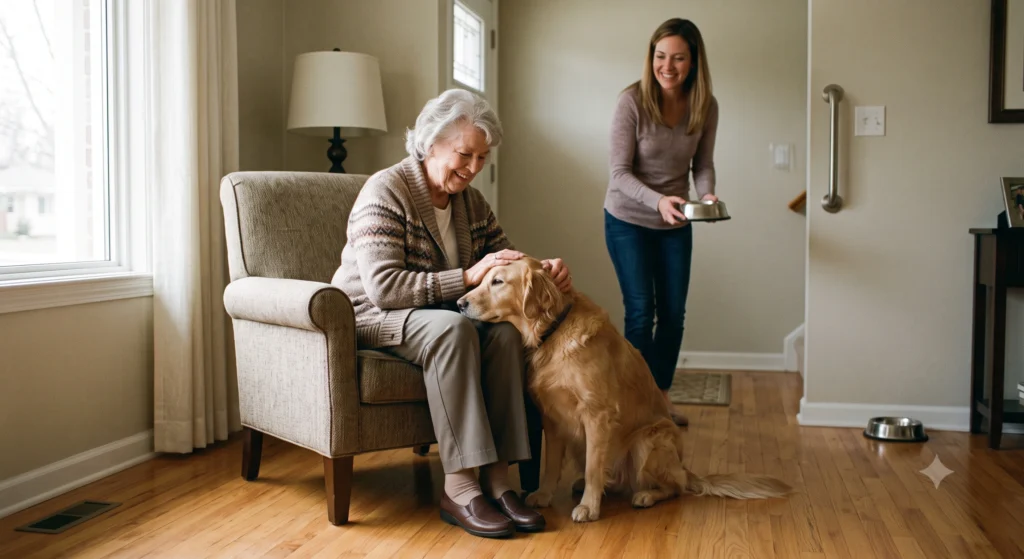
Despite the immense benefits, families must be brutally honest about the physical hazards pets introduce into a senior’s home.
- The Tripping Hazard: This is the most significant danger. Small dogs and cats are notorious for weaving around ankles. For a senior with peripheral neuropathy, a shuffled gait, or who relies on a walker, a pet underfoot is a leading cause of catastrophic hip fractures and falls.
- The Leash Pull: A senior walking a medium-to-large dog is at extreme risk. If the dog lunges at a squirrel or another animal, the senior likely lacks the core strength and balance to brace themselves, resulting in a severe fall on the pavement.
- Heavy Lifting and Bending: A 40-pound bag of dog food is impossible for a frail senior to lift from a shopping cart. Similarly, bending down to the floor to scoop a litter box or fill water bowls can trigger vertigo or severe back strain.
- Zoonotic Infections: Seniors with compromised immune systems or thinning skin are at higher risk for infections if they are scratched or bitten or if they improperly handle pet waste.
If your loved one is expressing deep loneliness and wants to adopt a pet, the choice of animal is critical.
- Avoid Puppies and Kittens: While adorable, they are chaotic. They require immense energy, training, and present severe, unpredictable tripping hazards.
- Adopt Senior Pets: Older, rescue animals (ages 7 and up) ar and training perfect match for seniors. They are usually house-trained, calm, and their primary desire is simply to sleep on the sofa next to their owner.
- Consider Cats or Small Birds: Cats generally do not require outdoor walks, making them an excellenthouse-trained andniors with severe mobility limitations.
- Size Matters: If adopting a dog, look for smaller breeds that cannot physically pull a senior over, but avoid “teacup” breeds that are too easily tripped over.
Technology and adaptive equipment can mitigate many of the daily risks.
- Long-Handled Scoopers: Invest in pooper-scoopers or litter box scoops with extra-long handles (30+ inches) so the senior never has to bend at the waist to clean up waste.
- Automated Feeders and Fountains: These devices can be filled once a week by a family member, dispensing portion-controlled food and fresh water daily without the senior needing to bend down to the bowls.
- Self-Cleaning Litter Boxes: While an investment, a self-cleaning litter box drastically reduces the hygienic risks and physical labor required of the senior.
- High-Visibility Collars: Put a brightly colored or reflective collar (with a small bell) on indoor pets so the senior can see and hear them coming, reducing the tripping hazard.
One of the most agonizing moments in senior care occurs when a family decides an aging parent must move into an assisted living facility (ALF), only to discover the facility has a strict “no pets” policy.
Forcing a senior to surrender a pet they have loved for a decade is deeply traumatic. It frequently triggers severe depression, anxiety, and a rapid decline in the senior’s overall will to live. This “facility rule” is one of the most powerful arguments for aging in place. By keeping the senior in their own home, you keep the family, furry members included, together.
You do not have to choose between your parent’s physical safety and their emotional happiness.
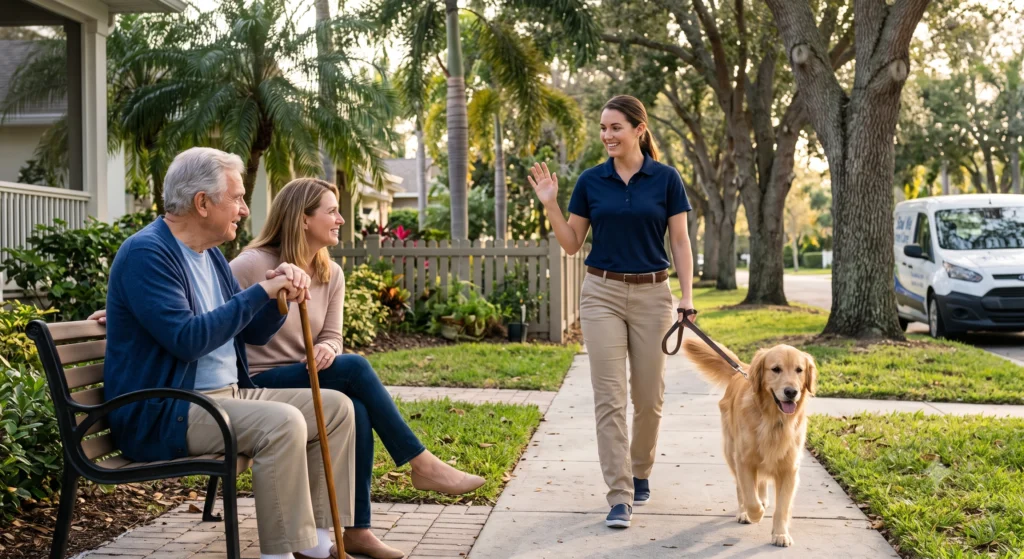
At Shal We Home Care, serving Lee, Collier, and Hendry counties, we understand that pets are family. When we design a “personal facility rule,” we look at the needs of the entire household.
- The Heavy Lifting: Our caregivers handle the strenuous tasks. We can purchase the heavy bags of food, carry them inside, and store them. We handle the daily bending required to clean litter boxes and wash food bowls.
- Safe Exercise: If Dad loves his dog but can no longer safely walk him, our caregivers step in. We can take the dog for a brisk walk, ensuring the animal burns off energy (making them calmer indoors) while completely removing the fall risk for the senior.
- Veterinary Transport: As part of our incidental transportation services, a caregiver can drive both the senior andit pet to veterinary check-ups or the groomer.
- A Shared Love: We purposefully match your loved one with a caregiver who is an animal lover, ensuring a harmonious environment where the senior can simply enjoy the purrs and tail wags without the burden of the chores.
- Pets are Medicine: The emotional and physical health benefits of pet ownership for seniors actively combat isolation and cognitive decline.
- Beware the Leash: Walking a dog and bending to clean litter boxes are high-risk fall activities for frail seniors.
- Adopt Smartly: If getting a new pet, choose older, calm, low-energy rescue animals rather than puppies or kittens.
- Use Adaptive Tech: Utilize long-handled scoopers and automated feeders to reduce the need for bending and lifting.
- Keep the Family Together: Utilize professional in-home caregivers to handle pet maintenance, allowing the senior to age in place safely with their best friend.
Is caring for a pet becoming too difficult for your aging parent? They don’t have to say goodbye to their companion.
Contact Shal We Home Care today. Let our pet-friendly caregivers provide the support needed to keep your whole family safe, happy, and together at home in Southwest Florida.