
Is your parent with dementia refusing to shower? Learn the sensory and neurological reasons behind bathing resistance and expert strategies for stress-free hygiene.
Seniors with dementia often refuse to bathe because neurological damage causes them to perceive the shower as a terrifying, cold, and painful sensory assault. To overcome bathing resistance, caregivers should ensure the bathroom is pre-heated, cover bathroom mirrors (which can cause paranoia), use the “Towel Bath” method (keeping the senior covered with a warm towel while washing underneath it to preserve dignity), and play soothing music to distract the brain. If family friction remains high, hiring a professional home caregiver creates an objective, routine-based hygiene experience.
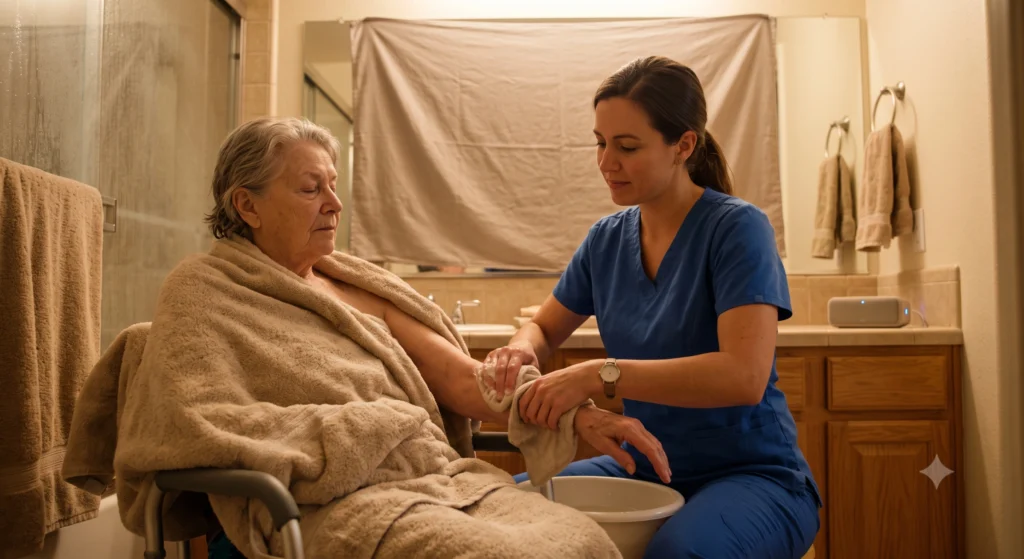
Of all the daily tasks associated with Alzheimer’s and dementia care, none causes more tears, screaming, and caregiver burnout than the simple act of taking a shower.
Adult children are often baffled when a mother who was meticulously clean her entire life suddenly refuses to bathe for weeks, becoming combative and physically aggressive if forced toward the bathroom. Families try reasoning, bribing, and arguing: “Mom, you smell. You have to take a shower!”
But logic does not work on a brain altered by dementia.
If you are fighting this battle in Southwest Florida, you must step back and completely change your approach. Getting a senior with dementia clean is not about force; it is about understanding their terrifying sensory reality and adapting the environment to make them feel safe.
To solve the problem, you must look at the bathroom through the eyes of someone with advanced cognitive decline.
- Temperature Shock: As we age, our skin thins, and our circulation slows. To a senior with dementia, stepping out of their clothes into a standard-temperature bathroom feels like walking into a freezer. The water hitting their skin can feel like painful needles.
- Loss of Depth Perception: Dementia destroys spatial awareness. When they look down at a white bathtub or the drain, they do not see a flat surface; they see a terrifying, bottomless black hole that they are afraid of falling into.
- The Glare and Noise: The bright lights bouncing off white tiles, combined with the loud, echoing roar of water hitting the shower floor, cause immediate sensory overload.
- Vulnerability and Pride: Taking off your clothes in front of your adult son or daughter is a profound violation of privacy and dignity. Their brain reacts to this vulnerability with a “fight or flight” response, usually manifesting as aggressive anger.
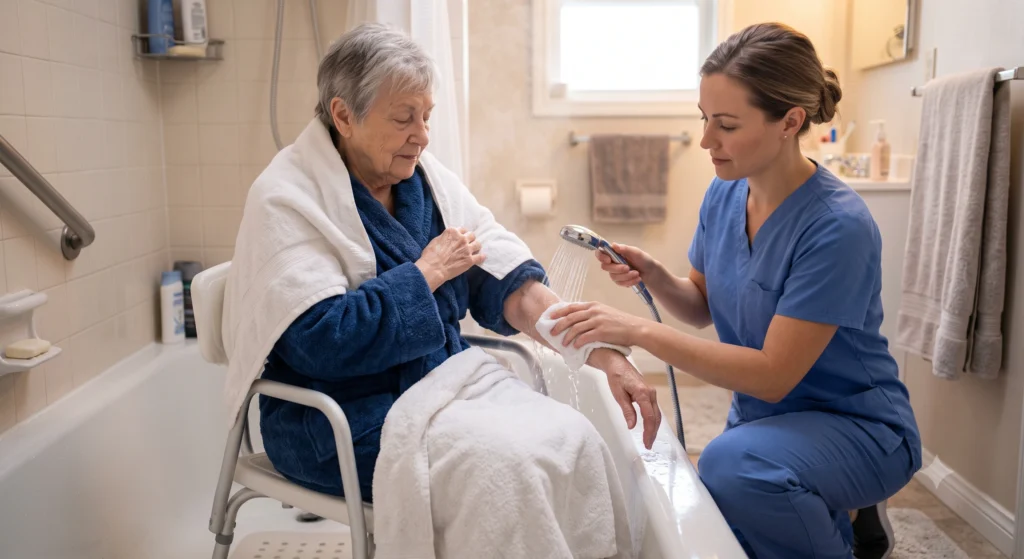
Before you even mention the word “shower,” the room must be prepared.
- Pre-Heat the Room: Turn on a small space heater (safely out of reach of water) or run the hot shower for 10 minutes with the door closed to turn the bathroom into a warm, inviting sauna.
- Cover the Mirrors: A senior with dementia may not recognize their own reflection. If they see a naked, older stranger looking at them in the mirror, they will panic. Throw a towel over the mirror.
- Control the Lighting and Sound: Turn off the harsh overhead exhaust fan and fluorescent lights. Bring in a small lamp and a waterproof speaker playing their favorite calming music (like Frank Sinatra or classical piano) to distract their brain from the task.
- Fix the Floor: Place a dark-colored, non-slip mat on the floor of the shower so they can clearly see where to step.
If the senior refuses to stand naked in the shower, do not force them. Use the towel bath technique, a favorite of professional caregivers.
- Place a sturdy shower chair in the tub.
- While the senior is still in their bedroom, wrap them in a large, warm bath towel or a heavy robe.
- Guide them to the shower chair while they are still covered.
- Do not turn on the overhead showerhead (which is terrifying). Use a handheld shower wand on a low, gentle setting.
- Wash them underneath the towel, exposing only one body part at a time (e.g., lift the towel off the right leg, wash, rinse, and cover the leg back up).
This method keeps them warm, preserves their modesty, and prevents the panic of feeling completely exposed.
Words matter. The word “shower” or “bath” may have become a trigger word that instantly causes a negative reaction.
- Change the Vocabulary: Do not say, “It is time for your shower.” Instead, try: “Let’s go get washed up for your doctor’s appointment,” or “Let’s go to the “spa” and get a nice warm shoulder massage.”
- Give an Illusion of Choice: Do not ask yes/no questions. If you ask, “Do you want to shower?” they will say no. Instead, ask: “Do you want to use the lavender soap or the vanilla soap today?” Holding up two choices distracts them and gives them a sense of control.
You must adjust your standards. A senior who is largely inactive does not need a full, scrubbing shower seven days a week.
- The “Sink Bath”: If they absolutely refuse the shower on a Tuesday, compromise. A thorough “sponge bath” at the sink (focusing on the face, underarms, and perineal area) is perfectly acceptable to maintain hygiene and prevent infections.
- Aim for Twice a Week: A full shower or bath is usually only medically necessary two or three times a week for a senior with dementia. Pick your battles to preserve your relationship.
For an adult child, attempting to bathe a combative parent often causes permanent damage to the family relationship. The guilt and exhaustion are overwhelming.
At Shal We Home Care, operating in Lee, Collier, and Hendry counties, we provide specialized memory care experts who transform bathing from a battle into a routine.
- The Objective Professional: Seniors will often fiercely fight a daughter but will politely comply with a professional caregiver in scrubs. It resets the dynamic.
- Clinical Safety: Our caregivers know exactly how to assist a senior safely into a shower chair, minimizing fall risks while utilizing the gentle “towel bath” techniques to keep them calm.
- Protecting Your Bond: By outsourcing the most stressful, intimate task of the week to Shalwe, you preserve your emotional energy so you can spend quality, joyful time with your parent.
- It’s Not Stubbornness: Refusing to bathe is a neurological reaction to feeling cold, vulnerable, and terrified of the sensory environment.
- Pre-Heat and Prepare: Make the bathroom a warm, dimly lit, music-filled sanctuary before bringing them inside.
- Cover Them Up: Use the Towel Bath method, keeping a towel over their shoulders and lap while washing underneath to preserve their modesty and warmth.
- Change the Words: Stop using the word “shower.” Call it “washing up” or “spa time” to avoid triggering a negative reaction.
- Outsource the Stress: Hire a professional home caregiver to manage hygiene routines, preserving your emotional relationship with your parent.
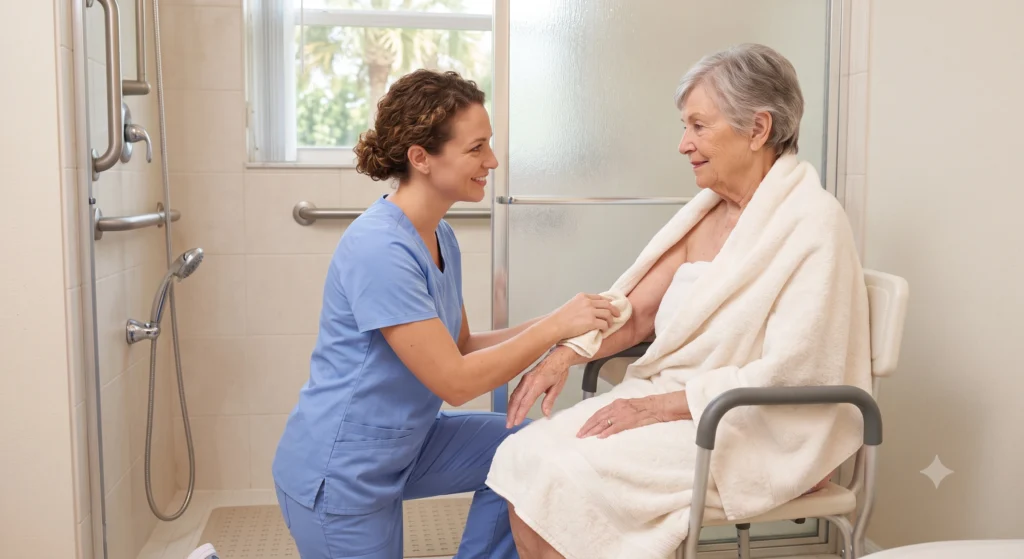
Is bathing your loved one ending in tears and frustration? You do not have to fight this battle alone.
Contact Shal We Home Care today. Let our compassionate, expertly trained memory care professionals restore dignity and peace to your loved one’s hygiene routine in Southwest Florida.