
Taking an autistic adult to the doctor for a blood draw can cause severe medical trauma. Learn how to use numbing creams, social stories, and sensory accommodations in Florida.
Medical appointments and blood draws are common triggers for severe meltdowns in autistic adults due to intense sensory overload and a fear of the unknown. To survive medical visits, caregivers must proactively request “sensory accommodations” (like waiting in the car instead of a crowded waiting room), utilize topical numbing creams (like lidocaine) prior to blood draws to eliminate needle pain, prepare the adult using visual “social stories” days in advance, and act as a fierce advocate to ensure doctors communicate patiently and clearly.
For parents and caregivers of neurodivergent individuals, few things induce as much dread as an upcoming medical appointment.
Taking an adult child with severe Autism Spectrum Disorder (ASD) or intellectual disabilities to a standard Florida medical clinic for a routine check-up, a dental cleaning, or a blood draw is often an exercise in trauma. The intense sensory environment, combined with the invasion of personal space and the fear of pain, frequently triggers catastrophic, aggressive meltdowns.
Because these visits are so traumatic, many special needs families avoid the doctor altogether. They skip vital blood work and ignore dental pain until it becomes a massive, unavoidable emergency room crisis.
You cannot avoid the healthcare system, but you can drastically change how your neurodivergent loved one interacts with it. Surviving medical appointments requires intense pre-planning, desensitization, and fierce advocacy.
To understand the panic, you have to look at a doctor’s office through a sensory-processing lens.
- Auditory Overload: Waiting rooms are echo chambers filled with coughing patients, ringing phones, and loud televisions playing daytime talk shows.
- Visual Assault: Fluorescent, buzzing overhead lights reflect off stark white walls, causing visual distress.
- Tactile Violation: Having a stranger (the doctor) touch their body, look in their ears, or wrap a tight, squeezing blood pressure cuff around their arm feels like a physical attack to someone with tactile defensiveness.
- Unpredictability: Autistic brains thrive on routine. A medical clinic is entirely unpredictable. They don’t know how long they will wait, what room they will go into, or what the doctor will do.
You cannot surprise an autistic individual with a doctor’s appointment on the morning it happens. You must prepare their brain days in advance to remove the fear of the unknown.
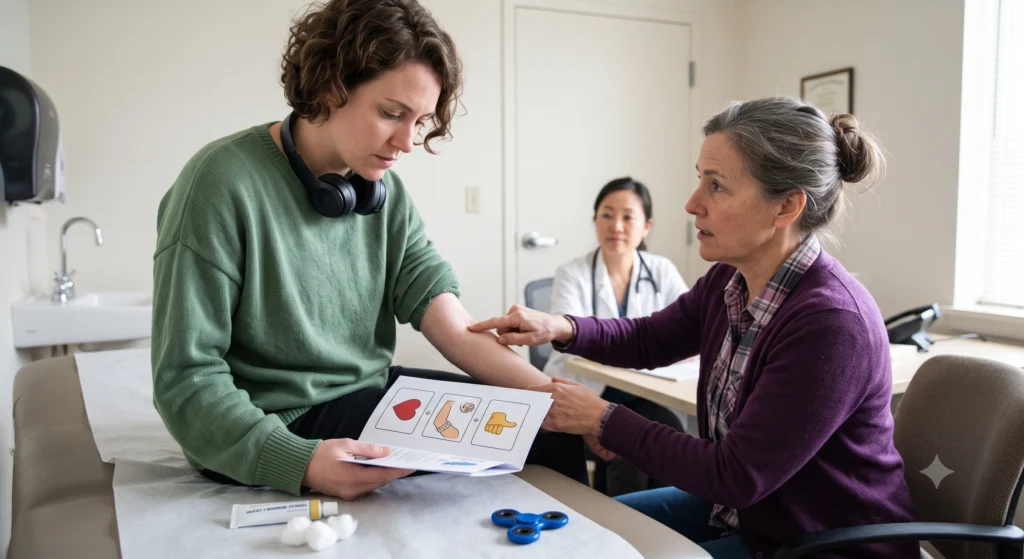
- Create a “Social Story”: A social story is a simple, visual book that explains exactly what is going to happen. Print out pictures of the actual clinic, a picture of a stethoscope, and a picture of the doctor.
- Read it Daily: Walk through the steps every night: “On Tuesday, we will drive to the clinic. We will sit in a chair. The nurse will wrap a gray band around your arm to give it a hug. Then, we will get a milkshake.”
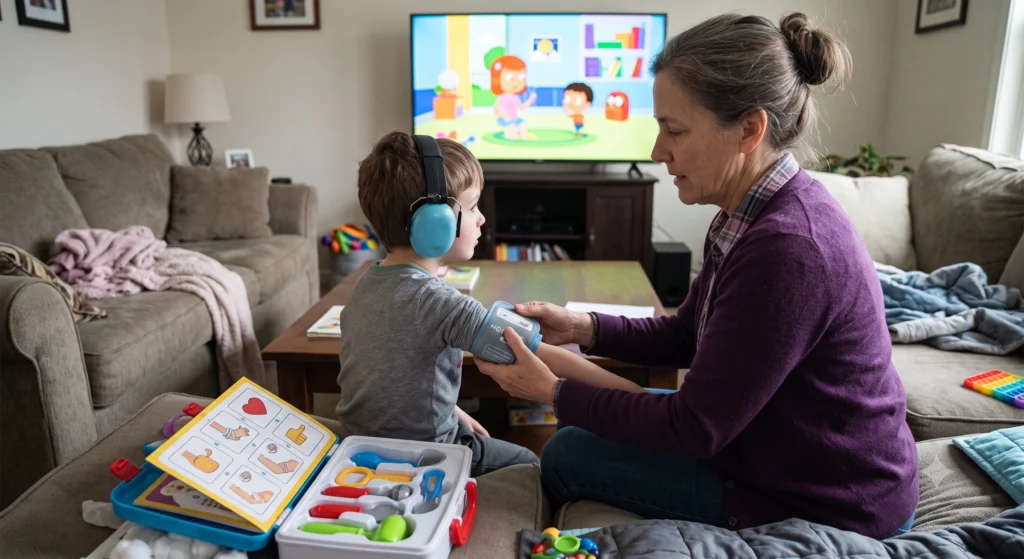
- Practice at Home: Buy a toy medical kit. Practice putting the blood pressure cuff on their arm at home while they are watching their favorite show, so the sensation is familiar before they arrive at the clinic.
You are your loved one’s ultimate advocate. Do not force them to sit in a chaotic waiting room for 45 minutes.
- Call Ahead for Accommodations: Under the ADA, medical offices are required to make reasonable accommodations. Call the office manager a week before the appointment. Explain: “My adult son has severe autism. He cannot sit in a waiting room without having a meltdown.”
- The Car Waiting Room: Request to wait in your vehicle in the parking lot. Have the receptionist call your cell phone the exact moment the private exam room is ready, allowing you to bypass the waiting room entirely.
- Ask for the First Appointment: Always try to book the very first appointment of the day (usually 8:00 AM) before the clinic falls behind schedule, ensuring minimal wait times.
Blood work is the ultimate hurdle. For an autistic individual, a needle prick is not just a pinch; it is a massive sensory trauma. If they fight or flinch, it becomes dangerous.
- Numbing Creams (Lidocaine): You must eliminate the physical pain. Ask your pediatrician or primary care doctor for a prescription for EMLA cream (or buy over-the-counter 4% lidocaine cream). Apply a thick layer to the inside of both elbows exactly 60 minutes before the blood draw, and cover it tightly with plastic wrap (Saran wrap). By the time you reach the lab, the skin is completely numb. They will not feel the needle.
- The “Buzzy” Device: Use a tool like the Buzzy, a small, vibrating ice pack shaped like a bee. You place it above the injection site. The intense cold and vibration confuse the nerves, entirely blocking the sharp pain signal of the needle from reaching the brain.
- Distraction is Key: The moment the phlebotomist approaches, pull out an iPad with a highly preferred, mesmerizing video and noise-canceling headphones. Block their vision of the needle completely.
Many standard physicians are not trained in neurodiversity. They move too fast, talk too loudly, and expect compliance.
- Be the Barrier: Before the doctor touches your loved one, step in and explain the rules. “Dr. Smith, please do not use your penlight; he is sensitive to light. Tell him exactly what you are going to do before you touch his stomach.”
- Stop the Exam if Necessary: If your loved one hits their threshold and begins escalating toward violence or a meltdown, you have the right to end the appointment. Say, “We have reached his limit today. We need to leave and try this again another time.”
Managing the logistics of a medical visit while simultaneously trying to keep a dysregulated 200-pound adult calm is nearly impossible for one parent to do alone.
At Shal We Home Care, serving Lee, Collier, and Hendry counties, our specialized companion caregivers can provide vital support during these stressful outings.
- The Second Set of Hands: Our caregiver can drive the vehicle, allowing you to sit in the back seat with your loved one to keep them calm.
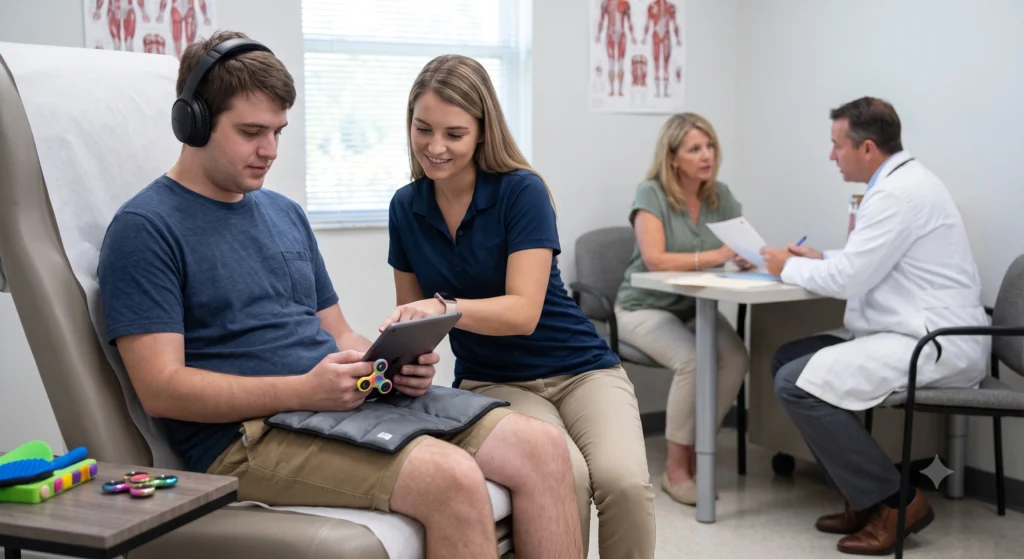
- The Distraction Partner: While you speak with the doctor and manage the medical paperwork, our caregiver focuses 100% on the neurodivergent individual, employing sensory tools and iPads to keep them distracted and calm.
- Objective Presence: Autistic adults are often highly attuned to their parents’ anxiety. If you are stressed, they escalate. A professional caregiver brings calm, neutral energy that helps de-escalate the entire room.
- Remove the Unknown: Use visual social stories to practice the medical routine days before the appointment.
- Bypass the Waiting Room: Call the clinic ahead of time and request to wait in your car until the exam room is ready to avoid sensory overload.
- Numb the Pain: Use lidocaine creams and vibrating tools (like the Buzzy) to completely eliminate the physical pain of blood draws and vaccines.
- Demand Accommodations: Advocate fiercely with doctors to move slowly and clearly explain their actions before initiating physical touch.
- Bring Backup: Utilize a professional companion caregiver to manage distractions and logistics so you can focus on advocacy.
Are medical appointments causing massive trauma in your family? You don’t have to face the clinic alone.
Contact Shal We Home Care today. Let our specialized special needs caregivers provide the calm, professional backup you need to navigate Southwest Florida’s healthcare system safely and successfully.