
Is your parent with dementia refusing to eat or losing weight rapidly? Learn the sensory, cognitive, and physical reasons behind dementia weight loss and how to help.
Seniors with dementia often stop eating due to a loss of smell and taste, an inability to recognize food (visual agnosia), or physical difficulty chewing and swallowing. To prevent severe weight loss, caregivers should serve high-calorie “finger foods” for seniors who pace, use high-contrast colored plates (like bright red or blue) so the food is visible against the table, cater to the dementia “sweet tooth” with nutritional shakes, and minimize all auditory and visual distractions during mealtime.
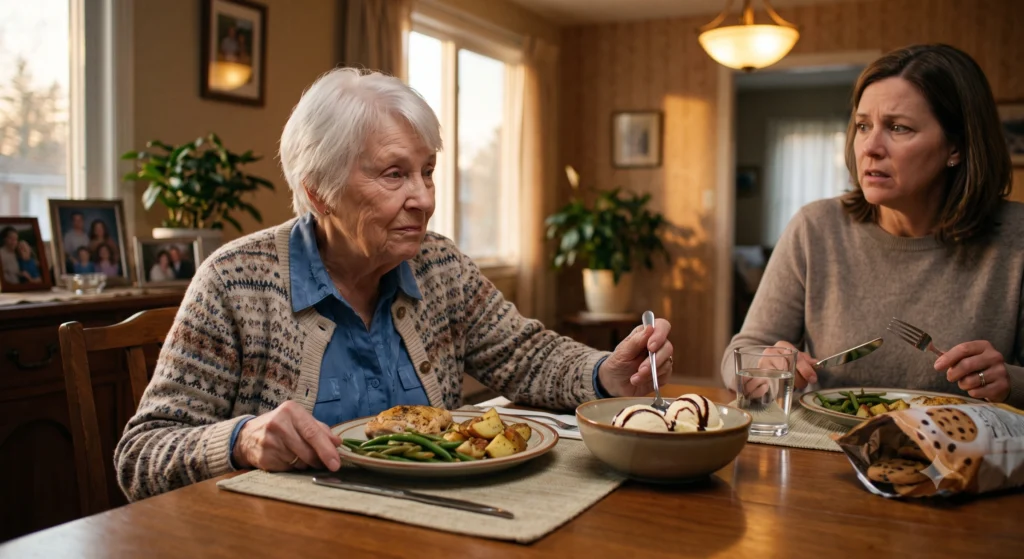
When a loved one is diagnosed with Alzheimer’s disease or another form of dementia, families prepare themselves for memory loss, confusion, and behavioral changes. However, one of the most alarming and stressful symptoms often catches families completely off guard: rapid weight loss.
You might notice that your father’s clothes are suddenly hanging off his frame, or that your mother, who used to love cooking, is now pushing her full plate away after just two bites. You try to reason with them, saying, “Mom, you have to eat; you’re getting too thin!” But reasoning does not work on a brain altered by cognitive decline.
In Southwest Florida, where the heat already suppresses senior appetites, ensuring a parent with dementia gets adequate nutrition is a massive daily hurdle. If they don’t eat, they lose muscle mass, which immediately increases their risk of catastrophic falls and infections. To fix the problem, you have to understand why their brain is rejecting food.
Dementia does not just destroy memories; it destroys the brain’s ability to process sensory information.
As we age, our taste buds naturally diminish. But in dementia, the olfactory bulb (the part of the brain that processes smell and taste) is heavily damaged. Food that used to taste rich and savory suddenly tastes like cardboard or metal. If a beautiful roasted chicken tastes like wet paper to your parent, they are not going to eat it.
Furthermore, as executive function fails, the physical mechanics of eating become overwhelming. They may look at a fork and a knife and completely forget how to use them to cut a piece of meat. The frustration of not knowing how to use utensils often causes them to simply give up and stop eating.
This is one of the most fascinating and misunderstood symptoms of Alzheimer’s disease.
Dementia severely impairs “contrast sensitivity,” the ability to distinguish between two colors of similar hues. If you serve white fish, mashed potatoes, and cauliflower on a white porcelain plate and set that plate on a white tablecloth, the senior literally cannot see the food. To their brain, the plate looks completely empty. This is called visual agnosia.
- The Fix: You must use high-contrast colors. Studies show that serving food on bright red or royal blue plates increases food intake in dementia patients by up to 25%. The bright color allows their brain to easily distinguish the food from the plate and the table.
Family caregivers are often baffled when a parent refuses to eat a healthy dinner but will happily devour an entire bowl of ice cream or a sleeve of cookies.
Why does this happen? The taste buds that process “sweetness” are the very last taste buds to degrade in the human body. While savory, salty, or bitter foods lose their flavor, sugar still registers powerfully in the brain, providing a massive hit of dopamine.
- The Fix: Do not fight the sweet tooth; use it to your advantage. If they will only eat sweet things, hide nutrients in sweet formats. Blend spinach, flavorless protein powder, and avocado into a sweet strawberry-banana smoothie. Add a dash of maple syrup to their vegetables. The goal in mid-to-late-stage dementia is calorie acquisition, not a perfectly strict diet.
In the moderate stages of dementia, many seniors develop “akathisia,” a severe restlessness that causes them to pace the house all day. They simply cannot sit in a dining chair for 20 minutes to eat a meal.
If you force them to sit down, they will become agitated and combative.
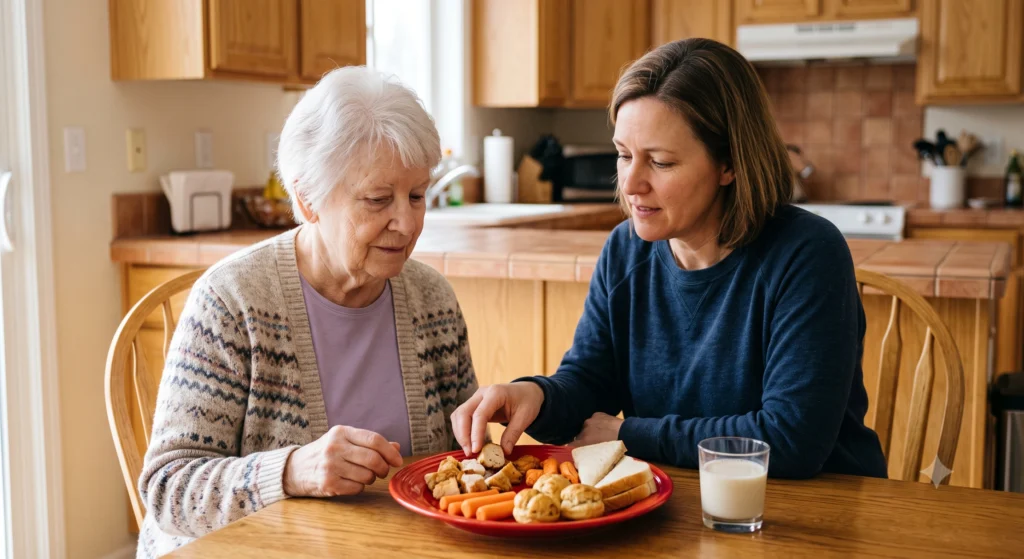
- The Fix: Transition to a “Finger Food Diet.” Prepare high-calorie, nutrient-dense foods that do not require utensils and can be eaten while walking.
- Examples: Chicken nuggets, thick slices of cheese, peanut butter sandwiches cut into quarters, hard-boiled eggs, and thick slices of fruit. Leave a plate of these small bites on the counter so they can “graze” as they pace around the house.
A brain with dementia cannot filter out background noise. If the television is blaring the evening news, the dog is barking, and multiple people are talking at the dinner table, the senior will experience severe sensory overload. Their brain cannot focus on the complex task of chewing and swallowing while processing the noise.
- The Fix: Turn the TV off completely during meals. Clear the table of all clutter (mail, centerpieces, multiple glasses), leaving only the plate and one cup. Play soft, familiar instrumental music in the background to create a calm, focused environment.
In the late stages of Alzheimer’s, the brain forgets the neurological reflex required to swallow (dysphagia).
- The Warning Signs: Coughing or clearing their throat constantly during a meal, holding food in their cheeks (pocketing), or a gurgling, “”wet”-sounding voice after taking a drink.
- The Action: If you see these signs, you must alert their physician immediately. They may require their liquids to be thickened or their food to be mechanically pureed to prevent fatal aspiration pneumonia (food entering the lungs).
Managing the dietary needs of a loved one with dementia is exhausting. Cooking three meals a day, only to have them rejected or thrown on the floor, is a major source of caregiver burnout.
At Shal We Home Care, our memory care professionals in Lee, Collier, and Hendry counties bring patience and clinical strategy to the kitchen.
- Nutrient-Dense Meal Prep: Our caregivers prepare specialized, high-calorie meals and smoothies designed specifically for the dementia palate, ensuring your loved one gets the nutrition they need without the battle.
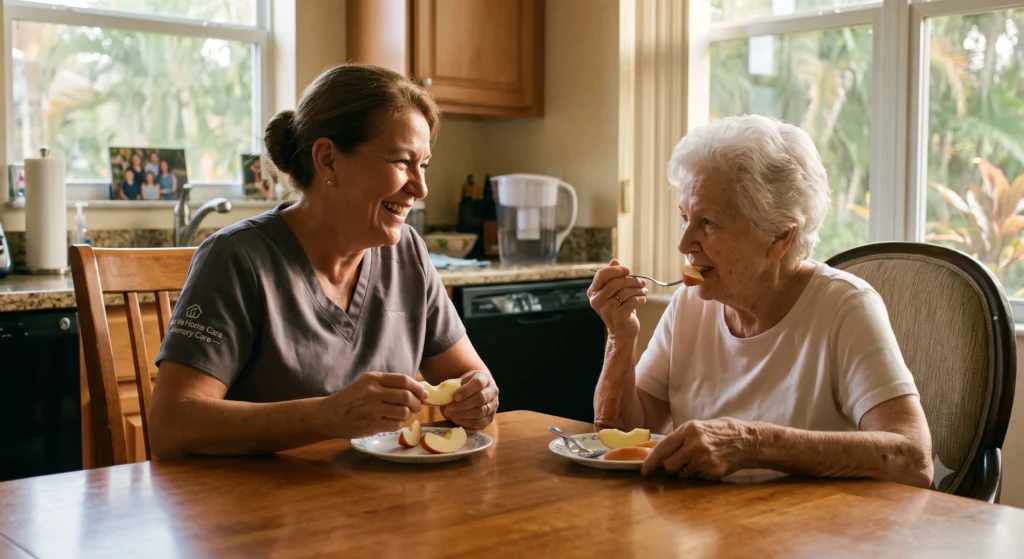
- The “Mirroring” Technique: Seniors often mirror the behavior of those around them. Our caregivers sit down, make eye contact, and eat a small snack alongside the senior. When the senior sees the caregiver taking a bite and smiling, it often prompts them to pick up their own fork and eat.
- Relieving the Family: By allowing us to handle the complex, stressful logistics of mealtime, you can step away from the role of the “food enforcer” and simply enjoy your parent’s company.
- It’s Not Stubbornness: Weight loss is caused by failing taste buds, visual agnosia, and the loss of executive function.
- Change the Plates: Use bright red or blue plates to make the food visually “pop” against the table.
- Embrace the Sweet Tooth: Hide healthy proteins and fats inside sweet smoothies or puddings if they reject savory foods.
- Use Finger Foods: For seniors who cannot sit still, provide a grazing plate of utensil-free, high-calorie bites.
- Get Professional Help: Utilize professional home caregivers to manage the stress of meal prep and employ clinical eating strategies.
Is mealtime becoming a daily battle? You don’t have to watch your loved one fade away.
Contact Shal We Home Care today. Let our specialized memory care team ensure your loved one receives the nutrition, dignity, and patience they deserve in Southwest Florida.