
We often think of “health” in terms of physical metrics: blood pressure, cholesterol, mobility, or nutrition. But there is another vital sign that is frequently overlooked by families and even doctors: Social Connection.
Understanding the Importance of Companionship is crucial for overall well-being.
For many seniors living independently in Florida, the house can become incredibly quiet. Friends move away or pass on, mobility issues make spontaneous outings difficult, and driving privileges may be lost. Adult children are often busy with careers and raising their own families, sometimes living states away.
This silence isn’t just sad—it is dangerous.
At Shal We Home Care, we believe that no senior should feel alone. Companionship is not an “extra” or a luxury; it is at the heart of what we do. It is the human connection that turns a house back into a home.
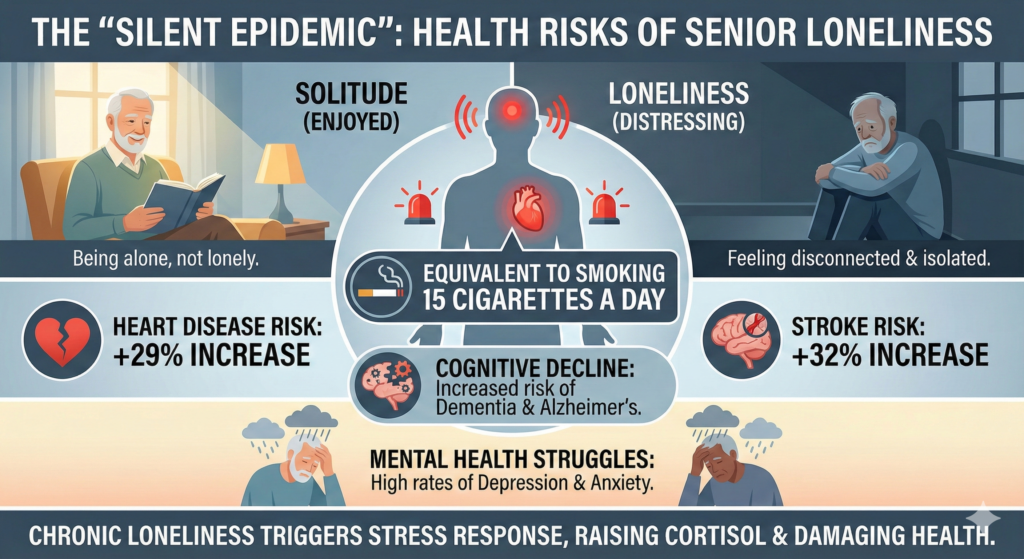
The “Silent Epidemic”: Why Loneliness Matters Scientifically
You might think your loved one is “fine” because they enjoy their solitude, but there is a distinct difference between being alone and being lonely.
Research from the CDC and the National Institute on Aging has shown that chronic loneliness in seniors is a serious medical risk. It triggers a stress response in the body, raising cortisol levels that can damage the heart and brain over time.
- Equivalent to Smoking: Studies suggest that prolonged isolation is as damaging to health as smoking 15 cigarettes a day.
- Cognitive Decline: Lack of social stimulation is a key risk factor for dementia. Socializing is a workout for the brain; without it, cognitive abilities can atrophy.
- Physical Health Issues: Loneliness is linked to a 29% increased risk of heart disease and a 32% increased risk of stroke.
- Mental Health Struggles: High rates of depression and anxiety are directly linked to isolation, leading to a loss of motivation for self-care.
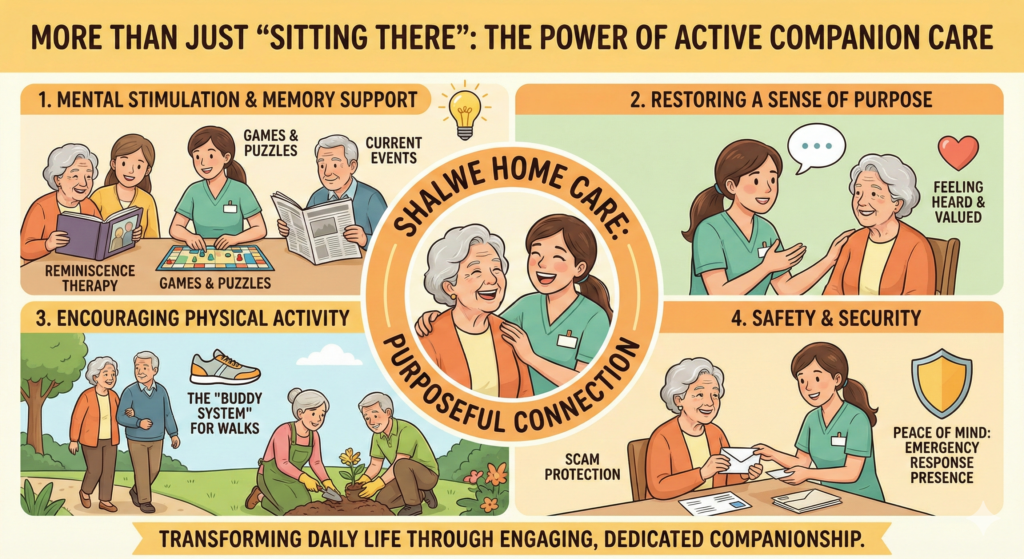
More Than Just “Sitting There”: The Power of Active Companion Care
When families hear the term “companion care,” they sometimes imagine a person just sitting on the sofa watching TV while the senior sleeps. That is not what we do.
At Shalwe Home Care, companionship is active, engaging, and purposeful. We match caregivers based on shared interests to spark genuine connection. Here is how dedicated companionship transforms daily life:
1. Mental Stimulation and Memory Support
A good conversation is the best medicine for the mind. Our caregivers engage clients in:
- Reminiscence Therapy: Discussing past experiences, looking at photo albums, or talking about their career. This strengthens long-term memory and validates their life story.
- Games and Puzzles: Playing cards, board games, Sudoku, or jigsaw puzzles helps maintain fine motor skills and problem-solving abilities.
- Current Events: Discussing the news (if it’s not too stressful) or talking about a favorite book keeps seniors connected to the outside world.
2. Restoring a Sense of Purpose
Everyone wants to feel heard and valued. Often, seniors feel “invisible” or that they are a burden to their busy families. Having a consistent caregiver gives them someone who is there just for them. A companion asks questions, listens to stories, and values their opinion, which significantly boosts self-esteem.
3. Encouraging Physical Activity
It is hard to find the motivation to take a walk alone. It can also be scary if you are worried about falling.
- The “Buddy System”: A companion provides the encouragement—and the safety arm—needed to get outside. Whether it’s a walk around the block, a stroll through a local park in Lee County, or just gardening in the backyard, having a partner makes movement fun rather than a chore.
4. Safety and Security
Loneliness often breeds fear—fear of falling with no one around, fear of home emergencies, or fear of scams. A companion provides a “safety net.”
- Scam Protection: Caregivers can help sort mail or screen calls, protecting vulnerable seniors from predatory scammers who target the lonely.
- Emergency Response: Just having another person in the house provides immense peace of mind to the senior and their family.
Breaking the Cycle of Isolation in Southwest Florida
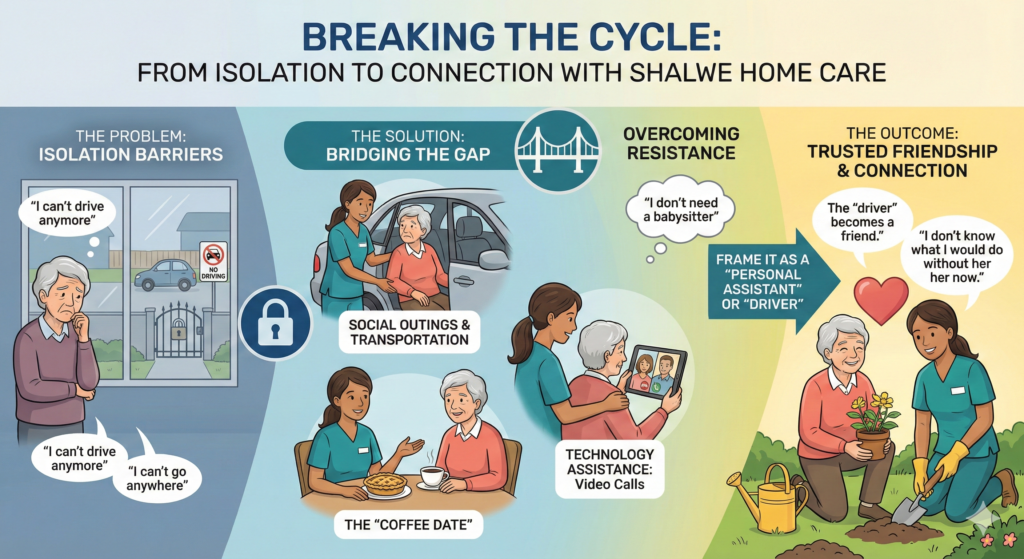
For seniors in Lee, Collier, and Hendry counties, the biggest barrier to socialization is often transportation. “I can’t drive anymore” often leads to “I can’t go anywhere.”
Our Companionship & Transportation services bridge that gap. We don’t just stay home; we help seniors reconnect with their community.
- Social Outings: We drive them to church services, club meetings, or the hairdresser.
- The “Coffee Date”: Sometimes, just getting out of the house for a slice of pie and a coffee is the highlight of the week.
- Technology Assistance: We can facilitate video calls with grandchildren, helping seniors navigate Zoom or FaceTime so they can see the people they love.
Overcoming Resistance: “I Don’t Need a Babysitter”
It is common for seniors to resist companionship at first. They may feel it is an intrusion or an admission of decline.
- How to Frame It: Don’t call it a “caregiver.” Call it a “personal assistant” or a “driver.” Frame it as a service to help you (the adult child) feel better.
- “Mom, I hired someone to help with the driving and grocery shopping so you don’t have to worry about traffic. She’s really nice and loves gardening too.”
- The Shift: Usually, after two or three visits, the resistance fades. The “driver” becomes a friend. We often hear seniors say, “I don’t know what I would do without her now.”
A Friend You Can Trust
Inviting someone into your home requires trust. At Shalwe Home Care, we take the matching process seriously. We look for compatible temperaments. If your mom is a quiet reader, we won’t send a chatty extrovert. If your dad loves sports, we try to find a caregiver who can talk about the game.
Is Your Loved One Lonely?
Signs of loneliness aren’t always obvious. Look for:
- Loss of interest in hobbies they used to love.
- Changes in sleep patterns (sleeping too much is often a sign of depression).
- Neglecting personal care or housekeeping.
- Talking frequently about feeling “useless” or bored.
- Calling you multiple times a day just to talk (signaling a need for connection).
If you recognize these signs, it is time to reach out.
Contact Shal We Home Care today. Let’s bring conversation, laughter, and connection back into your loved one’s life. We aren’t just caring for a patient; we are befriending a person.