
Hearing the doctor say, “You can go home today,” is usually a moment of celebration. Whether it was a planned surgery like a hip replacement or an unexpected stay due to pneumonia or a fall, getting back to your own bed feels like the finish line.
But in reality, discharge day is just the starting line of recovery.
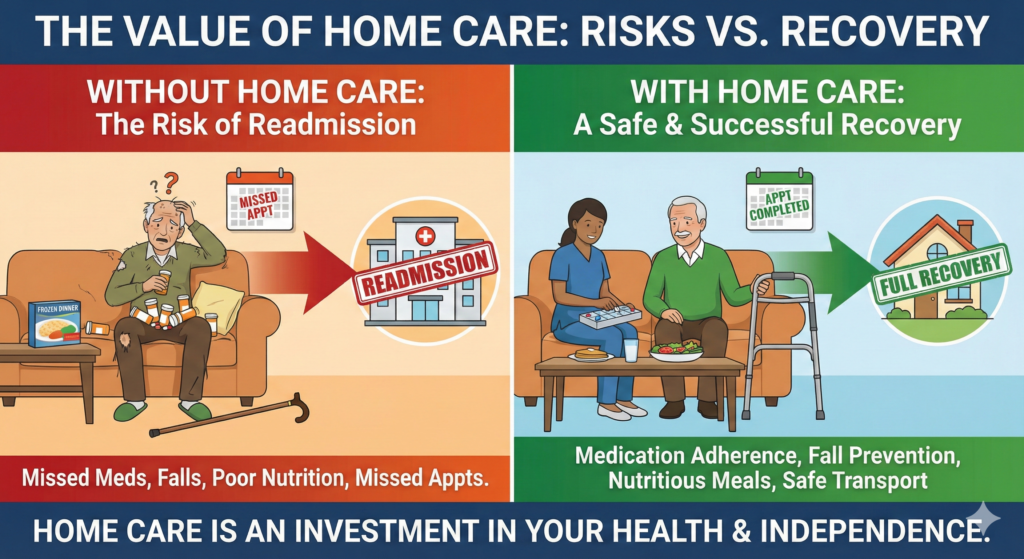
The transition from the 24/7 support of a hospital to the independence of home is often where things go wrong. Statistics show that nearly 20% of seniors on Medicare are readmitted to the hospital within 30 days of discharge. The primary reasons aren’t usually medical complications, but rather failures in self-care at home: missed medications, falls, or poor nutrition.
At Shalwe Home Care, we specialize in Transitional Care. We act as the safety net that bridges the gap between the hospital and full independence, serving seniors across Lee, Collier, and Hendry counties.
Here is how professional home care supports rehabilitation and ensures a successful recovery.
1. The “Hospital-to-Home” Gap
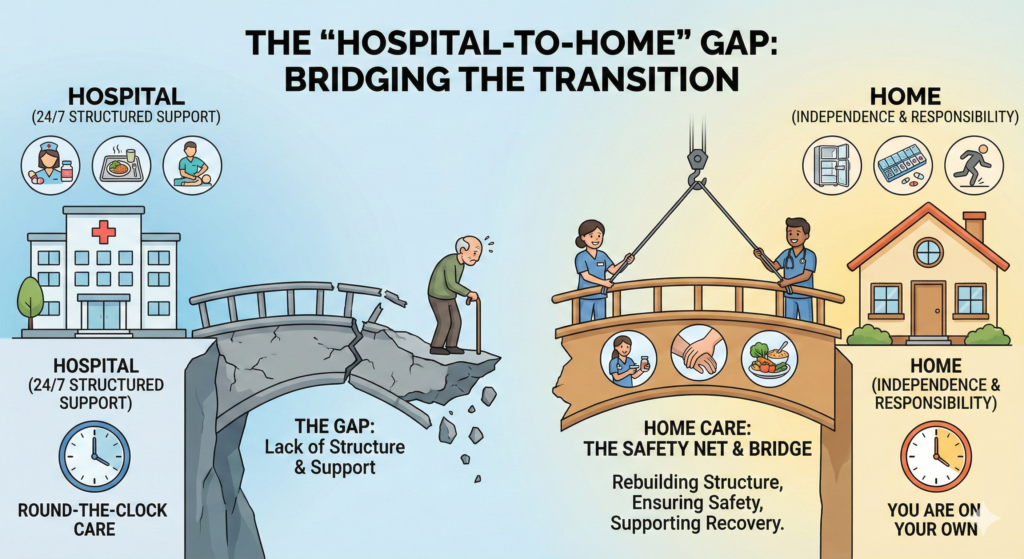
In the hospital, nurses bring medication on a schedule, meals appear on a tray, and physical therapists help you move. At home, that structure vanishes instantly. You are suddenly responsible for everything, often while you are still in pain, groggy from medication, or physically weak.
Home care rebuilds that structure. We don’t replace your physical therapists or visiting nurses; we support them. While a nurse might visit for 30 minutes a day to check a wound, our caregivers are there for the other 23.5 hours to ensure life happens safely.
2. Medication Adherence: The #1 Priority
One of the most common causes of hospital readmission is medication errors. Post-hospital regimens are often complex—new painkillers, antibiotics, and blood thinners mixed with pre-existing prescriptions.
- The Risk: Taking a pill too late, doubling a dose because of “brain fog,” or skipping it because the bottle is hard to open.
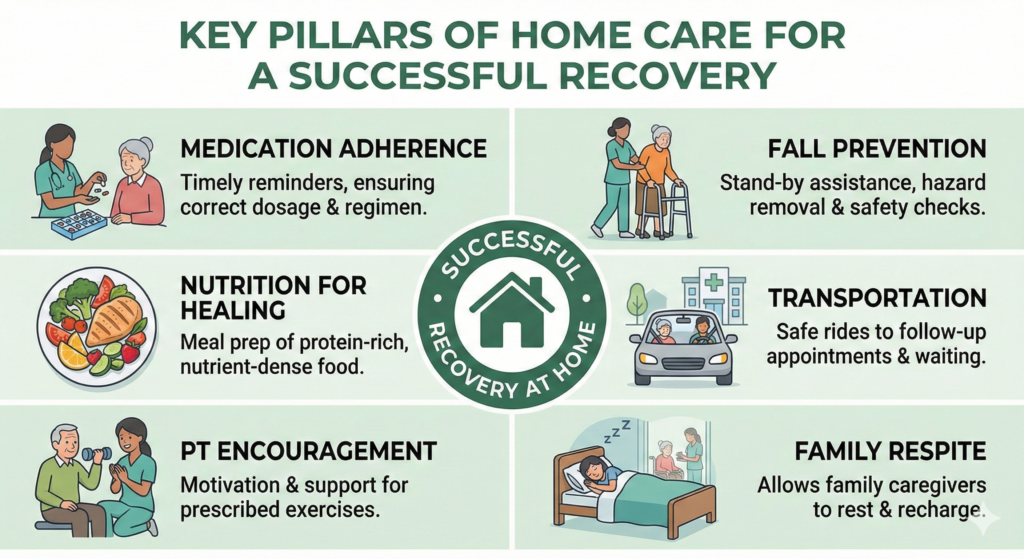
- The Home Care Solution: Our caregivers provide timely medication reminders. We ensure the prescription is filled, the bottle is accessible, and the medication is taken with food and water as directed.
3. Fall Prevention During the Weakest Moments
After days or weeks in a hospital bed, muscle atrophy sets in quickly. Your balance may be off, or new medications might cause dizziness.
- The Risk: A fall during recovery can be catastrophic, often leading to re-hospitalization and orthopedic surgery.
- The Home Care Solution: We provide “Stand-By Assistance.” We walk behind or beside you as you move to the bathroom or kitchen. We clear pathways of tripping hazards (like that suitcase you just brought home) and ensure you are using your walker or cane correctly as prescribed by your physical therapist.
4. Nutrition for Healing
Your body needs fuel to repair tissues and fight infection. However, post-surgery fatigue often kills the appetite or the energy to cook.
- The Risk: Malnutrition weakens the immune system and slows wound healing. Relying on frozen dinners or toast because it’s “easy” deprives the body of necessary protein and vitamins.
- The Home Care Solution: Shalwe caregivers handle the grocery shopping and meal prep. We prepare high-protein, nutrient-dense meals that support healing, ensuring you have the energy to tackle your physical therapy exercises.
5. Transportation to Follow-Up Appointments
The weeks following discharge are filled with follow-up appointments with surgeons, specialists, and therapists.
- The Risk: Seniors who cannot drive may skip these vital appointments because they don’t want to burden family members for a ride.
- The Home Care Solution: We provide incidental transportation. We help you dress comfortably, get you into the car, drive you to the appointment, and—crucially—we can sit in the waiting room with you to ensure you get home safely afterwards.
6. Encouragement with Physical Therapy (PT)
A visiting Physical Therapist might give you a set of exercises to do three times a day. Doing them alone can be boring, painful, or confusing.
- The Risk: Skipping exercises leads to stiffness and poor outcomes (e.g., a knee replacement that never achieves full range of motion).
- The Home Care Solution: While we are not therapists, we are excellent cheerleaders. We can remind you it’s time for your exercises, set up your chair, and offer encouragement while you complete your routine.
7. Respite for the Family Caregiver
Often, a spouse or adult child takes on the role of “nurse” after discharge. But caring for a recovering patient is exhausting, involving sleepless nights and high anxiety.
- The Risk: Caregiver burnout can happen within days of a complex discharge.
- The Home Care Solution: We allow the family to sleep. Hiring a caregiver for overnight shifts or for a few hours during the day allows the primary family caregiver to rest, shower, and recharge, making them better partners in the long-term recovery.
Conclusion: Investing in a Safe Recovery
Think of post-hospital home care as an insurance policy for your health. It is a temporary investment that yields a permanent return: a complete recovery and the ability to stay in your own home.
Planning a surgery or facing a discharge? Don’t wait until you are in the car on the way home. Contact Shal We Home Care today to set up a
transitional ca
re plan tailored to your specific recovery needs.