
Engaging activities for seniors with memory loss should avoid relying on short-term memory or complex logic, which cause frustration. Instead, focus on sensory, repetitive, and reminiscence-based tasks. Folding laundry, sorting hardware, listening to music from their youth, or looking through old photo albums taps into preserved long-term memories, provides a sense of purpose, and significantly reduces anxiety and behavioral issues.
The Danger of Boredom in Dementia
When a senior is diagnosed with Alzheimer’s or dementia, families often focus heavily on physical safety locking doors, managing medications, and preventing falls. While crucial, this often leads to a situation where the senior is perfectly “safe” but sitting in front of a television for 10 hours a day.
Boredom is toxic to a brain with dementia. When the brain is under-stimulated, the individual often becomes deeply anxious, depressed, or agitated. This lack of engagement is a leading trigger for pacing, wandering, and aggressive outbursts.
Keeping a senior with memory loss engaged in meaningful activities isn’t just about passing the time; it is a vital therapeutic tool. It preserves dignity, exercises remaining cognitive pathways, and drastically improves their daily mood.

The “Fail-Free” Activity Rule
The golden rule of memory care activities is that they must be fail-free.
If you give a senior with moderate dementia a 1,000-piece puzzle or a complex crossword, they will likely become intensely frustrated when they cannot complete it, highlighting their cognitive decline and causing distress.
Instead, activities should focus on the process, not the outcome. There is no “right” or “wrong” way to do them. You must focus on utilizing the skills they still possess, rather than the ones they have lost.
Sensory and Tactile Activities
As cognitive skills fade, the senses, touch, smell, and sight remain powerful avenues for connection.
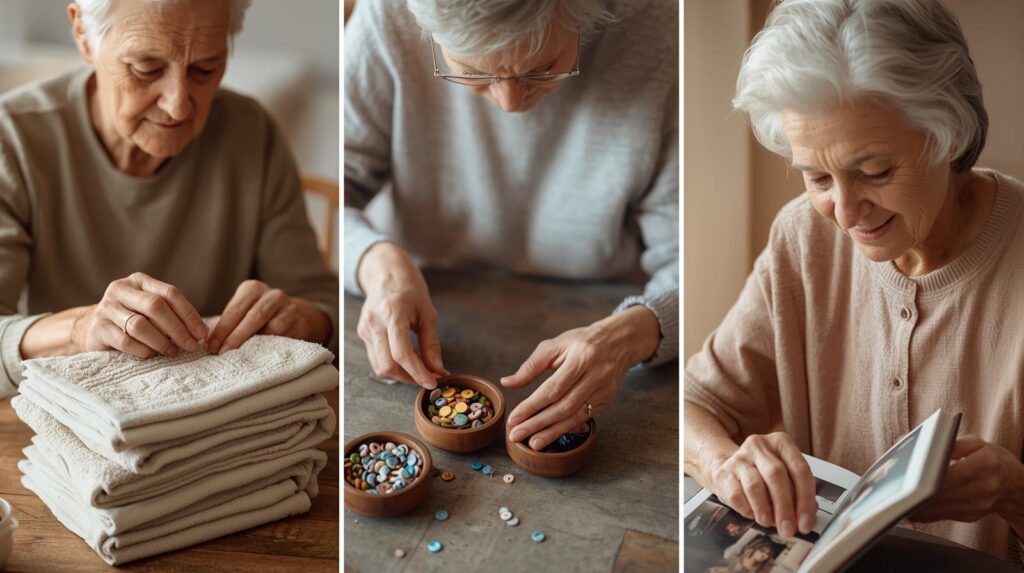
- Sorting and Organizing: Provide a large bin of assorted items to sort. This could be sorting mismatched buttons by color, sorting a deck of playing cards by suit, or sorting different types of large nuts and bolts into separate bins. The repetitive motion is highly soothing.
- Sensory Bins/Aprons: “Fidget aprons” or lap blankets (often called “muff boxes”) that have zippers, velcro, textured fabrics, and large beads sewn onto them provide wonderful tactile stimulation for restless hands.
- Working with Dough: Let them knead and roll out bread dough or play with soft, scented playdough. The resistance provides calming proprioceptive input to the joints.

Reminiscence Therapy (Tapping into the Past)
Dementia erodes short-term memory first. A senior may not remember what they ate for breakfast, but their memories of their 1950s childhood or their early career are often crystal clear.
- Photo Album Storytelling: Look through old family albums. Do not ask, “Do you remember who this is?” (which is a test). Instead, point to the picture and say, “Look at that beautiful classic car! Did you ever drive one like that?” Let them lead the story.
- Career-Related Tasks: If your father was an accountant, give him a stack of junk mail, some old receipts, and a calculator, and ask him to “help you organize the files.” If your mother was a secretary, give her a stack of paper to stamp or hole-punch. Tapping into their past identity provides immense pride.

The Power of “Helpful” Chores
Everyone wants to feel needed. When we do everything for our aging parents, we accidentally strip them of their sense of purpose.
Give them safe, simple household tasks to make them feel like a contributing member of the family.
- Folding Laundry: Hand them a basket of hand towels or socks. It doesn’t matter if they are folded perfectly; the act of contributing is what matters. If they fold them messy, simply refold them later when they aren’t looking.
- Kitchen Prep: Have them wash potatoes, snap the ends off green beans, or polish silverware.
- Sweeping: A lightweight broom is safe and allows them to feel productive.

Music and Art Therapy at Home
The areas of the brain that process music and art are often the last to be damaged by Alzheimer’s.
- The Magic of Music: Create a playlist of the popular songs from the era when they were 15 to 25 years old. The response is often miraculous. Seniors who are entirely non-verbal will suddenly start humming or tapping their feet to a favorite Frank Sinatra or Elvis Presley track.
- Fail-Free Art: Provide large, thick crayons or watercolors (avoid markers with small caps). Do not ask them to draw something specific (like a house); simply ask them to fill the paper with their favorite colors. Adult coloring books with large, simple patterns are also excellent.

How Shal we Caregivers Structure the Day
Creating and leading these activities takes time and energy that busy family caregivers often do not have.
At Shal We Home Care, serving Lee, Collier, and Hendry counties, our caregivers don’t just “babysit.” We act as activity coordinators.
- During our initial assessment, we take a deep dive into your loved one’s life history, their former career, and their hobbies.
- We design a daily schedule packed with structured, fail-free activities tailored specifically to their past.
- We ensure their brains are stimulated and their hands are busy, resulting in happier days, fewer behavioral outbursts, and better sleep at night.
Key Takeaways
- Avoid Tests: Never use activities that rely on short-term memory or complex logic. Make them “fail-free.”
- Focus on the Senses: Repetitive tactile tasks, like sorting buttons or folding towels, are incredibly soothing for a damaged brain.
- Utilize the Past: Lean into long-term memories by looking at old photos or simulating tasks from their past careers.
- Give Them Purpose: Allow them to “help” with simple household chores to boost their self-esteem and dignity.
- Use Music: Play music from their youth to bypass cognitive damage and spark joy instantly.
Is your loved one sitting in front of the TV all day?
Bring joy and purpose back into their life. Contact Shal We Home Care today to learn how our customized, engaging companion care can transform your loved one’s daily routine in Southwest Florida