

Entrusting a stranger with your loved one’s care is a big decision. Here are the essential questions to ask a home care agency to ensure safety, quality, and reliability.
Making the decision to hire home care is a huge relief you know help is on the way. But then the next worry sets in: Who can I trust?
In Florida, the senior care market is flooded with options. There are national franchises, local boutique agencies, registries, and independent hires found on social media. It can be overwhelming to sift through the marketing and find the truth.
Entrusting a stranger with your parent’s safety, privacy, and dignity is a massive leap of faith. You are essentially giving someone the code to your front door and asking them to care for the most important person in your life. At Shal We Home Care, serving Lee, Collier, and Hendry counties, we believe that transparency is the foundation of trust.
To help you make an informed decision, here is a comprehensive guide to the essential questions you must ask, the red flags to avoid, and how to evaluate if an agency is truly “The One.”
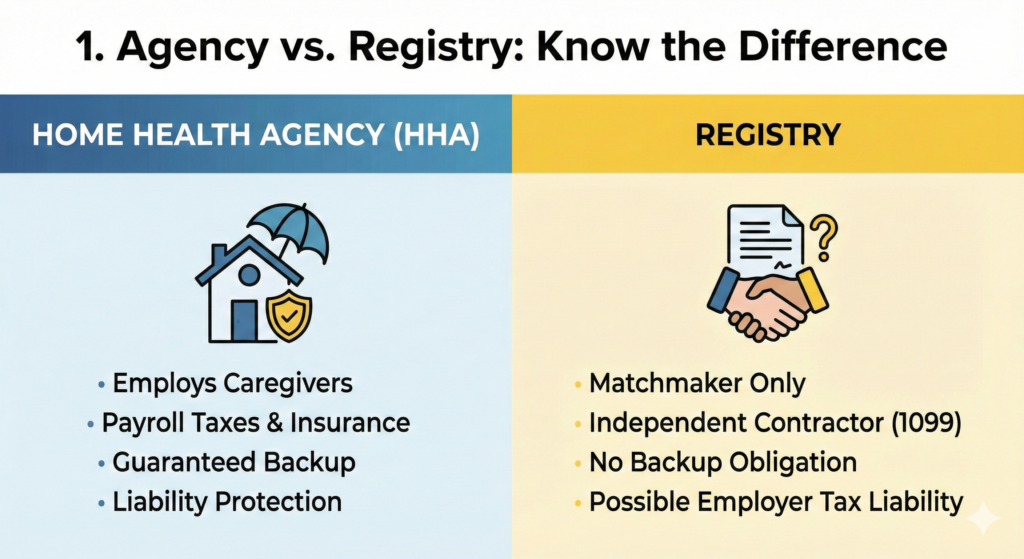
1. “Are you a licensed Home Health Agency (HHA) or a Registry?”
This is the most critical question in Florida, yet few families know to ask it. The difference affects your liability and the quality of care.
- The Agency (Shal We Home Care): We employ our caregivers. We handle the payroll taxes, workers’ compensation insurance, scheduling, and supervision. We provide training and oversight. If a caregiver is sick, it is our responsibility to send a qualified replacement.
- The Registry: They act strictly as a matchmaker. The caregiver is an independent contractor (1099). You may become the employer of record, meaning you could be responsible for payroll taxes. If the caregiver doesn’t show up, the registry often has no obligation to find a replacement.
- Why it matters: Hiring through a full-service agency protects you from legal liability, tax headaches, and sudden gaps in care.
2. “How do you vet and screen your caregivers?”
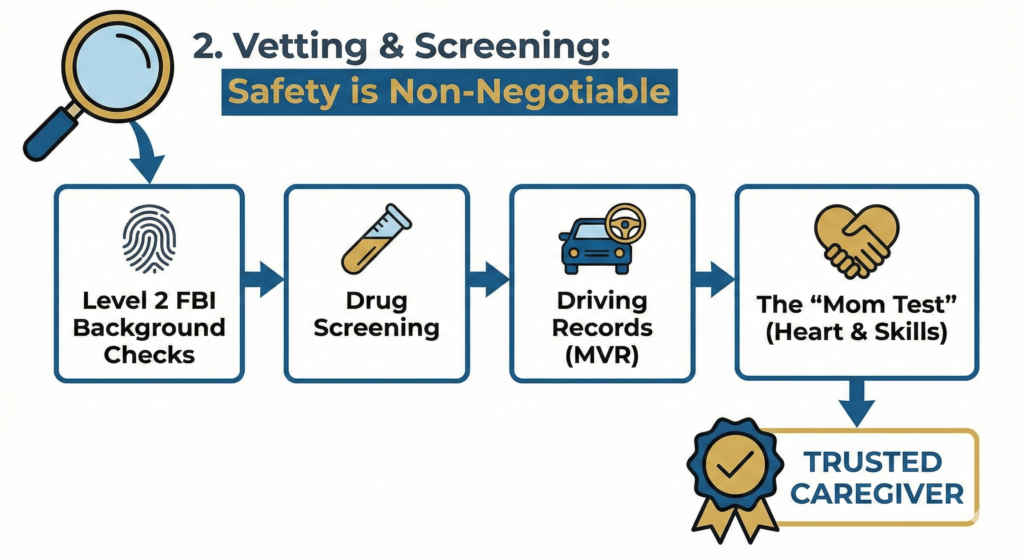
Safety is non-negotiable. You need to know exactly who is walking into your home. Don’t settle for a simple “yes, we screen them.” Ask for specifics.
- What to look for:
- Level 2 FBI Background Checks: This is the gold standard in Florida, fingerprinting applicants against national databases.
- Drug Screening: Ask if this is standard policy for new hires and if they do random testing.
- Driving Records (MVR): Critical if they will be driving your loved one to appointments or grocery shopping.
- Reference Checks: Does the agency actually call past employers to verify reliability and temperament?
- The “Mom Test”: At Shalwe, we look for “heart” as much as “skills.” We ask ourselves regarding every applicant: Would I let this person care for my own mother? If the answer is no, they don’t get hired.
3. “Are you insured and bonded?”
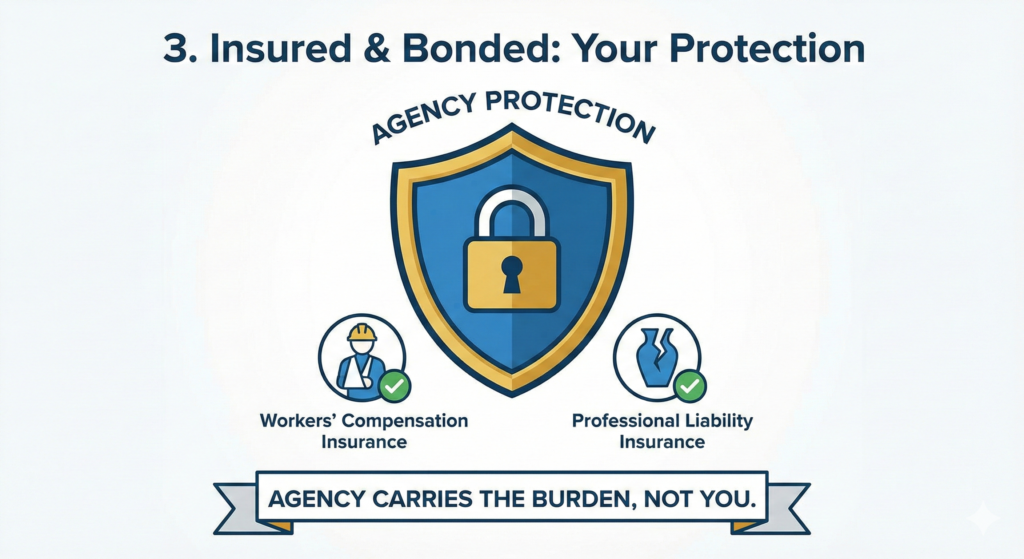
Accidents happen, even with the best professionals. A caregiver could accidentally break an expensive heirloom, or worse, they could slip and get injured while lifting your loved one.
- The Question: “Do you carry workers’ compensation and professional liability insurance?”
- Why it matters: If you hire privately or use a registry without insurance, you could be sued if a caregiver gets hurt in your home. Your homeowner’s insurance may not cover employees working on the premises. An agency like Shalwe carries the insurance burden so you don’t have to worry about lawsuits.
4. “How do you create the Personalized Care Plan?”
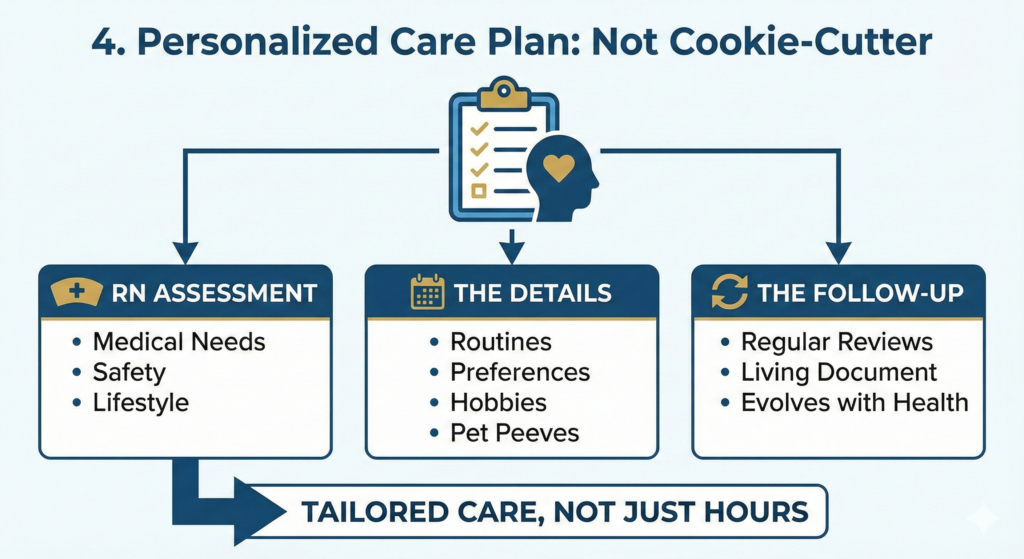
Avoid agencies that offer a “cookie-cutter” approach or simply ask, “What hours do you need?”
- The Assessment: A Registered Nurse or Care Coordinator should come to the home for a free assessment before service starts. They should ask about medical needs, but also about lifestyle.
- The Details: Do they document your loved one’s routines? Do they ask about dietary preferences, fears, hobbies, and pet peeves?
- The Follow-up: “How often is this plan reviewed?” A senior’s needs change. The plan should be a living document that evolves as your loved one’s health improves or declines.
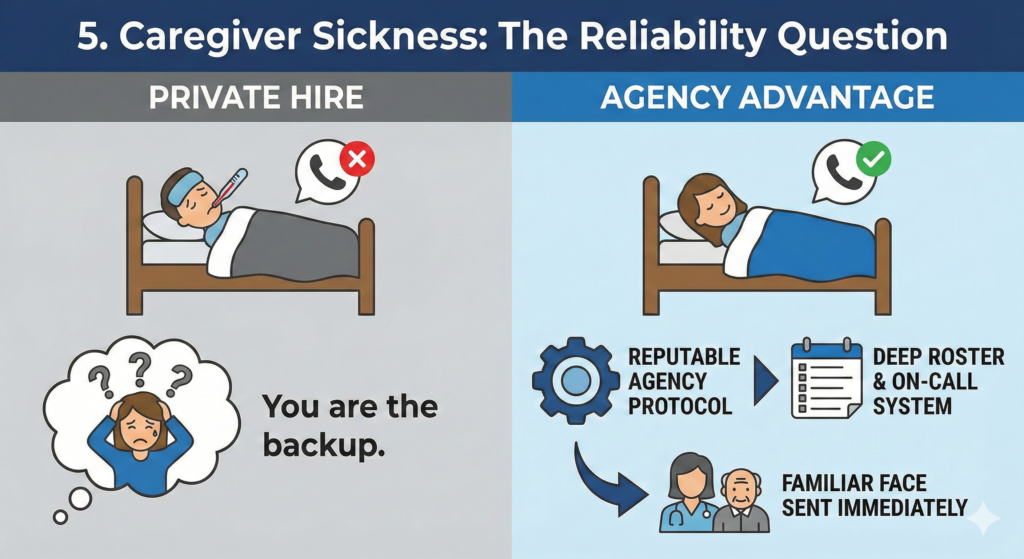
5. “What happens if the caregiver calls in sick?”
Reliability is the number one complaint families have with private caregivers. If your private hire gets the flu, you are the backup plan.
- The Agency Advantage: Ask about their backup protocol. A reputable agency has a deep roster of caregivers and an on-call system.
- The Process: Ask, “Will you call me immediately? Will you send a stranger, or will you try to send someone my mom has met before?” At Shalwe, we strive to introduce backup caregivers in advance whenever possible so there is always a familiar face.
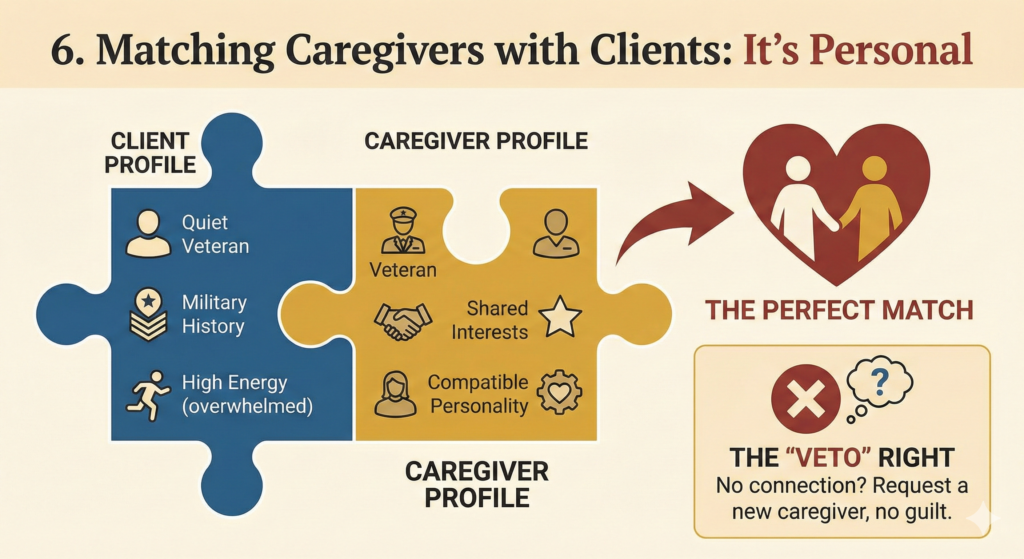
6. “How do you match caregivers with clients?”
It shouldn’t be random. Caregiving is an intimate relationship.
- The “Match”: Ask if they consider personality and interests. If your dad is a quiet veteran who loves military history, a loud, high-energy student might overwhelm him. A caregiver who is also a veteran might be a perfect match.
- The “Veto”: Ask, “If my mother doesn’t click with the caregiver, can we request a new one?” The answer should always be yes, without hesitation or guilt.
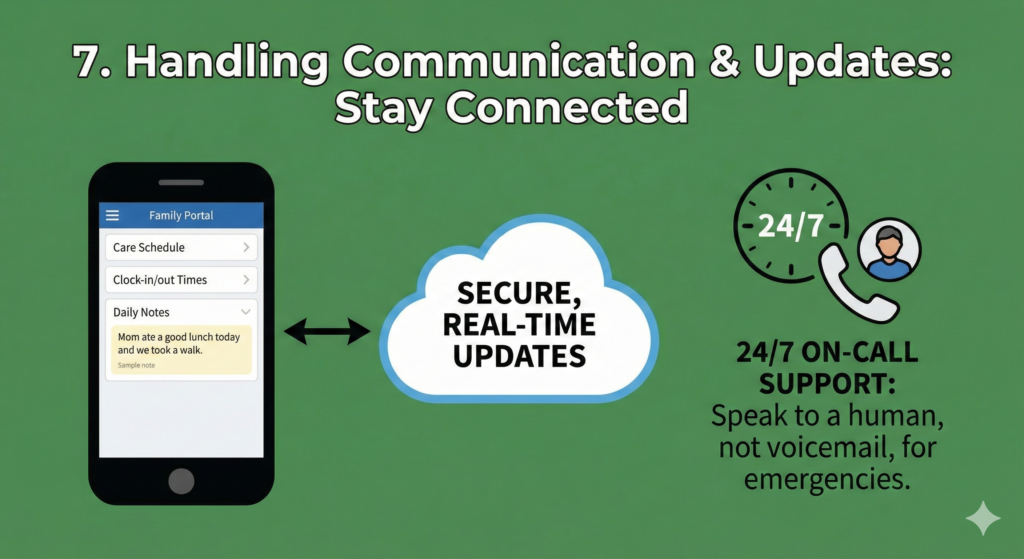
7. “How do you handle communication and updates?”
You don’t want to be in the dark, wondering if the caregiver arrived or if Mom ate lunch.
- Family Portals: Does the agency use technology? Many modern agencies have secure apps where family members can see the care schedule, see clock-in/clock-out times, and read daily notes from the caregiver (e.g., “Mom ate a good lunch today and we took a walk”).
- Access: Can you reach a human being after 5:00 PM on a Friday? Emergencies don’t stick to business hours. Ensure they have 24/7 on-call support.
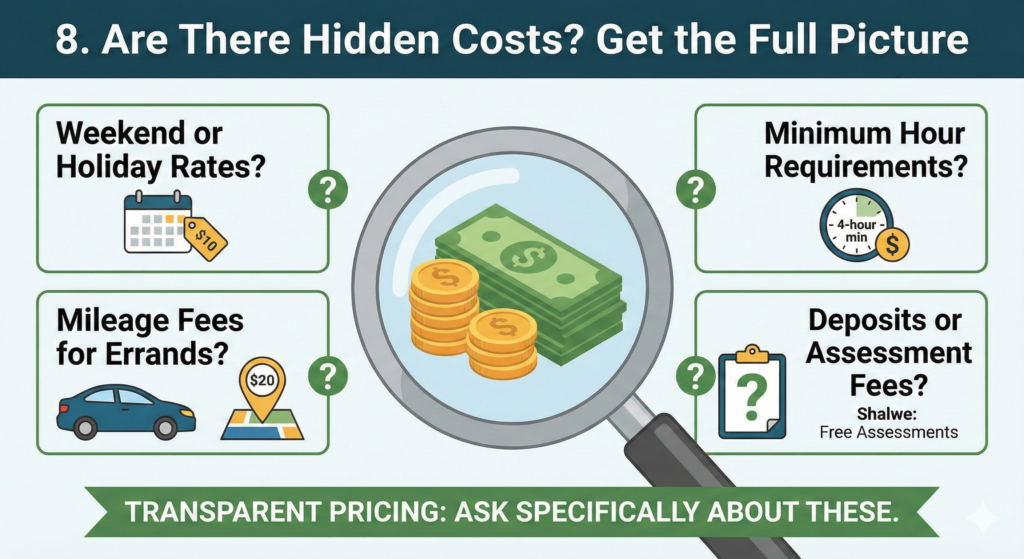
8. “Are there hidden costs?”
Budgeting for care is stressful enough without surprise fees on your invoice.
- Ask specifically about:
- Weekend or holiday rates: Is there a differential?
- Minimum hour requirements: “Do you require a 4-hour minimum per visit?” (This is common in the industry to ensure caregivers earn a living wage).
- Mileage fees: If the caregiver drives their own car for errands, what is the per-mile cost?
- Deposits or Assessment fees: Shalwe offers free assessments, but some agencies charge for the initial visit.
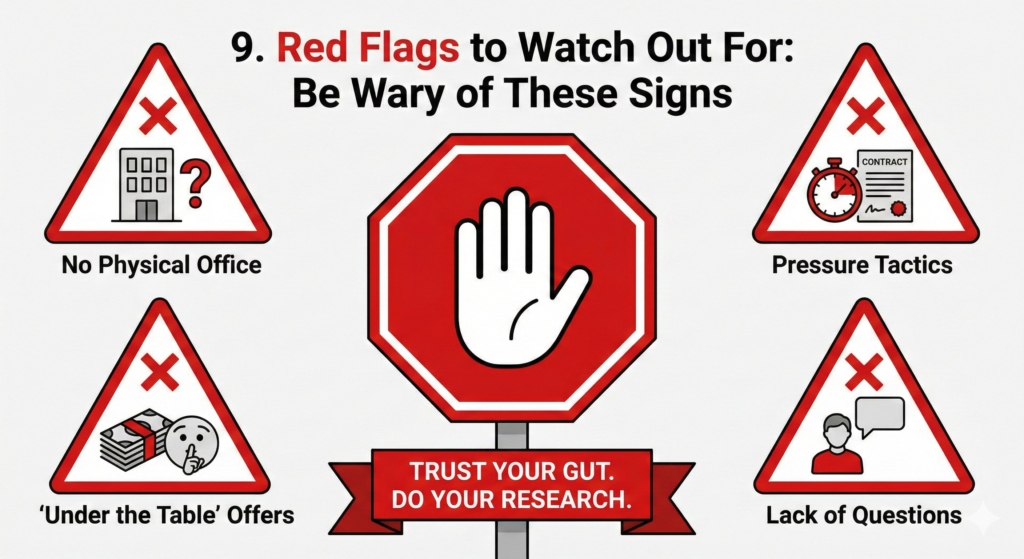
9. Red Flags to Watch Out For
During your research, be wary if you encounter any of the following:
- No Physical Office: While remote work is common, a reputable agency should have a local office you can visit in Lee, Collier, or Hendry county.
- Pressure Tactics: If they try to force you to sign a long-term contract immediately. Home care should be flexible.
- “Under the Table” Offers: If they suggest paying in cash to avoid taxes, run. This is illegal and leaves you completely unprotected.
- Lack of Questions: If they don’t ask detailed questions about your loved one’s health and safety, they are likely just looking to fill a shift, not provide care.
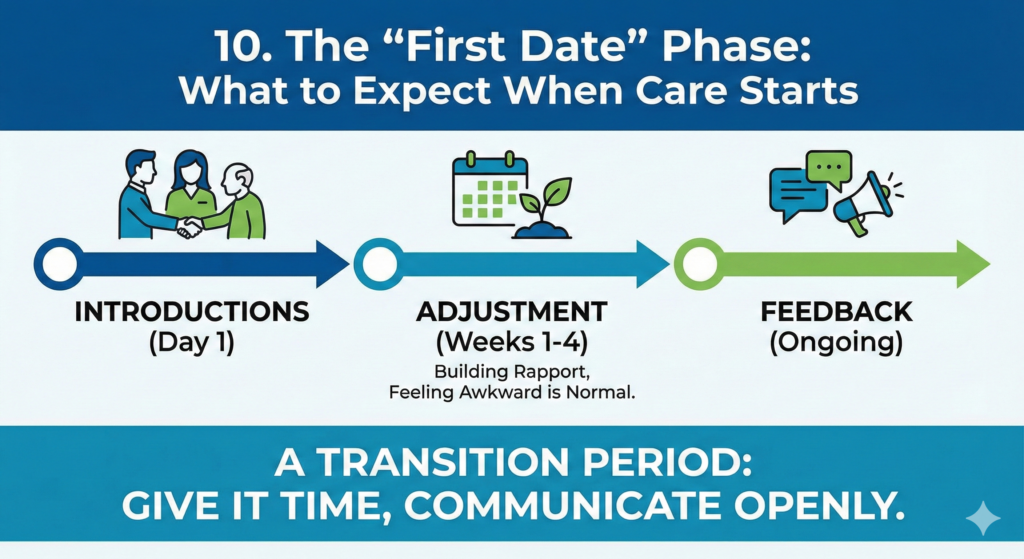
10. The “First Date” Phase: What to Expect When Care Starts
Once you choose an agency, the first few weeks are a transition period.
- Introductions: Ideally, a supervisor should introduce the caregiver on the first day to break the ice.
- Adjustment: It is normal for your loved one to feel awkward at first. Give it time (usually 3-4 visits) for a rapport to build.
- Feedback: Keep the lines of communication open. If the caregiver is doing great, tell the agency! If something small bothers you (e.g., “She put the dishes away in the wrong spot”), mention it early so it can be corrected gently.
Conclusion: Trust Your Gut
Finally, pay attention to how they make you feel during the initial call. Are they patient? Do they listen more than they talk? Do they seem genuinely interested in solving your problem, or just selling hours?
At Shal We Home Care, we invite these questions because we are proud of our answers. We operate with the highest standards of integrity because we know that we are caring for the most important people in the world: your family.
Ready to get answers?
Contact Shal We Home Care today for a free consultation. We are happy to sit down with you, answer every question on this list, and show you why families in Southwest Florida trust us with their loved ones.
