

Hiring a caregiver isn’t “handing over” your loved one. Discover how to stay involved, communicate effectively with the agency, and build a care partnership that benefits the whole family.
One of the biggest misconceptions about hiring home care is the idea of “handing over the keys.” Families often worry that bringing in a professional caregiver means they are stepping out of the picture, or that they will lose control over their loved one’s well-being.
At Shal we Home Care, we believe the opposite is true. Home care works best when it is a partnership.
We aren’t here to replace the family; we are here to extend your reach. Whether you live ten minutes away in Fort Myers or ten hours away in another state, staying involved is crucial for the success of the care plan. Your insights, history, and love are the foundation upon which we build our care.
Here is a guide on how to stay connected, involved, and effective as a family member once home care services begin.
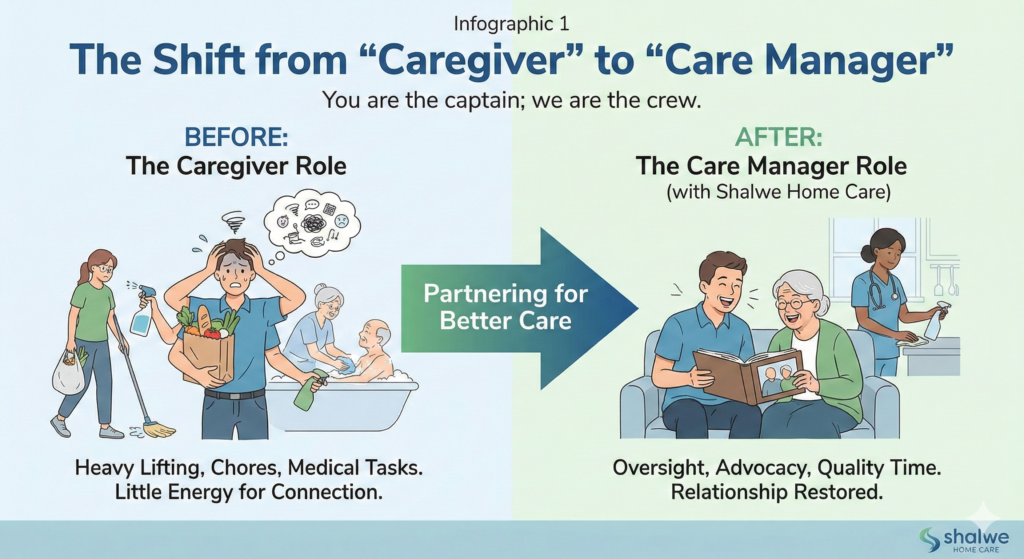
1. The Shift from “Caregiver” to “Care Manager”
Before hiring help, you were likely doing the heavy lifting: the bathing, the cleaning, the driving. This often leaves little energy for simply being a son or daughter.
When Shal We Home Care in, your role shifts. You become the Care Manager. You are still the captain of the ship; we are the crew sailing it.
- The Benefit: Instead of spending your visit doing laundry and arguing about medication, you can spend it playing cards, looking at photos, or just talking. You get your relationship back.
2. Effective Communication with the Agency
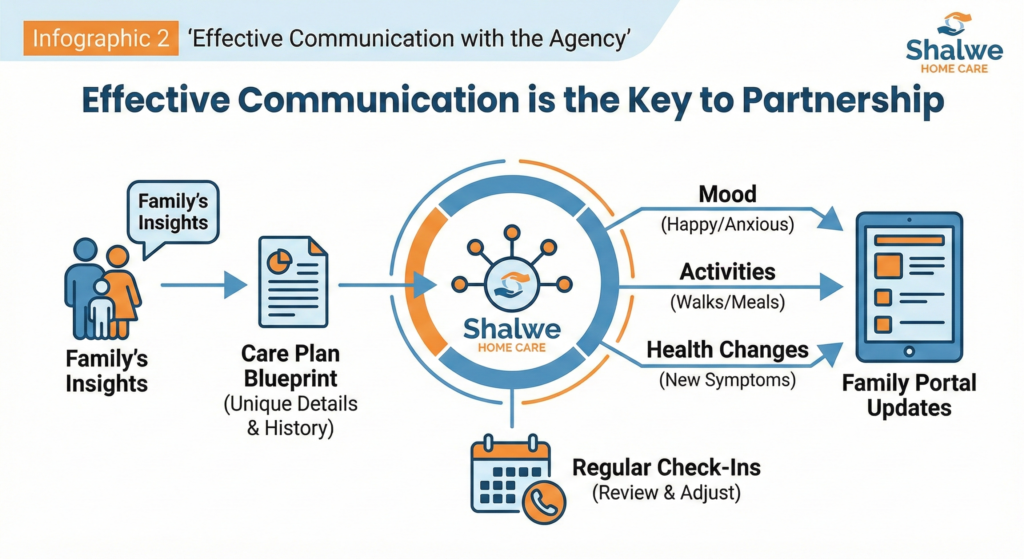
The key to a successful partnership is open, honest communication.
- The Care Plan is Your Blueprint: Be heavily involved in the initial assessment. Share the small details that only you know. “Dad gets grumpy if he doesn’t have his coffee by 8:00 AM” or “Mom is afraid of thunderstorms.” These details help our caregivers connect faster.
- Utilize Technology: Ask about our family portal or communication logs. We can provide updates on:
- Mood: Was your loved one happy today? Anxious?
- Activities: Did they go for a walk? Did they eat all their lunch?
- Health Changes: Did the caregiver notice a new bruise or a cough?
- Regular Check-Ins: Schedule a monthly or quarterly call with the agency supervisor to review the care plan. Are the hours still sufficient? Has the senior’s health changed?
3. Building a Relationship with the Caregiver
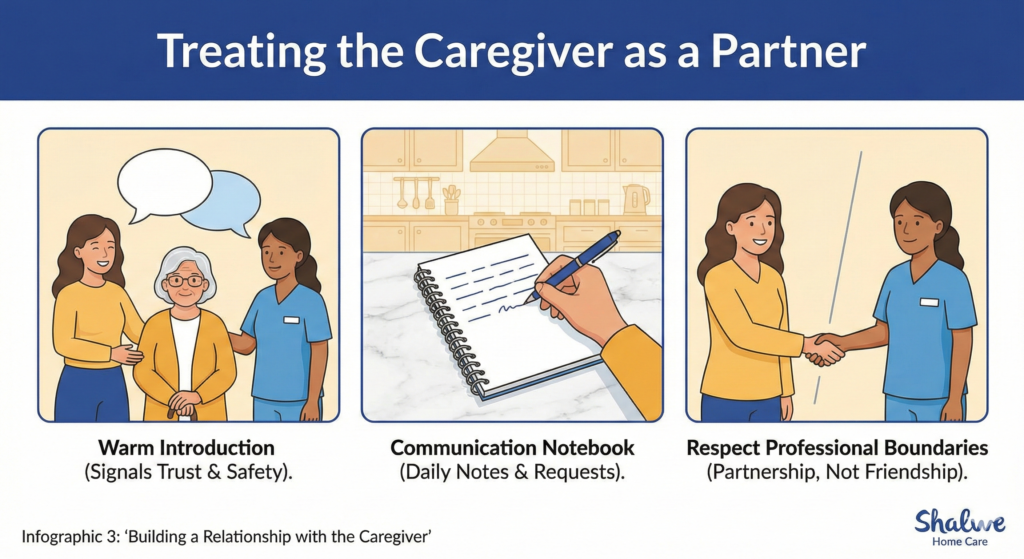
Treating the caregiver as a partner rather than just “staff” fosters a better environment for your loved one.
- The Introduction: If possible, be present for the first visit. Introduce the caregiver to your parent warmly. Your acceptance signals to your parent that this person is safe and trusted.
- Communication Notebook: If you live locally, keep a notebook on the kitchen counter. The caregiver can write notes about the day, and you can leave requests or updates (e.g., “Please make sure Mom wears her blue sweater for the appointment tomorrow”).
- Respect Boundaries: While it’s great to be friendly, remember that the caregiver is a professional with a job to do. Avoid putting them in the middle of family disagreements.
4. Managing Long-Distance Caregiving
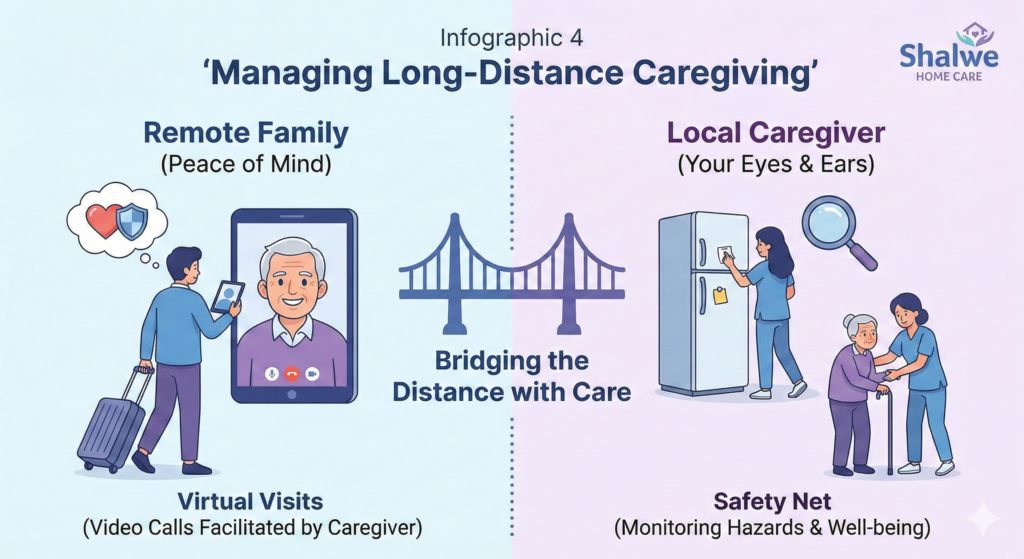
For families living outside of Lee, Collier, or Hendry counties, the guilt of not being there can be overwhelming. Home care is your eyes and ears on the ground.
- Video Calls: Ask the caregiver to facilitate a FaceTime or Zoom call during their shift. This allows you to “visit” while the caregiver is there to handle the technology.
- Safety Net: Knowing that a trained professional is checking the fridge for expired food, looking for fall hazards, and monitoring weight changes provides immense peace of mind.
- Surprise Visits (Virtual): You don’t always have to call. Knowing someone is there allows you to relax, but don’t hesitate to call the agency just to ask, “How is it going today?”
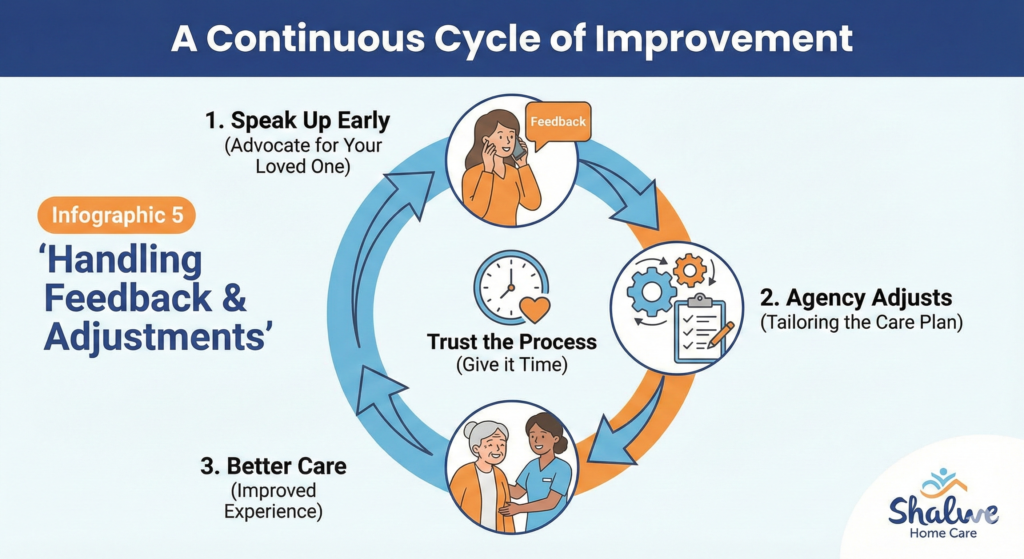
5. Handling Feedback and Adjustments
No relationship is perfect from day one. There is often an adjustment period.
- Speak Up Early: If something isn’t working, tell the agency immediately. You aren’t being “difficult”; you are advocating for your loved one.
- Example: “The caregiver is wonderful, but she talks a bit too fast for Dad’s hearing aids. Can you ask her to slow down?”
- Trust the Process: Conversely, give the relationship time to gel. It can take a few visits for a senior to let their guard down and accept the help.
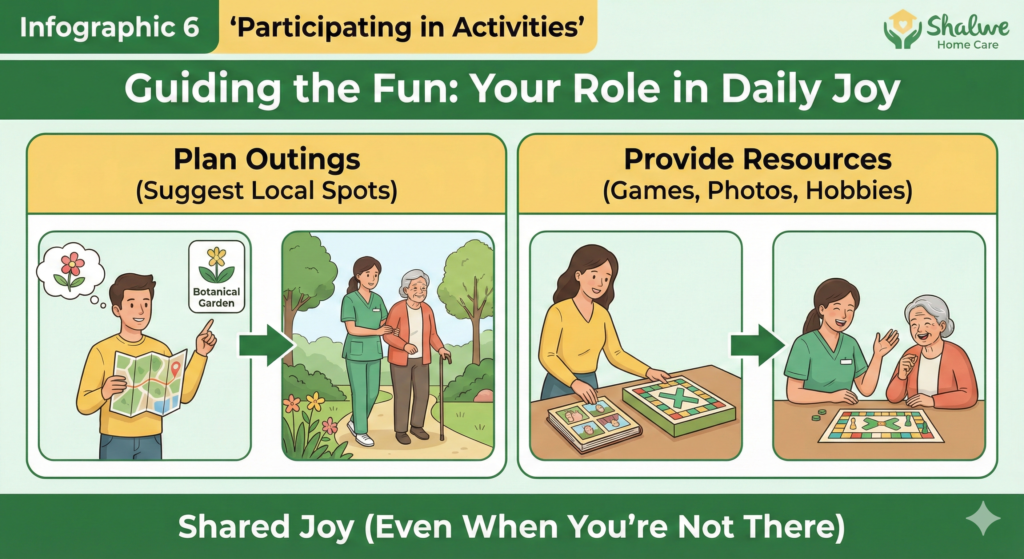
6. Participating in Activities
You can still be part of the daily fun even if you aren’t doing the work.
- Plan Outings: Tell the caregiver, “I’d love for you to take Mom to the botanical gardens this week.”
- Provide Resources: Leave out a favorite board game or a new photo album for the caregiver to use with your loved one. This guides the interaction in a way that you know your parent will enjoy.
Conclusion
You are the expert on your loved one. We are the experts on care. When we combine those strengths, we create a safety net that allows your parent to thrive.
Ready to build a partnership?
Contact Shal we Home Care today. Let’s discuss how we can work with you to provide the best possible life for your aging loved one in Southwest Florida.
