
Navigating VA Benefits: How Veterans in Florida Can Pay for Home Care
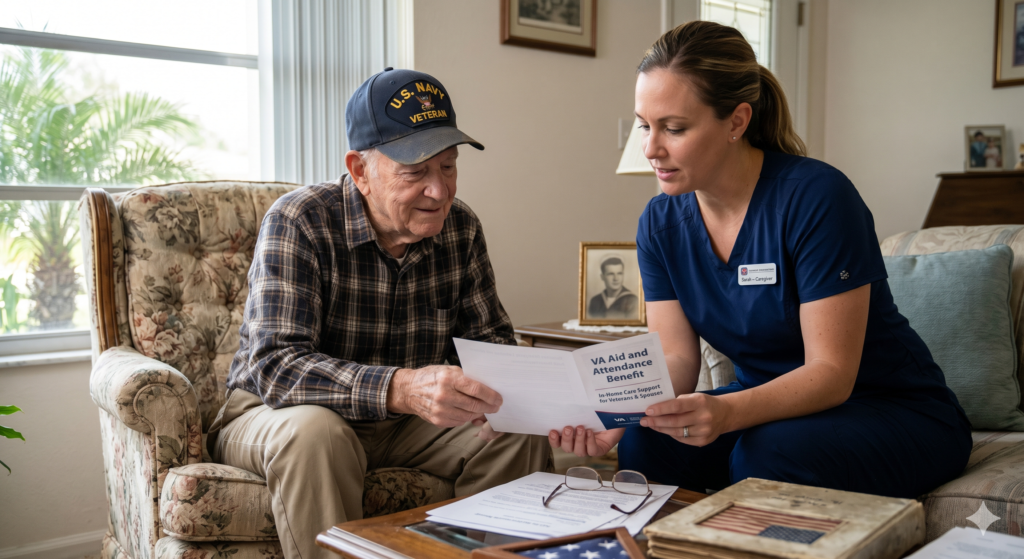
Did you or your spouse serve in the military? Discover how Florida veterans can use the VA Aid and Attendance benefit to pay for in-home care services. Veterans and their surviving spouses in Florida can often pay for non-medical in-home care using the VA Aid and Attendance (A&A) Pension benefit. This tax-free monthly stipend is […]
Decluttering a Senior’s Home for Safety (Without Causing Emotional Distress)
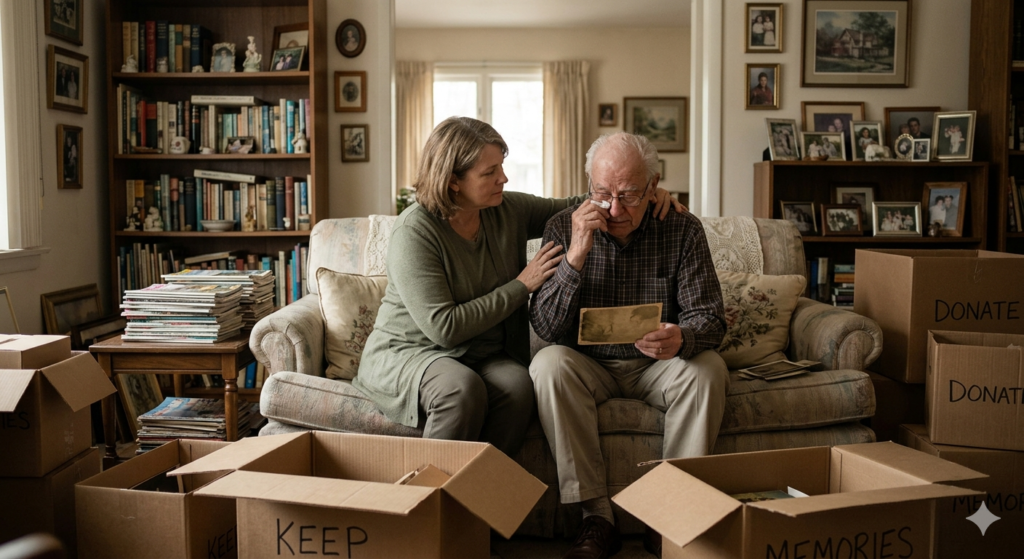
Decluttering a senior’s home is critical to prevent tripping hazards, but throwing away possessions can cause severe emotional distress. To declutter successfully, do not use the word “throw away.” Instead, use the “Keep, Donate, Gift” method, focus purely on clearing main walking pathways first, involve the senior in all decisions, and frame the process as […]
Gardening for Florida Seniors: Safe Ways to Enjoy the Outdoors Without Overexertion
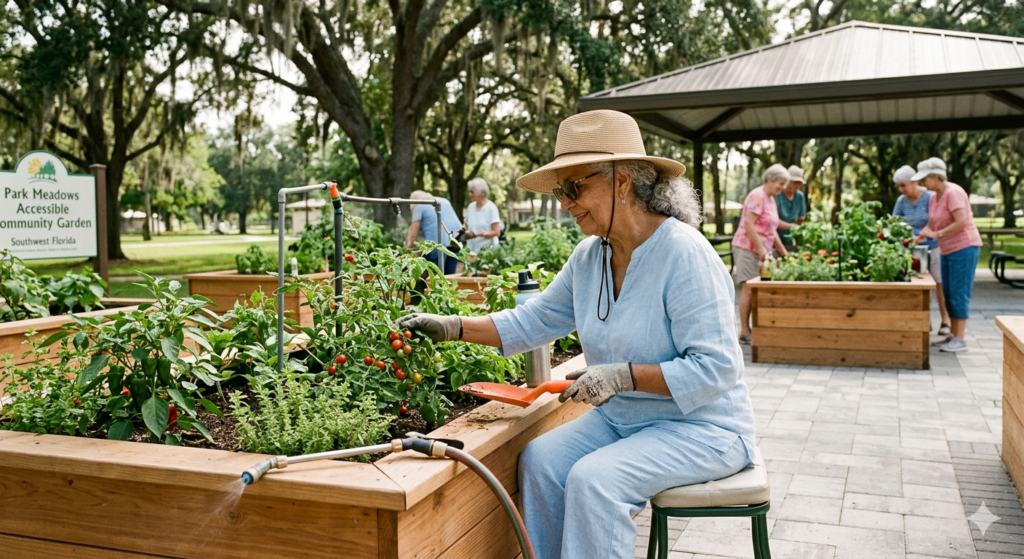
To safely enjoy gardening, Florida seniors should switch to raised garden beds or container gardening to eliminate painful bending and kneeling. To prevent heat exhaustion, gardening must be limited to the early morning hours (before 10 AM), hydration should be prioritized, and seniors should use ergonomic, lightweight tools designed for arthritis to protect their join […]
Best Senior-Friendly, Accessible Parks and Outings in Lee and Collier Counties
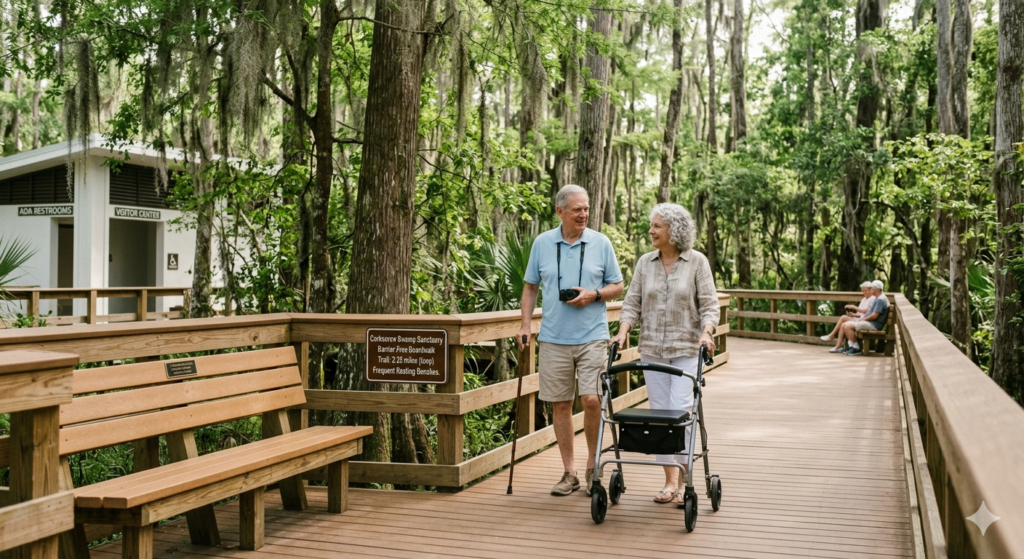
The best senior-friendly outings in Southwest Florida offer paved walkways, abundant shade, ADA-compliant restrooms, and frequent resting benches. Top accessible locations include Lakes Regional Park (Fort Myers), the Naples Botanical Garden, the Corkscrew Swamp Sanctuary boardwalk, and the JN “Ding” Darling Wildlife Refuge, which can be enjoyed safely from a vehicle. When mobility declines, a […]
Navigating Southwest Florida’s Healthcare System with an In-Home Caregiver
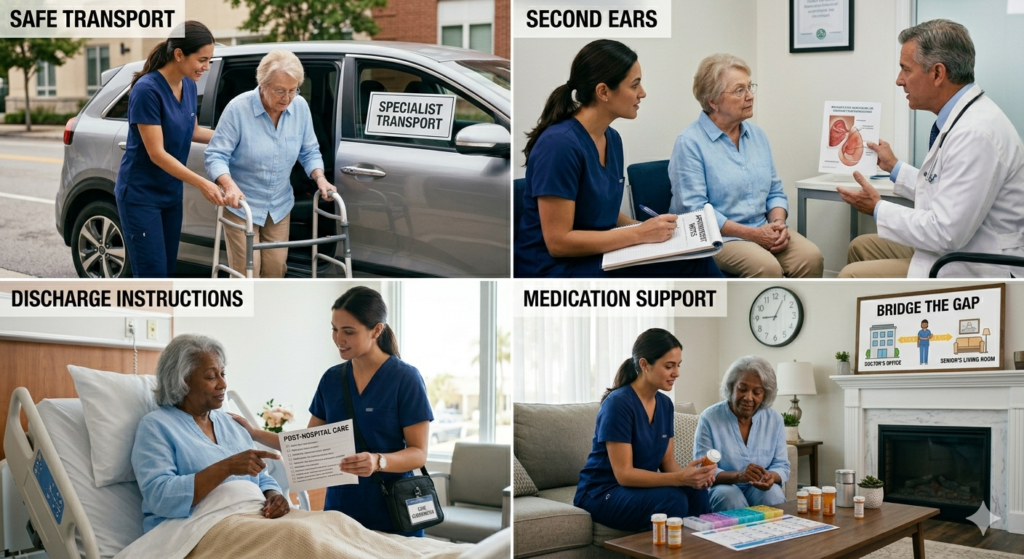
Navigating the complex healthcare system requires organization and advocacy. An in-home caregiver assists seniors by providing safe transportation to specialists, acting as a “second set of ears” to take detailed notes during appointments, ensuring post-hospital discharge instructions are followed precisely at home, and managing complex medication schedules, ultimately bridging the gap between the doctor’s office […]
Heat Exhaustion in Seniors: Safety Tips for Florida’s Hottest Months

Seniors are highly vulnerable to heat exhaustion because aging diminishes the body’s ability to sweat and regulate temperature, while common medications (like diuretics) increase dehydration risks. To prevent heat exhaustion in Florida, seniors must stay in air-conditioned environments during peak sun hours (10 AM to 4 PM), drink water consistently before feeling thirsty, wear loose, […]
How to Communicate with a Parent Who Has Dementia: 7 Compassionate Strategies
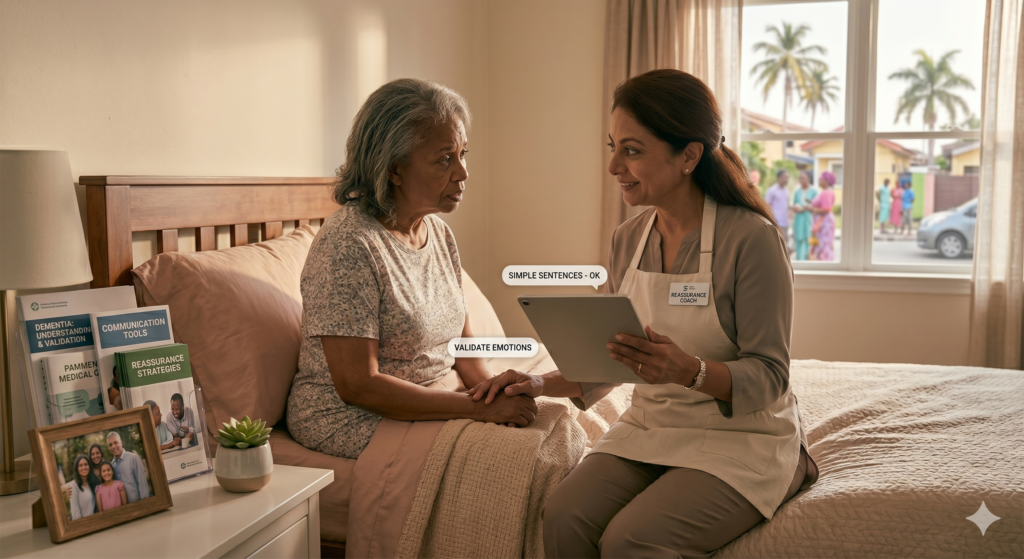
To effectively communicate with a parent who has dementia, you must avoid arguing or correcting their reality. Instead, use simple, short sentences, maintain reassuring eye contact, and practice “Validation Therapy” by acknowledging the emotions behind their words. Avoid asking open-ended questions that rely on short-term memory, and redirect their attention with a calm, positive tone […]
The Hidden Financial Costs of Family Caregiving (And How Home Care Can Save Money)

Family caregiving is rarely free. The hidden financial costs include thousands of dollars in annual out-of-pocket expenses (groceries, medical supplies, gas), lost wages from reducing hours or quitting a job, missed career promotions, and decreased Social Security contributions. Ironically, hiring a professional home care agency often protects a family’s overall financial health by allowing adult […]
Live-in Care vs. Hourly Home Care: Which is Best for Your Aging Parent?
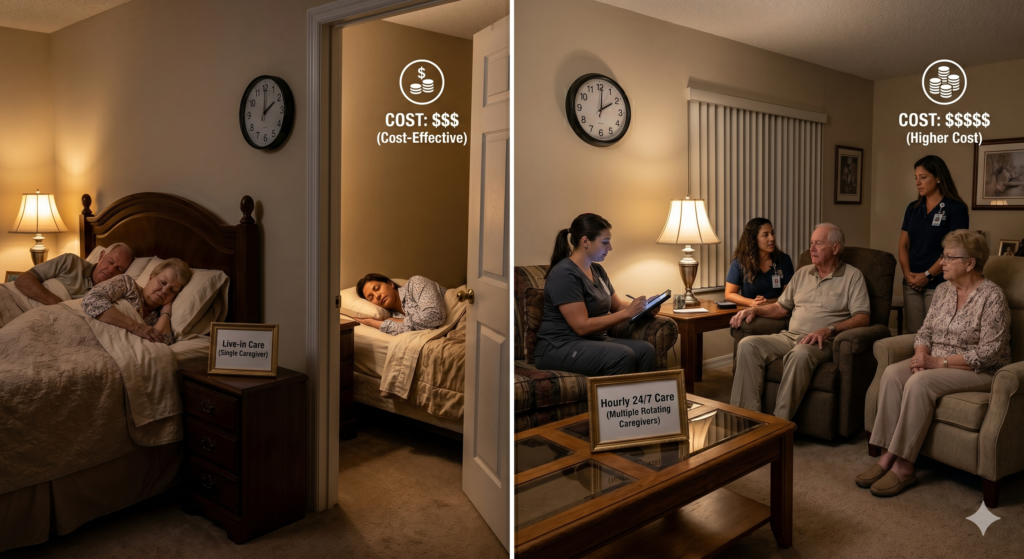
The main difference between live-in care and hourly 24/7 care is sleep and cost. Live-in care provides a single caregiver who stays in the home for several days but requires an 8-hour sleep break and a private bedroom, making it more cost-effective. Hourly 24-hour care utilizes multiple rotating caregivers who remain awake around the clock, […]
Will Medicare or Medicaid Pay for Non-Medical Home Care in Florida?
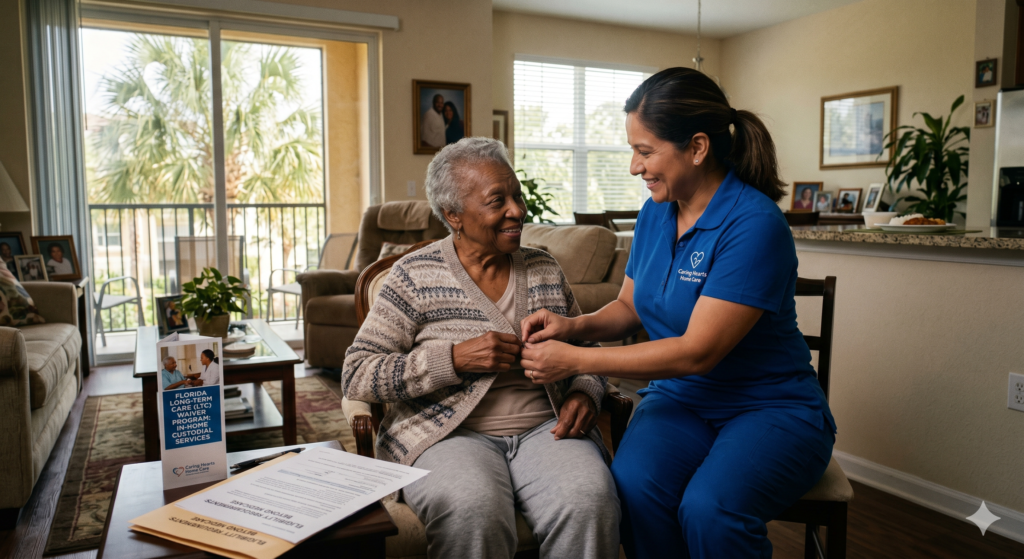
Traditional Medicare generally does NOT pay for non-medical in-home care (custodial care) such as assistance with bathing, dressing, or meal preparation. Medicare only covers short-term, doctor-prescribed skilled nursing or therapy. However, Florida’s Medicaid Long-Term Care (LTC) Waiver program can cover these non-medical services for seniors who meet strict financial and medical eligibility requirements. The Great […]