
Caring for a senior with diabetes requires constant vigilance. Learn how to manage blood sugar, prevent dangerous diabetic foot ulcers, and plan safe meals in Florida.
Managing senior diabetes at home requires a strict focus on stable nutrition, consistent medication reminders, and daily physical monitoring to prevent complications. Because aging can dull the classic symptoms of hypoglycemia (low blood sugar), caregivers must monitor for sudden confusion, dizziness, or lethargy. Furthermore, daily foot inspections are mandatory to prevent diabetic ulcers caused by neuropathy. Utilizing a professional in-home caregiver ensures that diabetic-friendly meals are prepared and dangerous blood sugar crashes are prevented.
Diabetes is one of the most common chronic health conditions among older adults in the United States. While managing Type 2 Diabetes is a lifelong commitment for many, doing so becomes exponentially more difficult when a senior begins to experience the natural cognitive and physical declines of aging.
A 50-year-old with diabetes might easily track their blood sugar, plan low-carb meals, and exercise daily. An 80-year-old with arthritis, failing eyesight, and mild memory loss faces a much higher hurdle. They may struggle to read the numbers on an insulin syringe, forget whether they ate lunch, or be physically unable to inspect the bottoms of their feet for sores.
For families in Southwest Florida, taking over the management of a parent’s diabetes is a heavy responsibility. The margin for error is incredibly small. A missed meal or a skipped pill can quickly lead to an emergency room visit. Here is a comprehensive guide to managing senior diabetes safely at home.
In younger adults, a drop in blood sugar (hypoglycemia) triggers a clear physiological alarm: sweating, shaking, extreme hunger, and a rapid heartbeat.
In seniors, these alarm bells often fail to ring. As the body ages, it experiences “hypoglycemia unawareness.” The body does not release the adrenaline that causes the shaking and sweating. Instead, the first organ to feel the lack of glucose is the brain.
- The Red Flags: For an older adult, a blood sugar crash often looks exactly like a stroke or a sudden onset of severe dementia. They may become profoundly confused, slur their speech, become highly agitated, or simply stare blankly into space.
- The Action Plan: If a diabetic senior is suddenly acting “out of character” or seems unusually lethargic, do not assume they are just tired. Caregivers must immediately check their blood glucose levels or provide a fast-acting carbohydrate (like a half cup of orange juice or glucose tablets) to stabilize the brain.
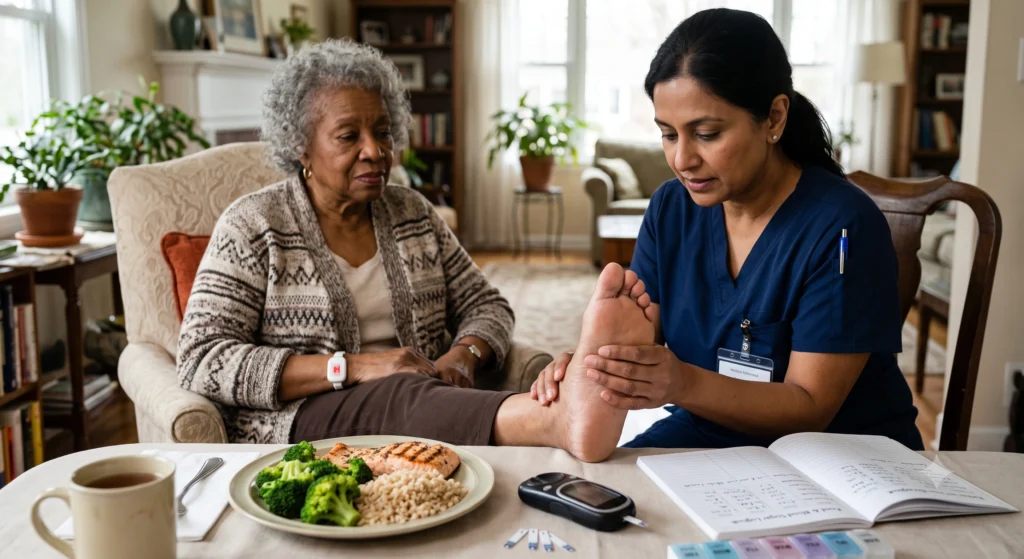
Diabetes causes peripheral neuropathy—nerve damage that numbs the extremities, particularly the feet. At the same time, it causes poor circulation, meaning wounds heal incredibly slowly.
This is a lethal combination. A senior could step on a sharp piece of glass or develop a severe blister from a tight shoe and feel absolutely zero pain. Because they don’t feel it, they don’t treat it. Within days, that small blister can turn into a massive, infected diabetic ulcer.
The Daily Foot Care Routine:
- Daily Visual Inspections: The bottom of the feet must be visually inspected every single night using a hand mirror (or by a caregiver). Look for red spots, cuts, or ingrown toenails.
- Wash and Dry Carefully: Wash feet daily in warm (never hot) water. Dry meticulously between the toes, as trapped moisture breeds fungal infections that can break the skin.
- Never Go Barefoot: A diabetic senior should never walk barefoot, even indoors on carpet. They should always wear supportive, hard-soled slippers or shoes to protect against stepping on unseen objects.
- Professional Nail Care: Never allow a senior (or an untrained family member) to cut thick, diabetic toenails with standard clippers. This must be done by a licensed podiatrist.
Many families mistakenly believe that diabetic nutrition simply means “no desserts.” In reality, managing senior diabetes is about maintaining a steady, consistent intake of complex carbohydrates and proteins to prevent spikes and crashes throughout the day.
- Consistent Meal Times: The timing of meals is just as important as the content. If a senior takes their medication at 8:00 AM but forgets to eat breakfast until 11:00 AM, their blood sugar will crash dangerously.
- The Plate Method: Aim for a balanced plate: 50% non-starchy vegetables (like broccoli or leafy greens), 25% lean protein (chicken, fish, tofu), and 25% complex carbohydrates (brown rice, sweet potatoes).
- Easy-to-Eat Proteins: For seniors with dental issues who struggle to chew meat, ensure they get protein through Greek yogurt, scrambled eggs, or protein-fortified smoothies to keep blood sugar stable.
Failing eyesight and memory loss make managing diabetic medication highly dangerous.
- Insulin Pens vs. Syringes: If your loved one is still drawing insulin from a vial with a syringe, ask their doctor to switch them to an insulin pen. Pens “click” for each unit, allowing seniors with poor vision to hear and feel the dosage, drastically reducing the risk of a fatal overdose.
- Continuous Glucose Monitors (CGMs): Devices like the Dexcom or Freestyle Libre attach to the arm and continuously send blood sugar readings to a smartphone. This eliminates painful finger pricks and allows adult children to monitor their parent’s blood sugar remotely from an app.
Living in Lee, Collier, or Hendry County presents a specific climate challenge for diabetics.
- Extreme heat causes blood vessels to dilate, which can increase the absorption of insulin, leading to sudden low blood sugar.
- Dehydration concentrates blood sugar, making it spike.
- Florida seniors must stay aggressively hydrated and avoid extended outdoor activities during the peak afternoon heat (10 AM to 4 PM). Furthermore, insulin and testing strips can be ruined if left in a hot car; they must be kept in temperature-controlled environments.
Managing a diabetic parent requires a level of strict, daily vigilance that is impossible for working adult children to maintain.
At Shal We Home Care, our professional caregivers provide the consistent, watchful eye your loved one needs.
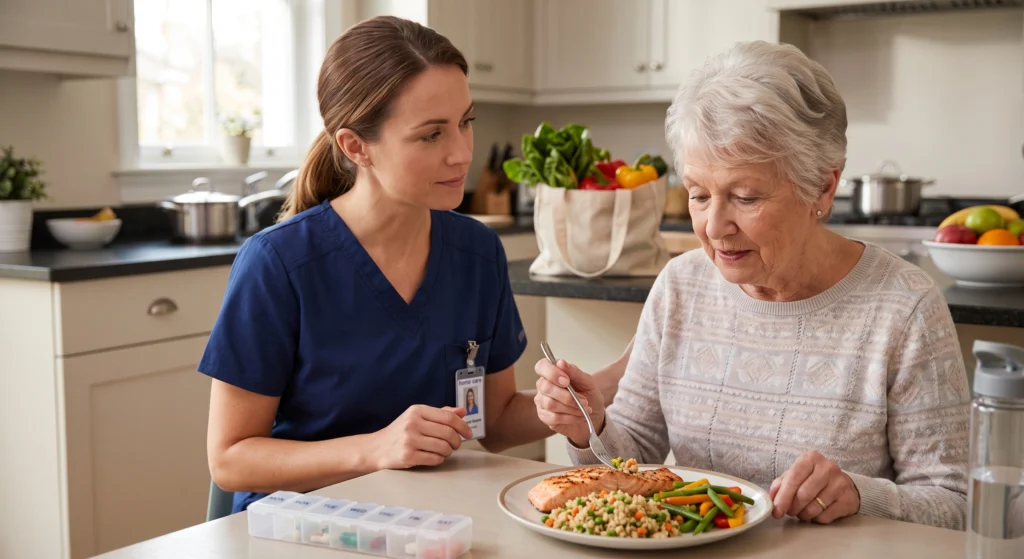
- Nutritional Support: We handle the grocery shopping and prepare delicious, diabetic-friendly meals, ensuring they are eaten on a strict schedule to coordinate with medications.
- Medication Reminders: We provide vital prompts to ensure oral medications are taken exactly as prescribed.
- Hygiene and Monitoring: During daily bathing routines, our caregivers visually inspect the feet and skin for any early signs of breakdown, alerting families and doctors before an infection sets in.
- Watch for Confusion: In seniors, a blood sugar crash often looks like sudden dementia or a stroke; it is a medical emergency.
- Inspect Feet Daily: Neuropathy prevents seniors from feeling cuts. Daily visual foot inspections are mandatory to prevent amputations.
- Timing is Everything: Meals must be eaten on a consistent schedule to match medication release times.
- Upgrade the Tech: Switch to clicking insulin pens and continuous glucose monitors (CGMs) to accommodate failing senior eyesight.
- Hire Daily Support: Utilize a professional home care agency to manage meal prep and medication reminders to prevent dangerous fluctuations.
Is managing your parent’s diabetes becoming overwhelming? You don’t have to carry the burden of constant vigilance alone. Contact Shal We Home Care today. Let our trained caregivers provide the safe, structured daily routine your loved one needs to thrive in Southwest Florida.