
Senior Fall Recovery: What to Do (and Mistakes to Avoid) When an Aging Parent Falls at Home
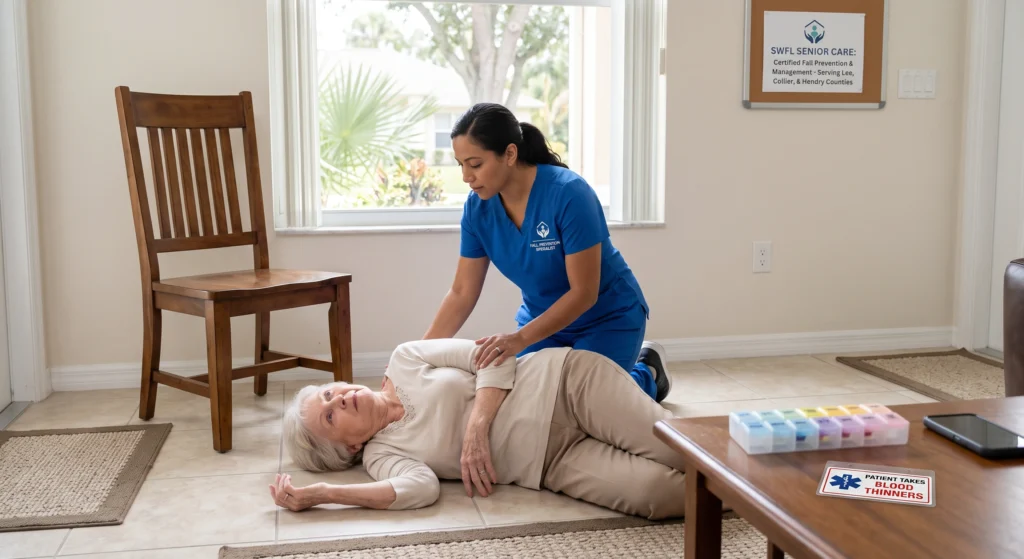
Did your elderly parent fall at home? Discover the exact steps to assess for injury, the dangers of lifting them incorrectly, and when to call 911 in Florida. When a senior falls at home, caregivers must suppress the instinct to immediately lift them, as moving an injured senior can cause lethal internal bleeding or worsen […]
Traveling with Autism: A Guide to Airports, Road Trips, and Hotel Safety
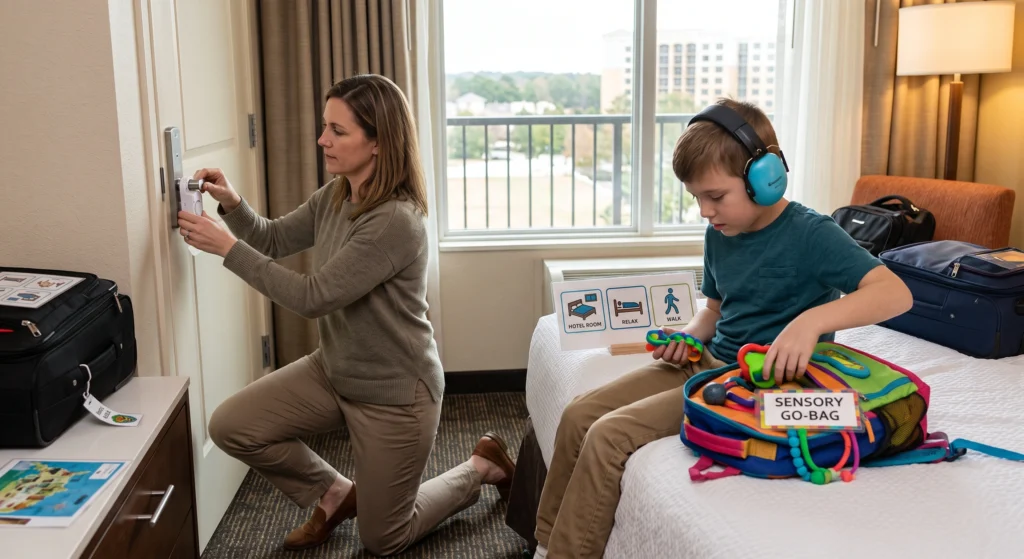
Family vacations shouldn’t be traumatic. Learn how to travel safely with an autistic child or adult, utilizing TSA Cares, visual schedules, and hotel elopement prevention. Traveling with an autistic child or adult requires extreme pre-planning to manage sensory overload and prevent wandering. For air travel, families should utilize the “TSA Cares” program for expedited, sensory-friendly […]
Refusing the Walker: How to Convince a Stubborn Senior to Use Mobility Aids
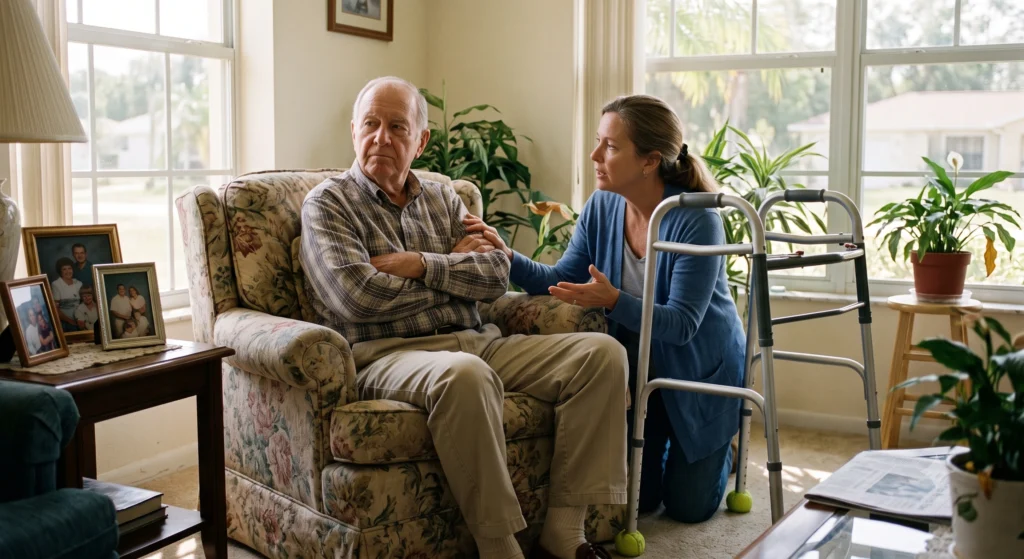
Does your aging parent refuse to use a walker or cane despite frequent falls? Learn the psychology of mobility resistance and actionable scripts to gain compliance. Seniors often refuse to use walkers, canes, or wheelchairs out of a deep psychological fear of appearing “old,” frail, or losing their independence. To convince a stubborn parent to […]
Special Needs and Dental Care: Overcoming Sensory Aversions to Oral Hygiene

Brushing teeth is often a daily sensory battle for individuals with autism. Learn clinical strategies to overcome oral aversions and how to find a sensory-friendly dentist in Florida. Dental care is a major challenge for individuals with autism due to severe oral sensory defensiveness, where the texture of bristles, the taste of mint toothpaste, or […]
Recognizing “Caregiver Brain Fog”: Why You Can’t Focus and How to Recover

Are you forgetting appointments or struggling to focus while caring for a parent? You may have “caregiver brain fog.” Learn the biological cause and actionable steps to recover. Caregiver brain fog” is a state of severe cognitive dysfunction, characterized by forgetfulness, inability to focus, and mental exhaustion, caused by chronic, prolonged stress and sleep deprivation. […]
Supporting the “Glass Child”: Balancing Attention for Neurotypical Siblings in a Special Needs Home

Siblings of children with severe autism often suffer in silence as “glass children.” Learn how to balance attention, validate their feelings, and use respite care to reconnect. Neurotypical siblings in special needs homes are often referred to as “glass children” because parents, overwhelmed by medical and behavioral crises, inadvertently look right through their needs. To […]
The Hardest Conversation: How to Transition an Aging Parent Away from Driving in Florida
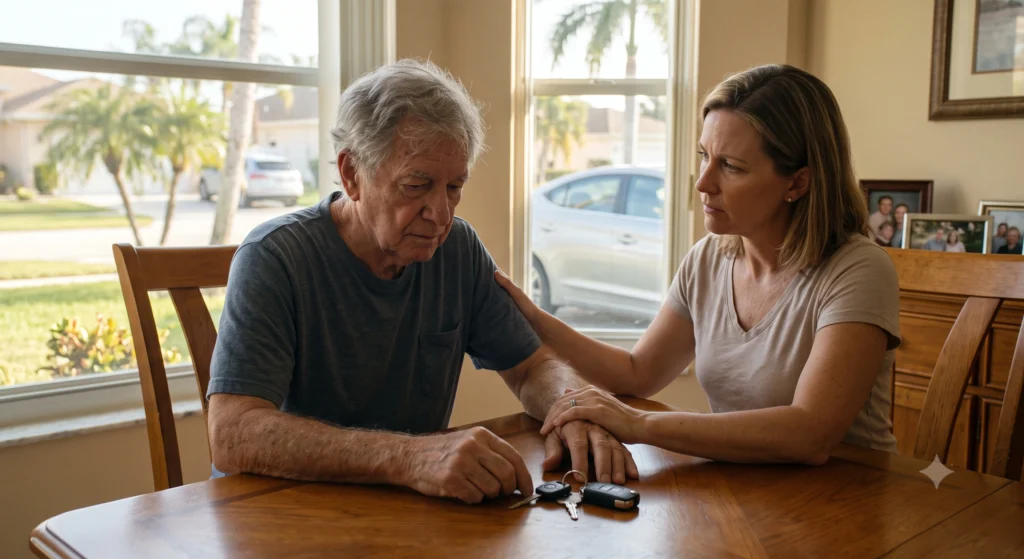
Taking the car keys away from an aging parent is a massive emotional hurdle. Learn the warning signs, how to have the conversation, and alternative SWFL transport. To safely transition a senior away from driving, families must first look for physical warning signs like unexplained dents, getting lost on familiar routes, or delayed reaction times. […]
Managing Senior Diabetes at Home: Diet, Foot Care, and Preventing Emergencies
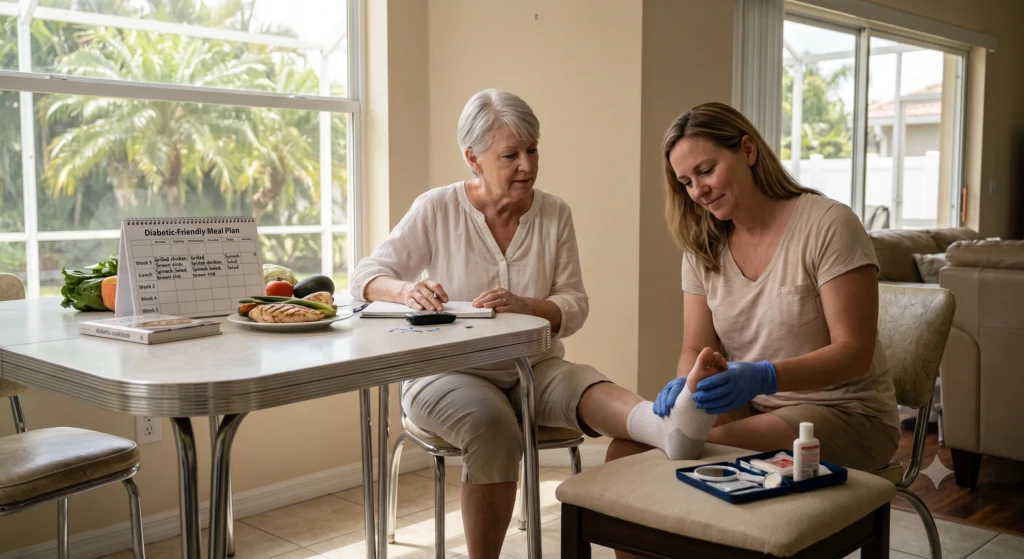
Caring for a senior with diabetes requires constant vigilance. Learn how to manage blood sugar, prevent dangerous diabetic foot ulcers, and plan safe meals in Florida. Managing senior diabetes at home requires a strict focus on stable nutrition, consistent medication reminders, and daily physical monitoring to prevent complications. Because aging can dull the classic symptoms […]
Sharing Caregiving Duties with Siblings (Without Destroying Your Family)

Caregiving often tears siblings apart due to unequal workloads. Learn how to hold family meetings, divide tasks by skill, and use home care to preserve family bonds. Sharing caregiving duties among siblings frequently causes resentment because the workload naturally falls on the sibling living closest to the aging parent. To prevent family conflict, siblings must […]
Lewy Body Dementia (LBD) Home Care: Managing Hallucinations and Motor Symptoms

Lewy body dementia is vastly different from Alzheimer’s. Learn how to manage the vivid hallucinations, Parkinson-like motor stiffness, and sleep disorders safely at home. Lewy Body Dementia (LBD) requires a specialized home care approach because it combines the cognitive decline of Alzheimer’s with the physical rigidity of Parkinson’s disease, alongside vivid visual hallucinations and fluctuating […]