
Taking the car keys away from an aging parent is a massive emotional hurdle. Learn the warning signs, how to have the conversation, and alternative SWFL transport.
To safely transition a senior away from driving, families must first look for physical warning signs like unexplained dents, getting lost on familiar routes, or delayed reaction times. The intervention conversation must focus on preserving their independence through alternative transportation rather than focusing purely on their medical deficits. Utilizing a home care agency for incidental transportation allows the senior to run errands and socialize without the dangers of navigating Florida’s heavy traffic, softening the emotional blow of losing their keys.
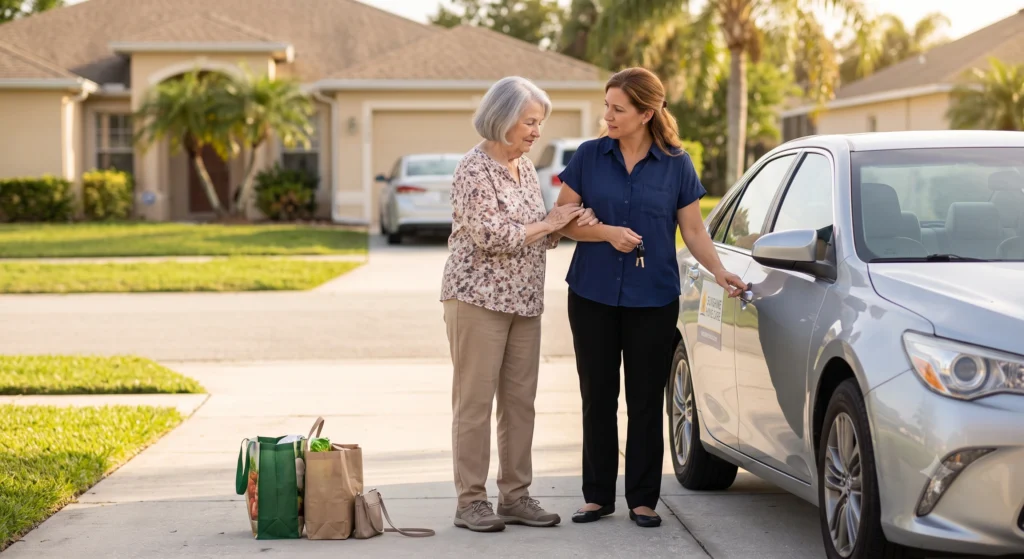
For a teenager, getting a driver’s license represents the ultimate transition into freedom and adulthood. For an aging adult, handing over those same car keys feels like the ultimate surrender of that freedom.
In America and especially in sprawling regions like Southwest Florida, the car is the lifeline to the outside world. It is how you get your groceries, visit your friends, go to church, and maintain your identity as a self-sufficient adult. When adult children begin to notice their parent’s driving skills slipping, they are faced with one of the most dreaded caregiving milestones: the driving conversation.
Adult children often delay this conversation because they are terrified of the ensuing argument or breaking their parent’s heart. However, delaying the conversation can have fatal consequences, not just for the senior, but for innocent pedestrians and other drivers on the road.
If you are losing sleep worrying about your parent behind the wheel, here is a comprehensive, compassionate guide to navigating this transition.
Driving in Lee, Collier, and Hendry counties is not for the faint of heart. Our roads are a volatile mix of high-speed local traffic, thousands of tourists relying on GPS, and chaotic “Snowbird Season” congestion.
Navigating six-lane highways like US-41 (Tamiami Trail) or Colonial Boulevard requires split-second reaction times, sharp peripheral vision, and rapid cognitive processing. If a senior’s reflexes have slowed by even a fraction of a second, merging onto a bustling Florida highway becomes a lethal gamble.
You cannot rely on your parent to tell you they are struggling to drive. Out of fear of losing their independence, they will almost always compensate or hide their near-misses. You must become a passenger and an observer. Look for these undeniable red flags:
- Unexplained Damage: Finding new dents, scrapes, or missing paint on their car, the garage doorframe, or their mailbox.
- Getting Lost: Becoming disoriented or taking significantly longer to return from a highly familiar route (like the local Publix or their longtime church). This is a massive warning sign of early-stage dementia.
- Delayed Reaction Times: Braking far too late at stoplights, or failing to notice pedestrians stepping into crosswalks.
- Lane Drifting: Drifting across the center line or straddling two lanes, often indicating a loss of spatial awareness or vision problems.
- Ignoring Traffic Signals: Running stop signs or misjudging the speed of oncoming cars when making left-hand turns.
- “Co-Pilot” Dependency: If they require a spouse to constantly tell them when it is safe to turn or when the light has changed, they are no longer fit to be the primary driver.
Driving decline is rarely due to just “getting older.” It is usually linked to specific, measurable medical changes.
- Vision Loss: Macular degeneration destroys the central vision needed to read street signs, while glaucoma destroys the peripheral vision needed to see cars in the blind spot. Furthermore, aging eyes struggle severely with nighttime glare.
- Neuropathy: Nerve damage in the feet (common in diabetes) means the senior can literally no longer feel how hard they are pressing the gas or the brake pedal.
- Medication Side Effects: Many common senior medications for blood pressure, pain, or sleep cause drowsiness and delayed cognitive processing.
- Dementia: Alzheimer’s destroys executive function, meaning the brain can no longer process the dozen simultaneous variables (speed, distance, signs, other cars) required to operate a 4,000-pound machine safely.
If you march into the house and declare, “Give me the keys, you’re a terrible driver,” your parent will immediately become defensive and hostile. You must approach this with immense empathy.
- Change the Vocabulary: Do not frame it as “taking the keys away.” Frame it as “Retiring from driving.” Retirement is an honorable, earned milestone.
- Focus on the Car, Not the Driver: Remove the personal attack. Say, “Mom, the traffic in Naples has gotten so aggressive and crazy lately. I am terrified of those other drivers hitting you. I want you to let us handle the driving so you don’t have to deal with the stress of these roads anymore.”
- Acknowledge the Grief: Validate their feelings. “I know this feels like losing your freedom, Dad, and I am so sorry. I know this is incredibly hard. But we are going to make sure you still get to go everywhere you want to go.”
If your parent absolutely refuses to listen to reason, or if dementia prevents them from understanding the risk, you cannot back down. You must outsource the authority.
- The Doctor’s Prescription: Schedule a check-up and call the doctor beforehand. Ask the doctor to physically write a prescription on a prescription pad that says, “No Driving.” Seniors from older generations hold immense respect for medical authority; if the doctor says it, they are much more likely to comply.
- The State Level (Florida HSMV): In Florida, anyone (including a family member or doctor) can file a confidential medical reporting form with the Department of Highway Safety and Motor Vehicles (FLHSMV). The state will then require the senior to pass a medical or driving test to keep their license. This makes the State of Florida the “bad guy,” preserving your relationship with your parent.
- Disable the Vehicle: In extreme cases of dementia where the senior insists on taking the car, you must physically disable the vehicle (e.g., removing the battery cable) or remove the car from the property entirely.
The reason seniors fight so hard to keep their keys is that they believe the alternative is becoming a prisoner in their own home.
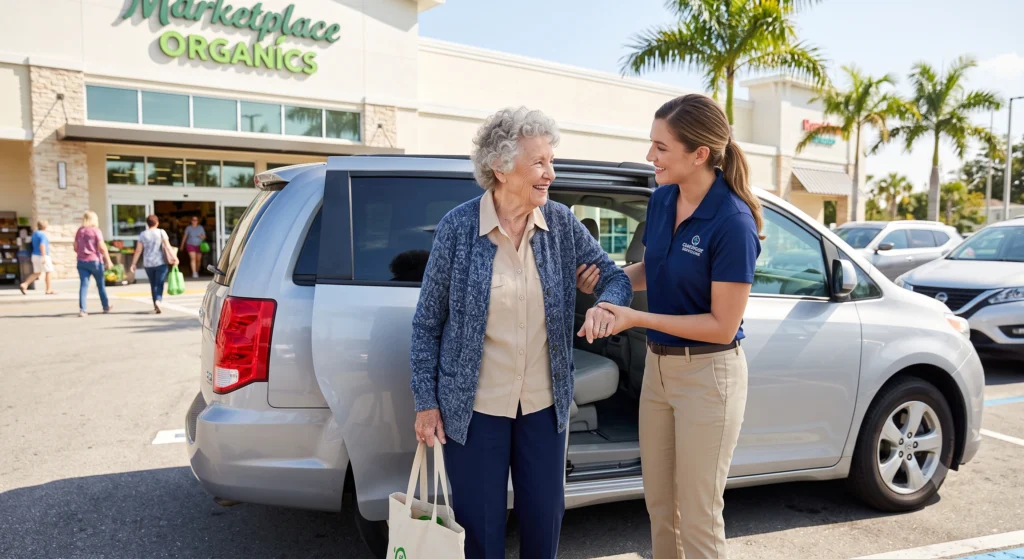
You must prove to them that “stopping driving” does not equal “stopping living.” This is where Shal We Home Care becomes the ultimate solution.
- Incidental Transportation: We provide safe, comfortable transportation in Lee, Collier, and Hendry counties. We aren’t just a taxi service; our caregivers provide door-through-door assistance. We escort your parent into the grocery store, help them load the groceries, and put them away in the pantry.
- Social Outings: We ensure they never miss their hair appointments, their church services, or their lunch dates with friends.
- A New Chauffeur: Framing our caregiver as a “personal driver” or “assistant” often makes the senior feel pampered and dignified, completely removing the sting of losing their license.
- Watch for Red Flags: Unexplained dents, lane drifting, and getting lost are critical signs that driving must stop immediately.
- Blame the Traffic: Frame the conversation around the dangers of Florida’s aggressive drivers rather than attacking your parent’s declining skills.
- Use “Retirement” Language: Speak about “retiring from driving” to preserve their dignity.
- Leverage the Doctor: If they refuse, ask their primary care physician to formally order them to stop driving.
- Provide an Immediate Alternative: Hire a professional home care agency to act as a personal driver so they never feel trapped in their home.
Is it time for your loved one to retire from driving? Don’t wait for a tragic accident to force the issue.
Contact Shal We Home Care today. Let our professional caregivers provide the safe, reliable transportation your parent needs to maintain their active Florida lifestyle.