
Family vacations shouldn’t be traumatic. Learn how to travel safely with an autistic child or adult, utilizing TSA Cares, visual schedules, and hotel elopement prevention.
Traveling with an autistic child or adult requires extreme pre-planning to manage sensory overload and prevent wandering. For air travel, families should utilize the “TSA Cares” program for expedited, sensory-friendly security screening and request pre-boarding. In hotels, caregivers must “elopement-proof” the room by bringing portable door alarms and requesting rooms away from pools or elevators. For road trips, breaking the journey into predictable visual segments and packing a robust “Sensory Go-Bag” prevents severe behavioral meltdowns in unfamiliar environments.
For a neurotypical family, planning a vacation to Orlando, booking a flight to see grandparents up north, or renting a beachfront hotel is exciting. For a family raising a child or caring for a young adult with Autism Spectrum Disorder (ASD), a vacation is often a massive source of dread.
Autistic individuals thrive on predictability, routine, and a controlled sensory environment. Travel is the exact opposite. Travel is chaotic, loud, visually overwhelming, and deeply unpredictable. Disrupting an autistic individual’s routine often triggers severe anxiety, violent meltdowns, and a high risk of bolting (elopement) in crowded, unfamiliar places.
Because it is so stressful, many special needs families in Southwest Florida simply stop taking vacations entirely, leading to intense burnout and resentment from neurotypical siblings.
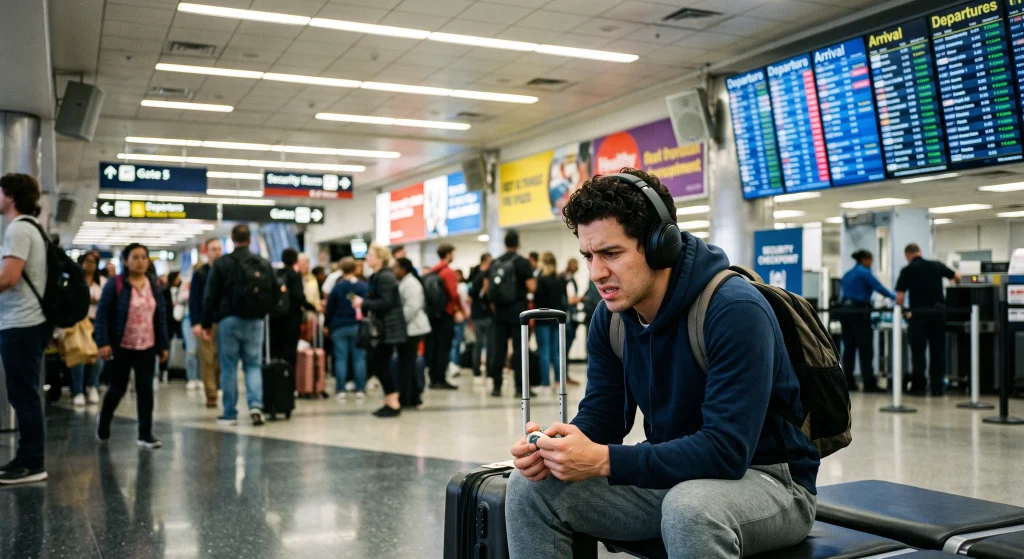
You do not have to stay trapped at home, but you cannot “wing it.” Traveling with neurodivergence requires military-grade planning. Here is your survival guide.
Airports are sensory minefields: harsh announcements over the PA system, massive crowds, and invasive security pat-downs.
1. Utilize the TSA Cares Program: You do not have to stand in the standard 45-minute security line with a dysregulated child.
- Contact TSA Cares (via phone or their website) at least 72 hours before your flight.
- A passenger support specialist will meet your family at the security checkpoint. They will guide you through an expedited, sensory-friendly screening process. They will explain exactly what is happening to the autistic individual and allow them to keep on their noise-canceling headphones if possible.
2. The Hidden Disabilities Sunflower Lanyard: Many major airports (including RSW in Fort Myers and MCO in Orlando) recognize the Sunflower Lanyard program. If your neurodivergent family member wears this green lanyard with yellow sunflowers, airport staff are trained to recognize that they have a hidden disability and may require extra time, patience, or assistance without you having to explain it to every single employee.
3. Request Pre-Boarding: Always speak to the gate agent and request disability pre-boarding. Getting onto an empty plane allows your child to settle into their seat and get their iPad and weighted lap pad situated before the chaotic rush of 150 passengers boarding the aircraft.
If you are driving to your destination, the biggest trigger for an autistic individual is the endless unknown of “Are we there yet?”
- The Visual Map: Autistic brains process visual information far better than verbal concepts. Print out a map of your route. Place a Velcro icon of your car at the start, and move it along the route as you pass major milestones.
- The “First/Then” Countdown: Do not speak in hours. Break the trip into predictable chunks. “First we drive until the timer goes off, then we stop at McDonald’s for fries. First we drive to the big bridge, then we watch a movie.”
- The Sensory Go-Bag: Keep a bag in the front seat containing their noise-canceling headphones, a chew tube, their favorite familiar snacks (do not rely on gas stations having their “safe” food), and a fully charged iPad with downloaded movies (in case you hit a dead zone with no Wi-Fi).
Hotels are terrifyingly unsafe for an autistic child or adult who wanders. The doors open easily to the hallway, and danger (elevators, pools, balconies) is just steps away.
- Call Ahead for Placement: When booking, explicitly request a ground-floor room (to avoid balcony fall hazards) that is located at the end of a hallway, far away from the busy, noisy elevators and the swimming pool.
- Bring Your Own Security: Do not trust hotel deadbolts. Pack portable, battery-operated door and window alarms (the kind that stick on with suction cups and emit a 120dB alarm if the door opens). Bring a portable travel lock or a rubber door wedge to place on the inside of the door while you sleep.
- Familiarity is Key: A hotel smells and feels wrong. Pack their own unwashed pillowcase and blanket from home. The familiar scent of their own bed will trick their nervous system into feeling safe, allowing them to sleep.
If you are braving Disney World, Universal Studios, or Busch Gardens, standing in a 90-minute line in the Florida heat is an absolute impossibility for an individual with autism.
- Register for Disability Passes: Both Disney (DAS – Disability Access Service) and Universal (AAP – Attractions Assistance Pass) have strict but vital programs for guests who cannot wait in standard queues. You must apply for these via video call weeks before your trip. These passes allow you to request a return time for a ride, so you can wait in a quiet, air-conditioned area rather than shoulder-to-shoulder in the physical line.
- Identify Quiet Zones: Before you enter the park, look at the map and identify the “First Aid” stations or designated quiet rooms where you can retreat immediately if a meltdown begins.
Sometimes, the sensory needs of the autistic individual are simply too severe to make a family trip enjoyable for anyone. If traveling causes your child extreme trauma, dragging them onto an airplane is not a vacation; it is a punishment.
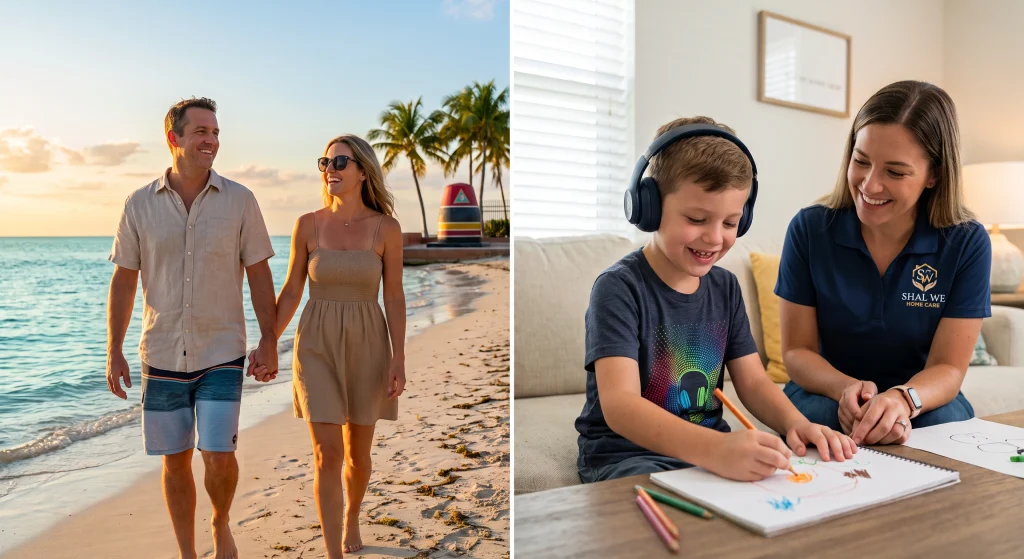
But you, the parents, and your neurotypical children still desperately need a break.
At Shal We Home Care, serving Lee, Collier, and Hendry counties, we provide specialized in-home respite care.
- The Guilt-Free Getaway: Instead of forcing your autistic loved one into a chaotic hotel, you can leave them in the exact environment where they feel safest: their own home.
- Professional Supervision: You can hire our highly trained special needs caregivers to stay with your adult child or teen for a weekend. We strictly follow their routines and keep them safe.
- Saving the Family: This allows the parents to take a short weekend trip to the Keys or Orlando with their other children, preserving their marriage and the mental health of the neurotypical siblings, knowing their neurodivergent child is happy and secure at home.
- Use TSA Programs: Call TSA Cares 72 hours before a flight to secure a sensory-friendly, expedited security screening.
- Visualize the Road Trip: Use printed maps and visual timers to make a long drive highly predictable.
- Elopement-Proof the Hotel: Bring portable travel alarms for hotel doors and request a room far from the pool and elevators.
- Apply for Park Passes Early: Secure Disney or Universal disability passes weeks in advance to avoid waiting in crowded queues.
- Consider Respite: If travel is too traumatic, utilize a professional home care agency to stay with your loved one so the rest of the family can take a necessary vacation.
Does your family desperately need a break? Whether you need strategies to make travel easier or you need professional respite care so you can take a trip without them, we are here to help.
Contact Shal We Home Care today to learn how we support special needs families in Southwest Florida.