
What happens if you get sick and can’t care for your aging parent? Learn how to build a foolproof emergency backup care plan for Florida seniors to ensure continuous safety.
An emergency backup care plan ensures a senior is never left stranded if their primary caregiver falls ill or faces a crisis. A robust plan includes a physical “Go-Bag” of medical records and medications, a communication tree of trusted local contacts, automated home technology (like fall sensors), and a pre-established relationship with a licensed home care agency that can immediately step in to provide short-term, emergency respite care.
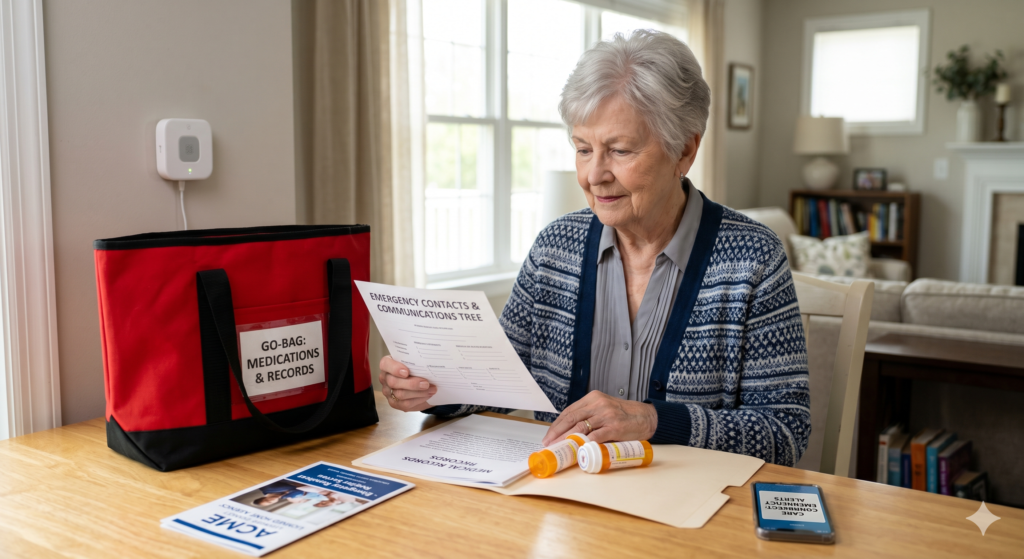
If you are the primary family caregiver for an aging parent in Southwest Florida, you are the linchpin holding their world together. You manage the meals, organize the pillboxes, handle the driving, and provide the physical safety they rely on.
But what happens if the linchpin breaks?
What happens if you wake up with the flu, get into a minor car accident, or face a sudden crisis with your own children that requires you to fly out of state immediately?
When a family relies entirely on one person to provide care, the entire system is incredibly fragile. A minor inconvenience for you can become a life-threatening emergency for a senior with dementia or mobility issues. You cannot assume you will always be available. You must create a foolproof, multi-layered Emergency Backup Care Plan before you ever actually need it.
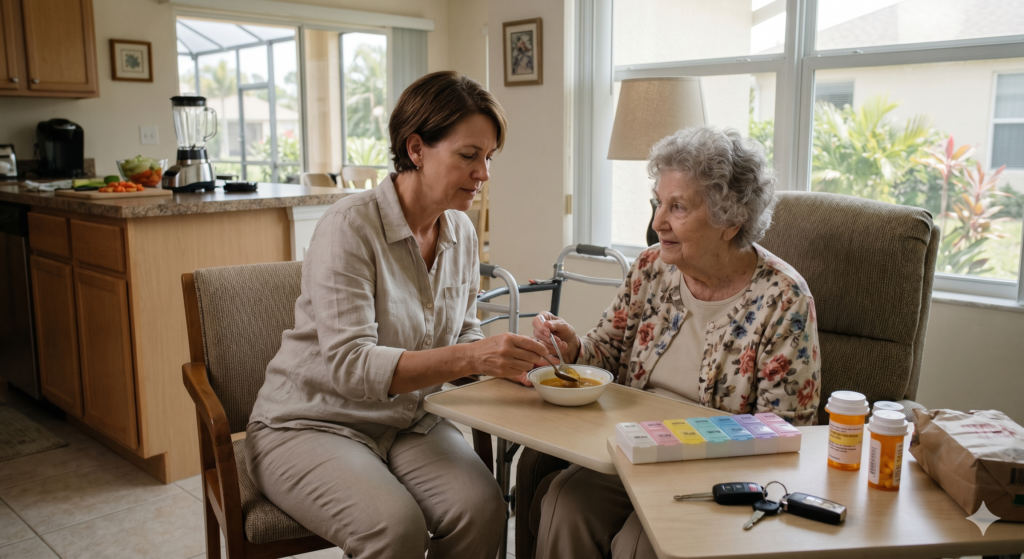
An emergency in the caregiving world doesn’t just mean a hurricane or a heart attack. It includes any sudden event that removes the primary caregiver from their post without warning.
- Medical: You contract COVID-19 or the flu and cannot risk infecting your frail parent.
- Logistical: Your car breaks down and you live 45 minutes away in Naples, while your parent is in Fort Myers.
- Personal: Your spouse has a medical emergency, or you experience a severe burnout breakdown and physically cannot get out of bed.
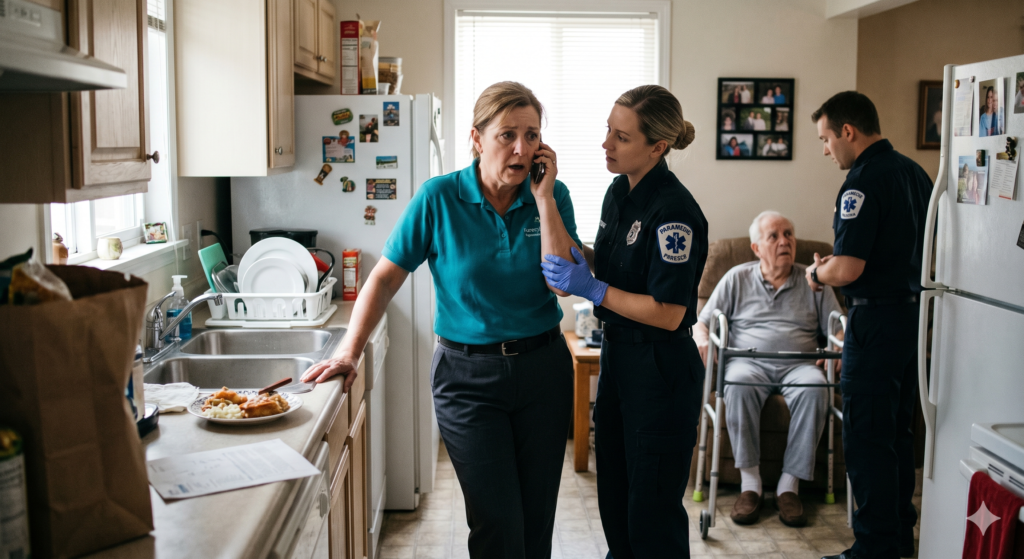
If you are incapacitated, the person stepping in to help your parent whether it is a neighbor, a sibling, or a professional caregiver needs to know exactly what to do instantly. They do not have time to guess.
You must create a highly visible Care Binder (keep it on the kitchen counter or magnetically attached to the fridge).
- The Medical Roster: A complete, updated list of every medication, dosage, and time of administration. Include the pharmacy phone number and the names/numbers of all primary doctors and specialists.
- The Routine Summary: A one-page cheat sheet of their day. (e.g., “Dad must eat breakfast before 9 AM with his pills. He uses the walker, do not let him walk without it. He hates the news, play country music instead.”)
- Legal Documents: Copies of the Healthcare Surrogate, Power of Attorney, and DNR (Do Not Resuscitate) orders.
- House Logistics: Where is the spare key? Where is the breaker box? Where is the main water shut-off?
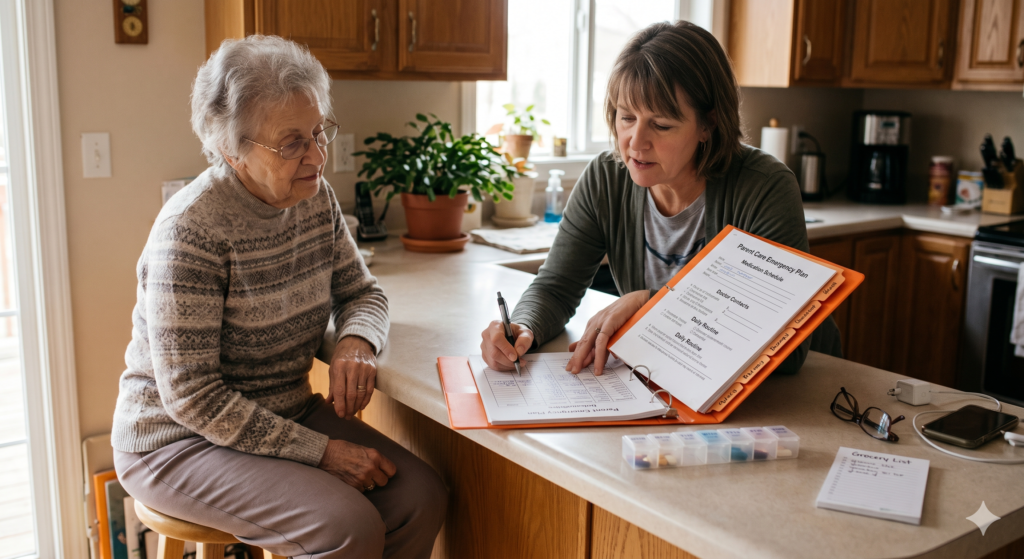
In a crisis, you need to make one phone call and have a cascade of help activate. Create a written communication tree.
- Primary Backup: Your sibling or a nearby trusted relative who agrees to be “on call” for emergencies.
- The Local Neighbor: A trusted neighbor who has a spare key. They might not be able to provide medical care, but they can walk next door instantly to make sure the stove is off and your parent is sitting safely while they wait for the primary backup to arrive.
- The Out-of-State Coordinator: A family member who lives out of state but can handle the administrative burden (calling doctors, canceling appointments, managing insurance) while the local team handles the physical care.
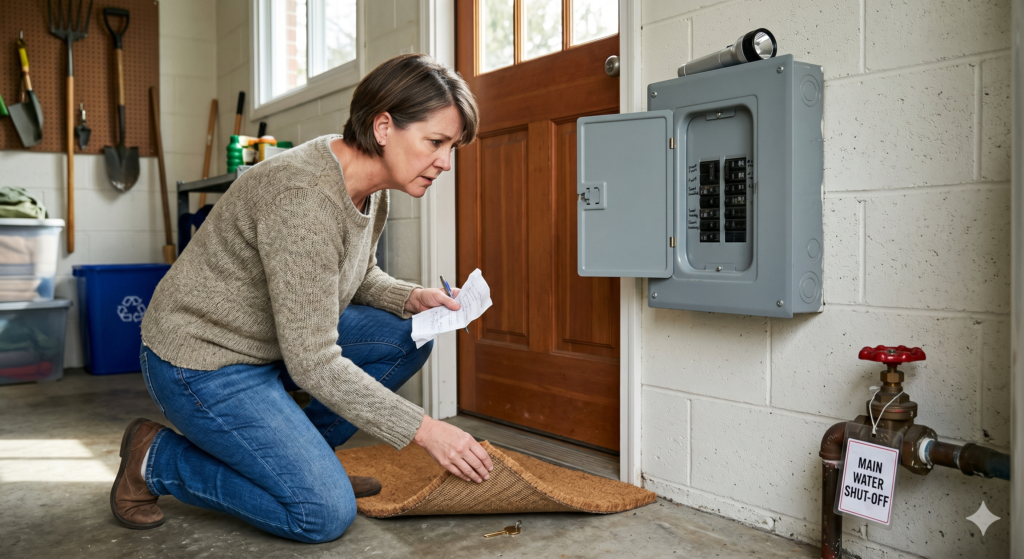
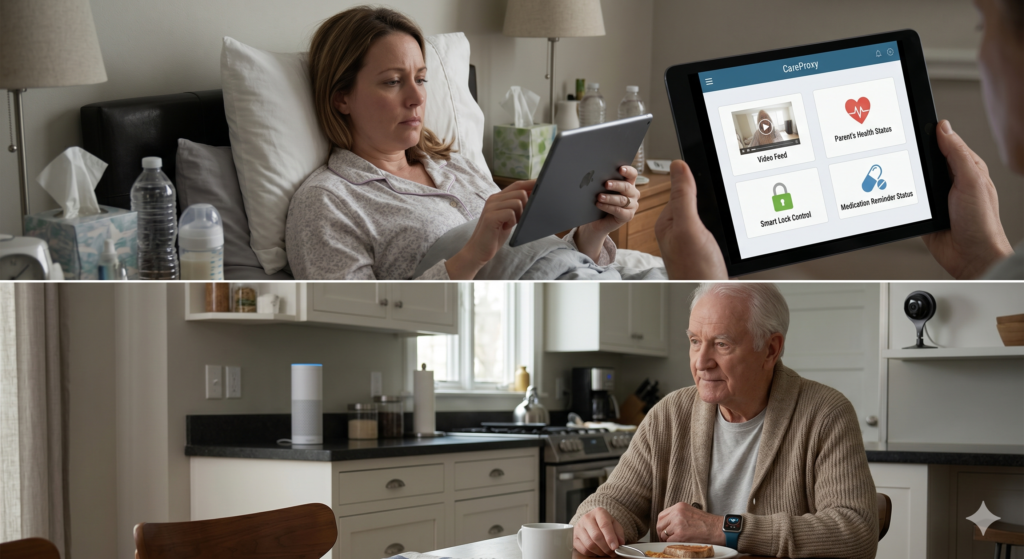
If you are sick in bed, technology can act as your proxy to ensure your parent survives the gap in care.
- Automated Medication Dispensers: If you cannot make it over to give them their pills, a locked, automated dispenser will alarm and unlock at the right time, preventing missed doses for a few days.
- Cameras / Indoor Monitors: (With your parent’s consent), having a simple camera in the main living area allows you to pull up an app on your phone and visually verify that they have not fallen while you are stuck at home.
- Medical Pendants: Ensure your parent is wearing a fall-detection pendant so they can call for paramedics independently if you are unreachable.
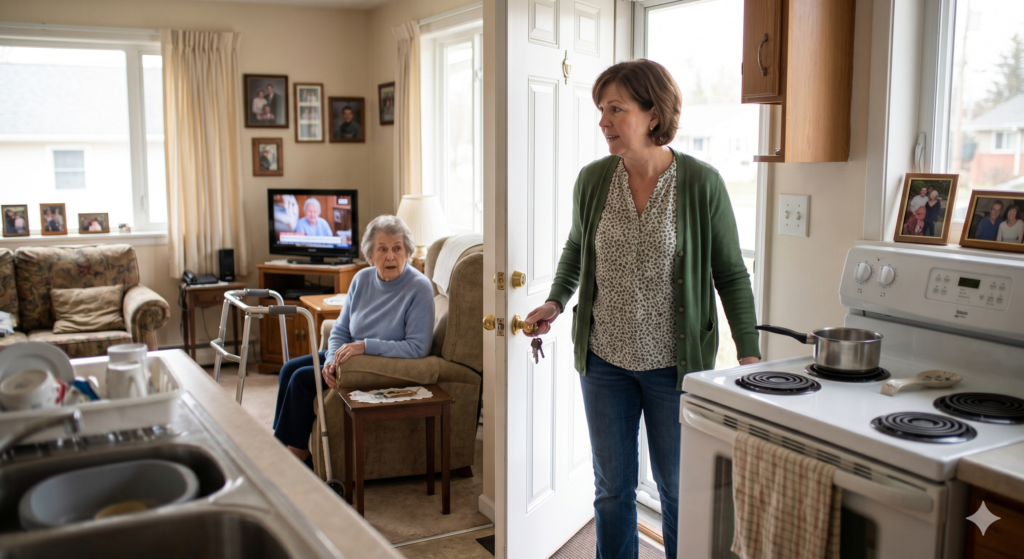
Friends and neighbors are great for an hour or two, but they cannot provide hygiene care, dementia management, or overnight supervision.
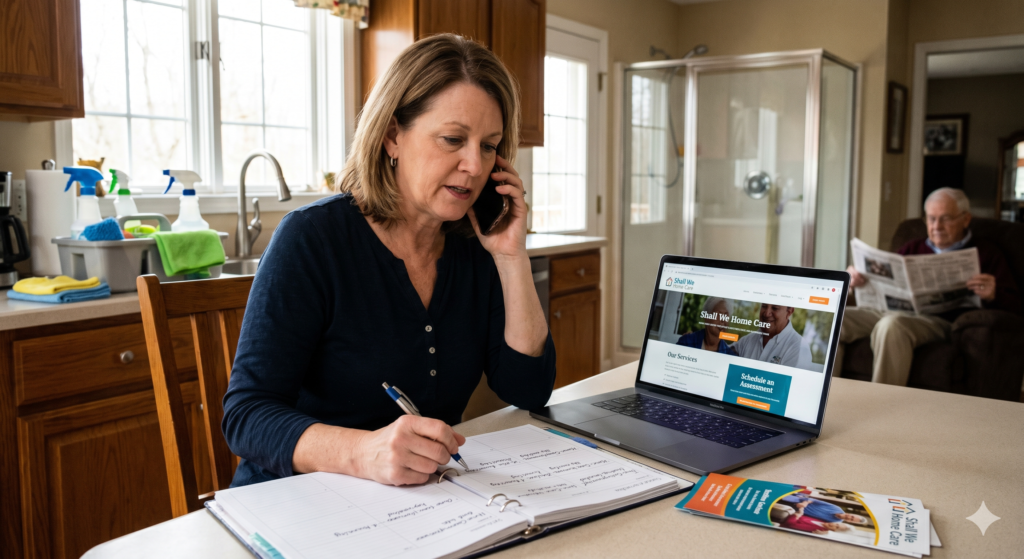
The ultimate emergency backup plan is having a pre-established relationship with a licensed home care agency.
- Do not wait until you are in the ER to start calling agencies. The intake process (assessments, signing contracts) takes a few days.
- The Strategy: Call an agency like Shal We Home Care now. Set up a small, recurring service perhaps just a 4-hour shift every other week to help with deep cleaning or a shower.
- The Benefit: Because you are already an active client in our system, your parent’s care plan is fully documented. If an emergency strikes, you can simply call our office and say, “I am in the hospital, I need a caregiver for Mom for the next three days continuously.” Because the paperwork is done, we can deploy a trained professional rapidly.
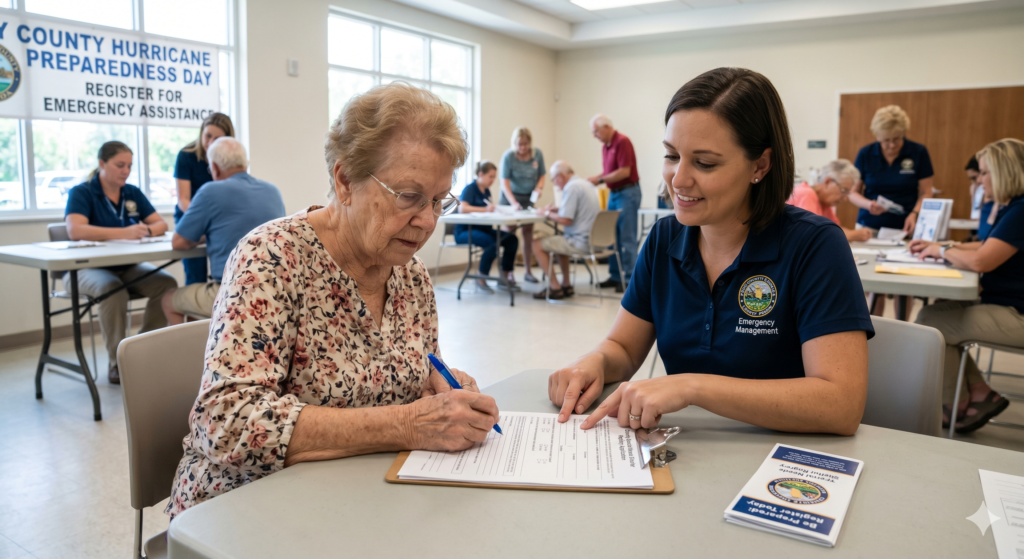
In Lee, Collier, and Hendry counties, emergency planning must include hurricane strategy.
- If a storm is approaching and you are mandated to evacuate your zone, but your parent is inland, how will they survive the power outage?
- Your backup plan must include registering your parent for the county Special Needs Shelter Registry so first responders know to extract them if you cannot get to their house due to flooded roads.
At Shal We Home Care, we provide peace of mind to exhausted family caregivers. We know that life happens.
By partnering with us, you are buying an insurance policy for your own well-being. We have a deep roster of fully vetted, insured, and highly trained caregivers. If your primary backup plan fails, or if you simply need to take a sick day, we are the safety net that catches your loved one. We ensure their routine remains unbroken, their medications are managed, and they are never left alone in a crisis.
- Acknowledge the Risk: A caregiving system reliant on one person is dangerously fragile.
- Build a Care Binder: Keep all medications, routines, and legal documents in a highly visible “Go-Bag” on the kitchen counter.
- Talk to the Neighbors: Secure a local neighbor with a spare key who can act as a rapid first responder to check on your parent.
- Use Tech for Medication: Automated pill dispensers protect your parent if you miss a visit.
- Establish an Agency Relationship: Start a small, recurring service with a professional agency now, so they can deploy emergency 24/7 care instantly if a crisis occurs.
Are you operating without a safety net? Don’t wait for a crisis to realize you need help.
Contact Shal We Home Care today to establish a care profile. Let us be the reliable backup plan that allows you to breathe easier.