
Poor dental health in seniors is directly linked to severe systemic health issues, including an increased risk of cognitive decline, Alzheimer’s disease, aspiration pneumonia, and heart disease. Bacteria from infected gums can enter the bloodstream and travel to the brain and heart. To protect overall health, seniors must maintain daily brushing, proper denture sanitation, and regular dental check-ups, often with the assistance of an in-home caregiver.
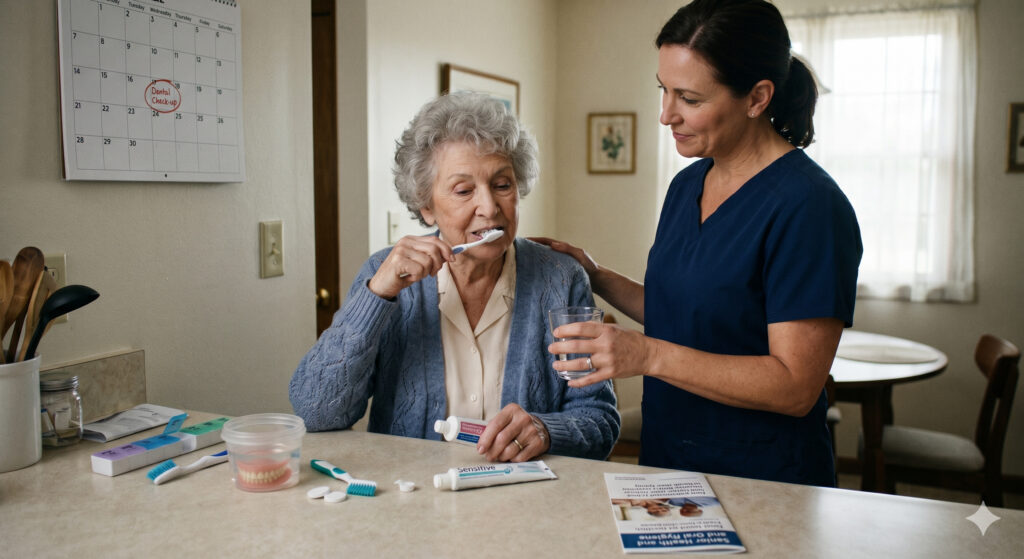
When managing the health of an aging parent in Southwest Florida, families are hyper-focused on major medical metrics: blood pressure, cholesterol, mobility, and memory tests. In the chaos of doctor appointments and medication management, one critical area is almost always neglected: The Mouth.
Dental health is often treated as a separate, isolated issue. If a senior has a toothache, they go to the dentist. But modern medical research has proven that the mouth is not an isolated system; it is the gateway to the rest of the body.
Neglecting oral hygiene in older adults doesn’t just lead to cavities or bad breath. It is a massive, systemic health risk that can accelerate cognitive decline, trigger heart attacks, and cause fatal respiratory infections.
Can forgetting to brush your teeth lead to Alzheimer’s disease? The research is pointing to a shocking “Yes.”
Gingivitis and periodontal disease (severe gum disease) create chronic inflammation in the mouth. The bacteria responsible for this disease (Porphyromonas gingivalis) can enter the bloodstream through bleeding gums and travel directly to the brain.
- Once in the brain, this bacteria releases toxins that damage brain tissue.
- Recent studies have repeatedly found this specific gum disease bacteria present in the brains of patients who died from Alzheimer’s disease.
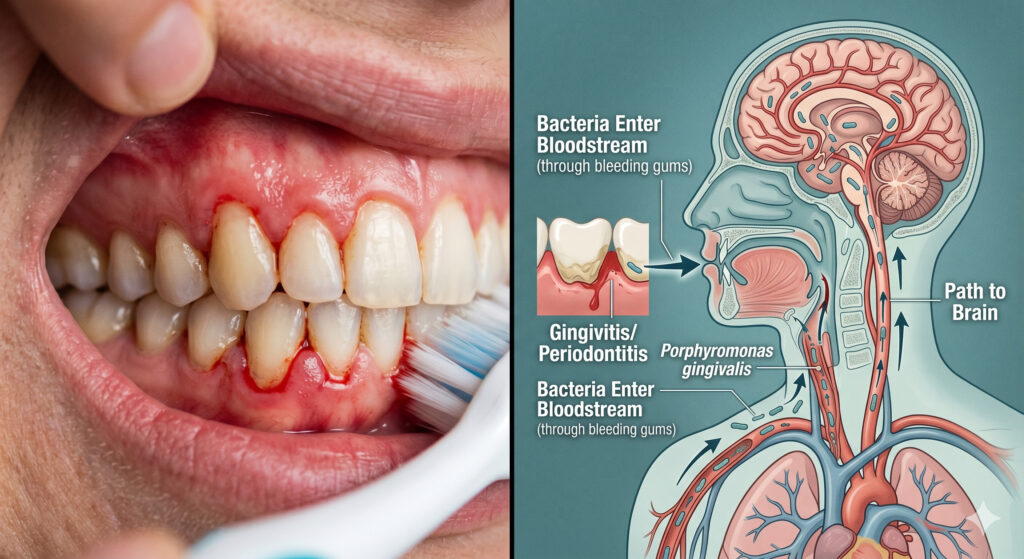
While poor oral hygiene may not be the only cause of dementia, chronic inflammation from the mouth significantly accelerates cognitive decline. Keeping the mouth clean is quite literally protecting the brain.
The bacteria in a neglected mouth don’t just travel to the brain; they travel everywhere.
- Heart Disease: The same bacteria that cause gum disease can attach to the fatty plaques in the blood vessels of the heart, contributing to clot formation. This directly increases the risk of heart attacks and strokes.
- Aspiration Pneumonia: For seniors with mobility or swallowing issues (dysphagia), microscopic amounts of saliva are naturally inhaled into the lungs instead of swallowed. If that saliva is filled with dangerous dental bacteria, it causes aspiration pneumonia one of the leading causes of death in frail seniors.

If dental care is so important, why do seniors struggle with it? It is rarely due to laziness; it is a physical and cognitive hurdle.
- Arthritis: Holding a thin toothbrush and performing the repetitive scrubbing motion is excruciating for hands crippled by osteoarthritis. Flossing becomes physically impossible.
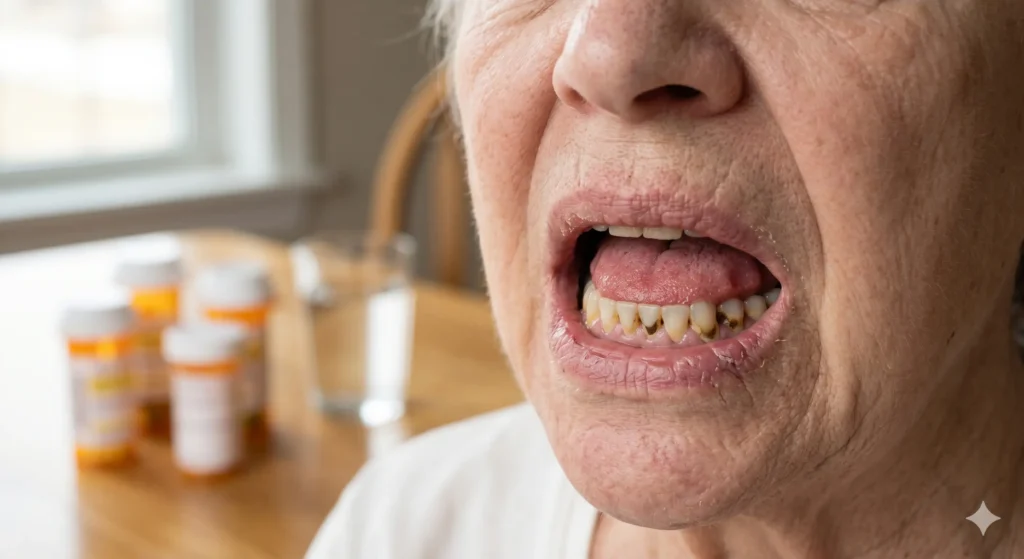
- Dry Mouth (Xerostomia): Hundreds of common senior medications cause severe dry mouth. Saliva is the body’s natural mouthwash. Without it, bacteria multiply rapidly, leading to aggressive tooth decay.
- Dementia and Forgetfulness: Seniors with memory loss simply forget to brush. Furthermore, as dementia progresses, the bathroom mirror can become frightening (they may not recognize their own reflection), making them avoid the bathroom entirely.
Many families assume that if a parent has full dentures, dental hygiene is no longer a concern. This is a dangerous myth.
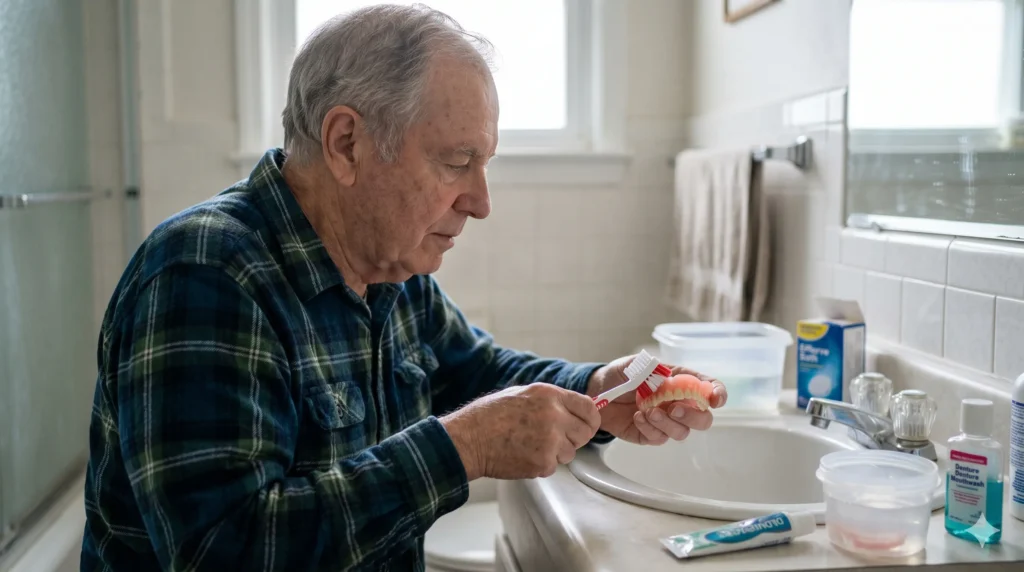
Dentures are a breeding ground for bacteria and fungal infections (like oral thrush) if not cleaned meticulously.
- Brush the Dentures: Soaking a tablet is not enough. Dentures must be physically brushed daily to remove plaque and food particles.
- Brush the Gums: Even without teeth, the gums, tongue, and roof of the mouth must be brushed with a soft-bristled brush to stimulate circulation and remove bacteria.
- Take Them Out at Night: Wearing dentures 24/7 deprives the gums of oxygen and drastically increases the risk of dangerous oral infections.
Ensuring an aging parent brushes their teeth can turn into a frustrating, daily battle for adult children, leading to resentment and arguments.
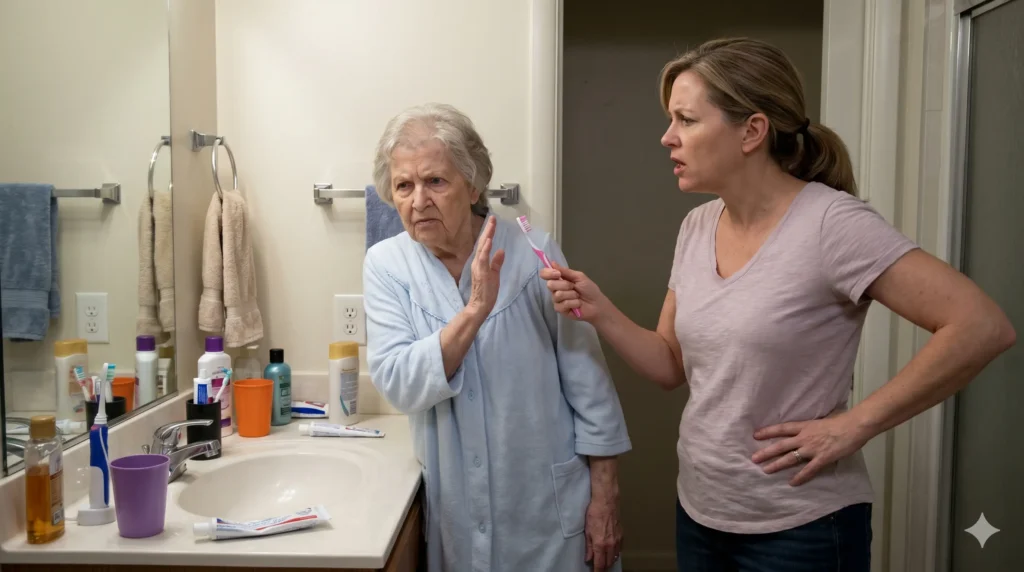
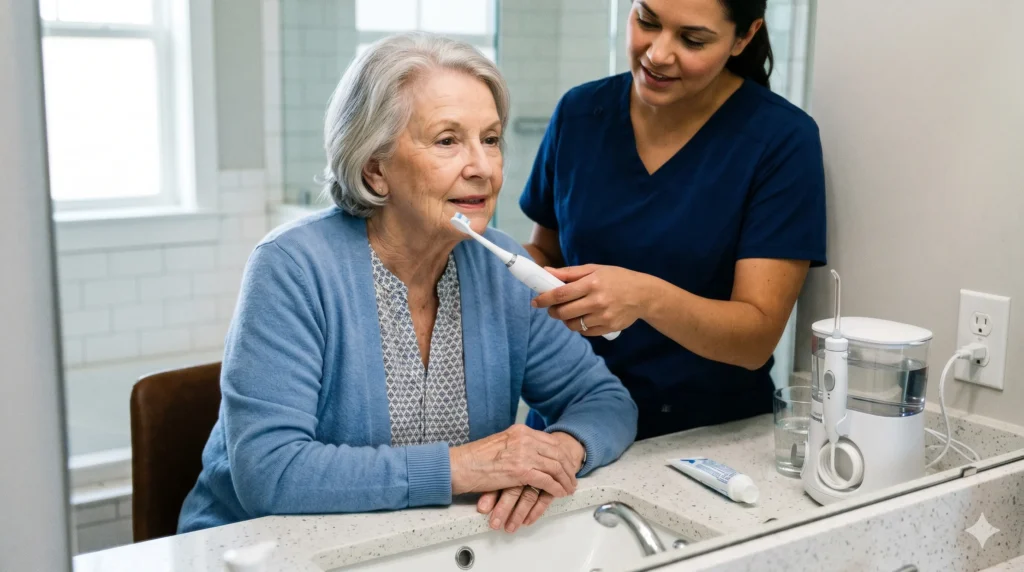
At Shal We Home Care, operating in Lee, Collier, and Hendry counties, our caregivers approach personal hygiene with professional dignity and specialized techniques.
- Adaptive Tools: We can help introduce electric toothbrushes or water flossers, which require significantly less manual dexterity than traditional brushing.
- Gentle Cuing: For seniors with dementia, our caregivers use step-by-step visual cuing. We don’t order them to brush; we hand them the prepared toothbrush and brush our own teeth alongside them to mirror the behavior.
- Routine Management: We incorporate oral care into the non-negotiable morning and evening routines, ensuring this vital health practice is never skipped.
- It’s Systemic: Dental bacteria can travel to the brain and heart, increasing the risk of Alzheimer’s and strokes.
- Pneumonia Risk: Dirty saliva inhaled into the lungs causes fatal aspiration pneumonia.
- Dry Mouth is Dangerous: Medication-induced dry mouth accelerates tooth decay; encourage frequent water sips.
- Dentures Need Brushing: False teeth require physical brushing, not just overnight soaking.
- Get Professional Help: In-home caregivers can ensure daily oral hygiene is maintained safely and respectfully.
Are you struggling to help your loved one maintain their hygiene?
You don’t have to fight these daily battles alone. Contact Shal We Home Care today. Our compassionate caregivers ensure your loved one’s entire body from their teeth to their toes is cared for with dignity.