
Dementia strips away the brain’s filter, leading to aggression, swearing, and inappropriate sexual behavior. Learn how to handle these dementia symptoms without judgment.
Inappropriate behaviors in dementia such as swearing, public undressing, aggressive outbursts, or inappropriate sexual comments are caused by physical damage to the brain’s frontal lobe, which destroys the individual’s impulse control. Caregivers must understand this is a symptom of the disease, not a behavioral choice. To manage these behaviors, caregivers must avoid reacting with shock or anger, gently redirect the senior’s attention, assess for hidden physical discomfort (like a UTI or tight clothing), and maintain a calm, objective demeanor.

When people talk about Alzheimer’s disease and dementia, the conversation usually focuses on memory loss: forgetting names, getting lost, or repeating questions. While heartbreaking, these are the “socially acceptable” symptoms of the disease.
However, there is a darker, much more distressing side to dementia that families rarely talk about in public due to intense shame and embarrassment.
Your sweet, mild-mannered mother who never cursed a day in her life might suddenly start shouting severe profanities at the grocery store. Your deeply respectful father might make explicit, inappropriate sexual comments to a visiting nurse. They might accuse you of stealing their money, or they might attempt to undress in the middle of the living room.

If you are a family caregiver experiencing this in Southwest Florida, you are not alone, and you have nothing to be ashamed of. These behaviors are incredibly common. They are not a reflection of your parent’s true character, and they are not a reflection of your caregiving.
Here is the ultimate guide to understanding and managing inappropriate behaviors in dementia.
To handle these behaviors, you must first understand the biology behind them.
Dementia is not a psychological disorder; it is physical brain damage. The frontal lobe of the human brain is responsible for “executive function.” It acts as your social filter, controlling impulses, regulating social behavior, and understanding the consequences of actions.
As dementia attacks and shrinks the frontal lobe, that filter completely disintegrates. The senior loses the ability to suppress sudden impulses or recognize social norms. If they feel an emotion (anger, heat, discomfort), they act on it immediately and rawly, exactly like a toddler would, but with an adult body and adult vocabulary.
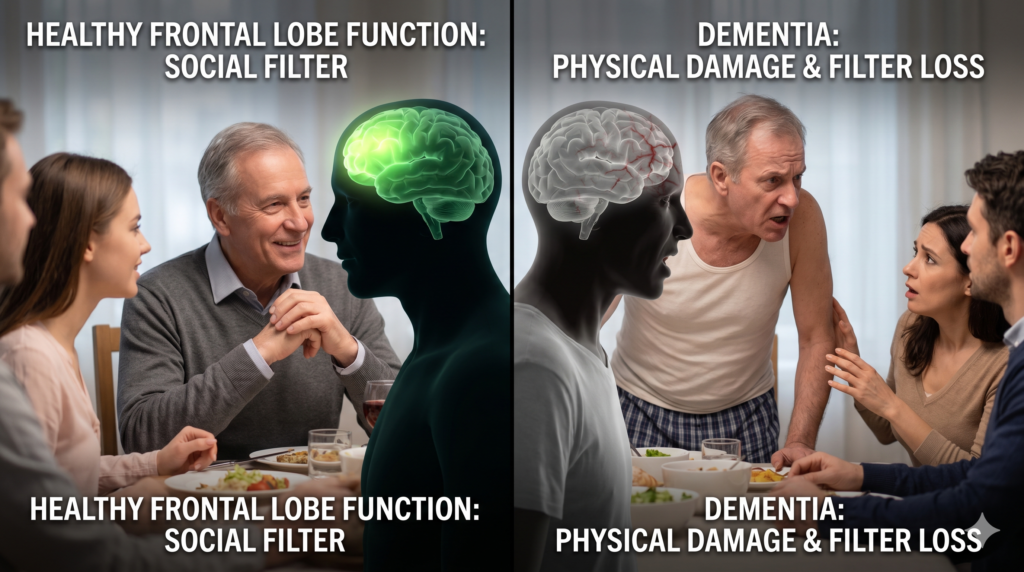
The Golden Rule: It is the disease talking, not the person. Type 1: Aggressive, Violent, or Swearing Outbursts
Sudden outbursts of rage, swearing, or physical striking are usually triggered by frustration, fear, or physical pain that the senior cannot articulate.
- How to Handle It: Do not argue. Do not scold them (“Mom, we don’t use those words!”). Arguing with a damaged brain only escalates the panic.
- The Strategy: Step back to ensure your physical safety. Maintain a low, calm voice and a neutral facial expression. Say something validating like, “I can see you are very upset. Let’s step into the other room.” Often, changing the physical environment (walking into a different room) acts as a “reset” button for the brain.
- Look for the Trigger: Did you approach them too quickly from behind? Is the TV too loud? Do they have an undiagnosed UTI causing them pain?
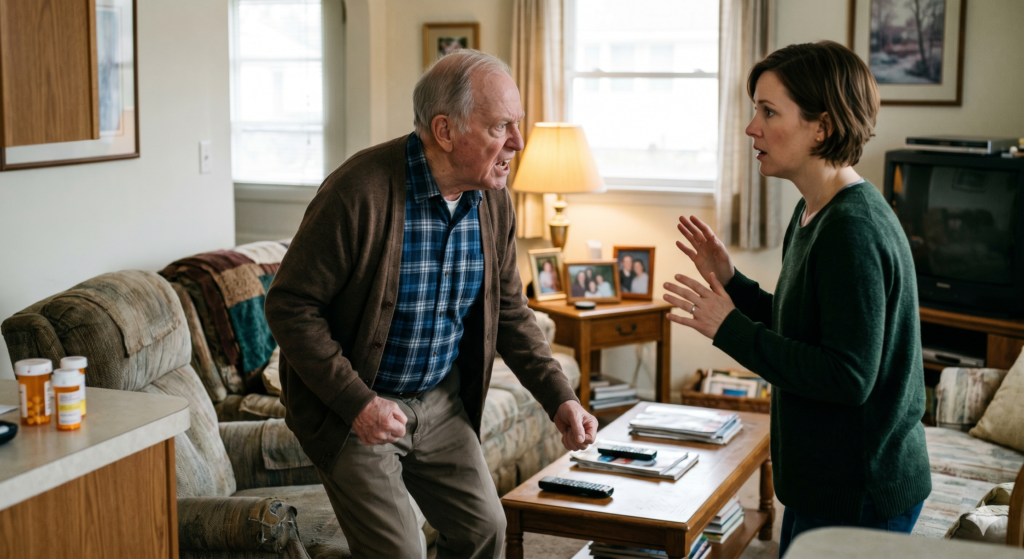
This is often the most shocking and embarrassing behavior for adult children to witness. A parent might make lewd comments, grope themselves, or mistake a caregiver or spouse for someone else.
- How to Handle It: Do not react with visible shock, disgust, or anger. A strong emotional reaction from you validates the behavior in their confused brain.
- The Strategy: Gently but firmly redirect. If a father makes an inappropriate comment to a female caregiver, the caregiver should ignore the comment entirely, step back, and firmly pivot the conversation: “Mr. Smith, it is time for your lunch now. Let’s walk to the kitchen.”
- The Clothing Check: If a senior is inappropriately touching themselves in public, they are frequently just reacting to a physical sensation. They may have a urinary tract infection, a yeast infection, or their adult brief may be too tight and chafing. Check for physical discomfort first.
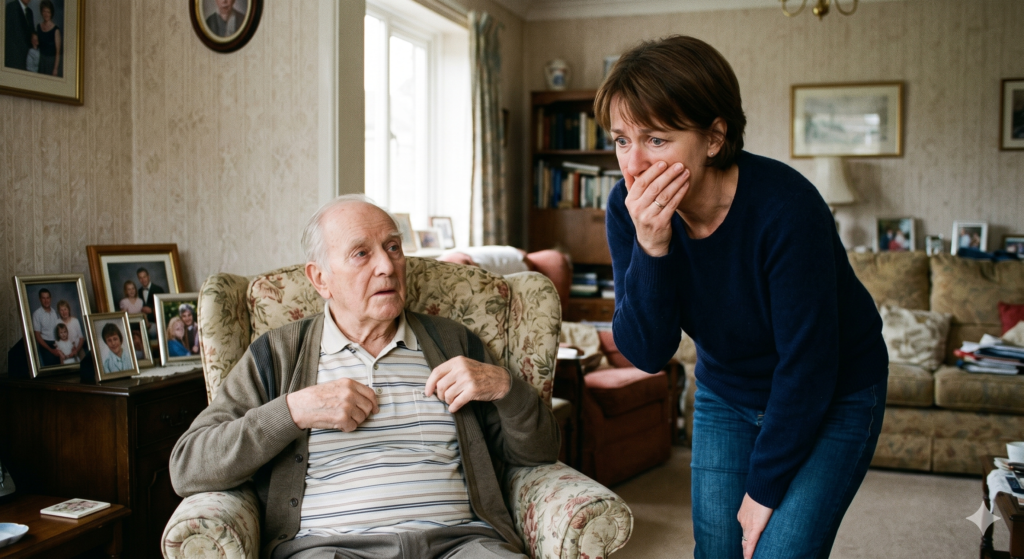
Because short-term memory is destroyed, seniors frequently misplace items (like a purse, glasses, or checkbook). Because their brain cannot process that they forgot where they put it, their brain creates a logical (to them) narrative: Someone stole it. You will often be accused of stealing their money or poisoning their food.
- How to Handle It: Never say, “I didn’t steal your purse, you lost it again!” This forces them to confront their cognitive failure, which terrifies them.
- The Strategy: Join their reality. Say, “Oh no, your purse is missing? That is terrible. Let me help you look for it.” Once you “find” the item, the paranoia usually evaporates instantly.
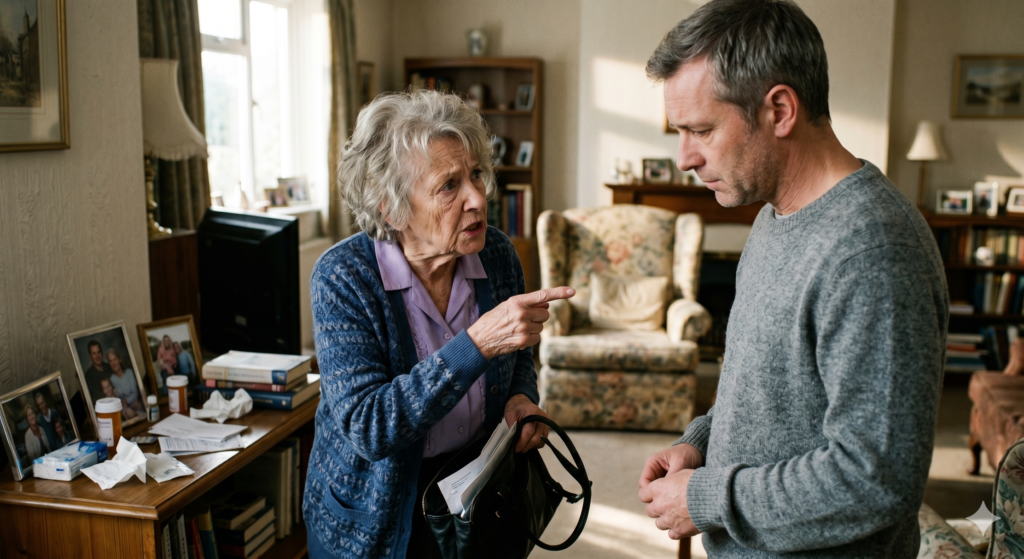
Seniors may attempt to take off their clothes in the living room or relieve themselves in a potted plant instead of the toilet.
- How to Handle It: This is almost always a mix of physical discomfort and severe disorientation. They may feel too hot (even if the AC is on), or their clothing may feel scratchy on thinning skin. If they are urinating in the wrong place, it is because the brain’s “map” of the house is broken; they literally cannot find the bathroom.
- The Strategy: If they are undressing, do not yell. Calmly approach them with a soft blanket or robe, wrap it around them, and say, “Let’s go into the bedroom, it’s a bit drafty out here.” To prevent bathroom accidents, put a brightly colored sign with a picture of a toilet on the bathroom door, and leave the bathroom door open with the light on so it is highly visible.
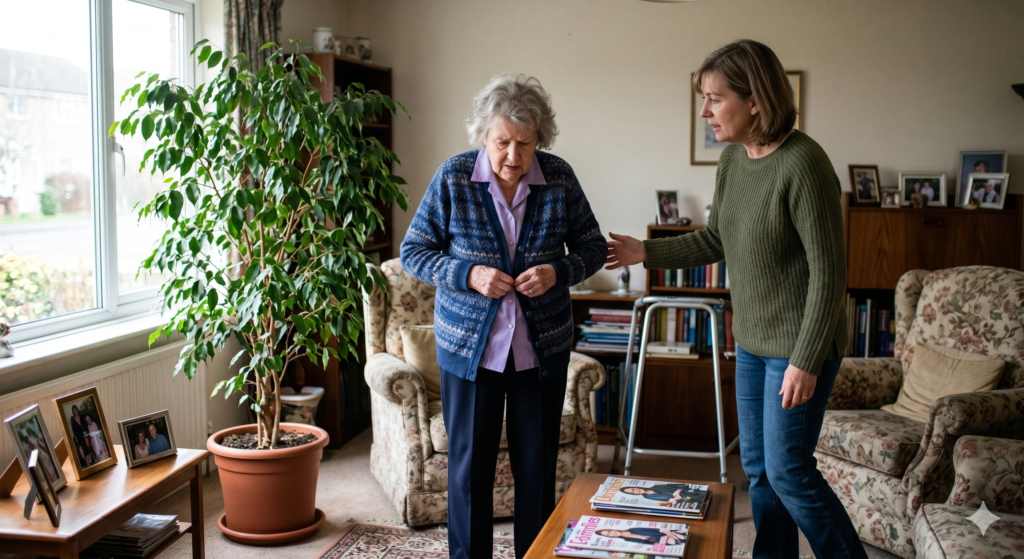
Dealing with these behaviors is soul-crushing for adult children. It is incredibly difficult to separate the parent who raised you from the disease that is hijacking their brain. When your mother curses at you, or your father accuses you of theft, it breaks your heart.
This chronic emotional battering leads to severe caregiver depression and burnout. You cannot endure this 24/7 without support.
This is precisely where professional, in-home memory care becomes a lifeline.
At Shal We Home Care, serving Lee, Collier, and Hendry counties, our caregivers are trained in dementia behavioral management.
- The Professional Shield: When an Alzheimer’s client swears at one of our caregivers or makes an inappropriate comment, our caregivers do not take it personally. They do not carry the emotional baggage of a 40-year family history. They maintain absolute professional objectivity, de-escalating the situation instantly.
- Preserving Your Relationship: By allowing our caregivers to manage the most difficult, combative hours of the day (like bathing or the afternoon “sundowning” period), you protect your own mental health. You get to step away, take a breath, and return to simply being a loving son or daughter.
- It’s the Disease, Not the Person: Frontal lobe damage destroys impulse control. They are not choosing to be difficult or inappropriate.
- Never Argue: Arguing with delusions or scolding inappropriate behavior only increases anxiety and aggression.
- Redirect and Distract: Use a calm voice and physically guide them to a new room or a new activity to hit the “reset” button on their brain.
- Check for Physical Triggers: Undressing, sexual behavior, and aggression are often reactions to hidden pain, a UTI, or an uncomfortable environment.
- Protect Your Heart: Hire professional memory care caregivers to absorb the emotional blows and manage the most difficult behaviors objectively.
Are your loved one’s dementia behaviors becoming too much to handle? You don’t have to endure the emotional strain alone.
Contact Shal We Home Care today for a confidential consultation. Let our trained dementia experts bring peace and expert management back to your home