
Pets provide immense joy to seniors, but walking dogs and cleaning litter boxes can become fall hazards. Learn how home care allows seniors to safely keep their furry friends.
Pets provide immense psychological benefits for seniors, reducing loneliness, lowering blood pressure, and providing daily purpose. However, managing pet care can become a physical hazard for aging adults due to tripping risks and the physical strain of walking dogs or cleaning litter boxes. Professional in-home caregivers assist by managing pet feeding, walking, and litter maintenance, ensuring the senior can safely keep their beloved companion at home without risking a fall.
For many seniors living alone in Southwest Florida, their dog or cat is much more than an animal. It is their roommate, their confidant, and their reason to get out of bed in the morning.
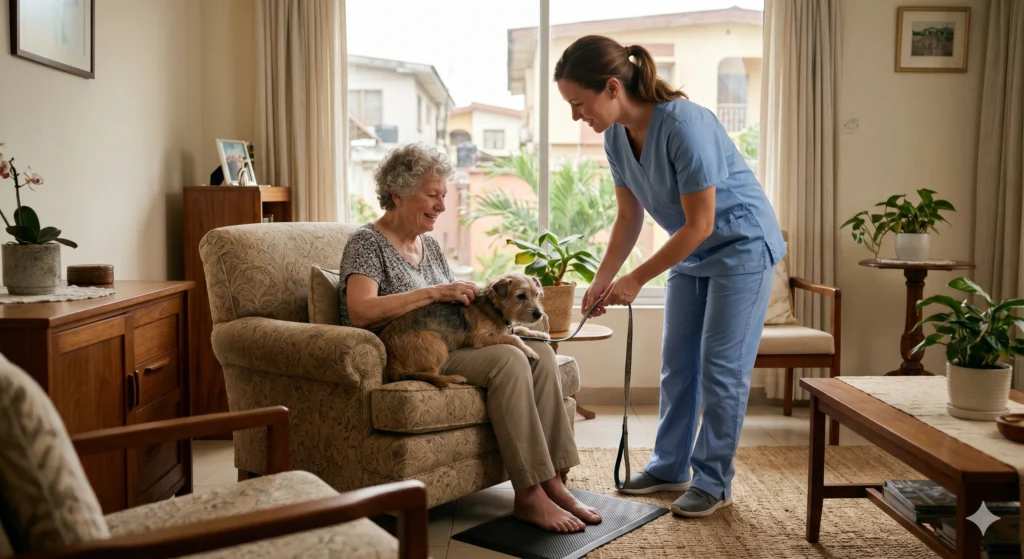
The psychological and physical benefits of pet ownership for older adults are heavily documented by medical science:
- Combating Loneliness: A pet provides constant, non-judgmental companionship, significantly reducing feelings of isolation and depression after the loss of a spouse.
- Routine and Purpose: Knowing that another living creature relies on them for food and care gives seniors a profound sense of daily purpose.
- Physical Health: The simple act of petting a dog or cat releases oxytocin (the bonding hormone) and lowers cortisol levels, which has been shown to reduce blood pressure and decrease anxiety.
However, as a senior’s mobility declines or cognitive issues emerge, caring for a pet can transition from a joyful routine to a dangerous physical burden.
Adult children are often torn. They see how much joy “Buster” or “Fluffy” brings to their mother, but they also see the massive safety risks the pet introduces into the home.
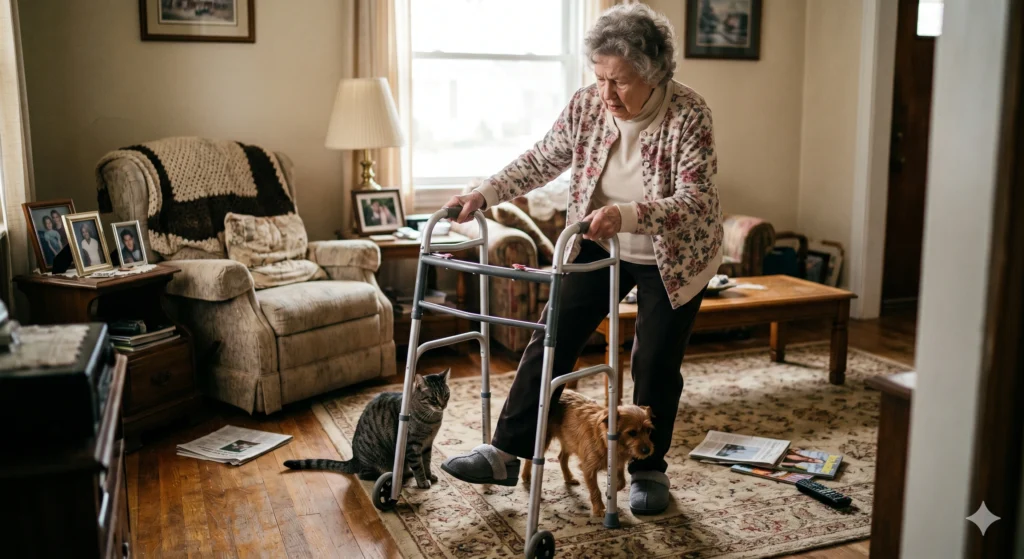
- The Tripping Hazard: Small dogs and cats love to weave between legs. For a senior with slow reaction times, a shuffled gait, or a walker, a pet underfoot is one of the leading causes of catastrophic hip fractures and falls.
- The “Pull” Hazard: Walking a medium-to-large dog on a leash is incredibly dangerous for a frail senior. If the dog suddenly lunges at a squirrel, the senior lacks the core strength to brace themselves and can be pulled violently to the pavement.
- Hygiene and Heavy Lifting: Bending down to clean a soiled litter box, or attempting to lift a 40-pound bag of dog food from the trunk of a car, strains the lower back and increases the risk of vertigo.
When families realize that a senior can no longer manage the physical demands of pet ownership, the conversation often turns to moving the senior into an assisted living facility (ALF).
This is where the heartbreak occurs. Many facilities have strict “No Pet” policies, or they have strict weight limits (e.g., “dogs under 15 lbs only”).
Forcing a senior to surrender a pet they have loved for a decade in order to move into a facility is deeply traumatic. It often triggers severe depression and a rapid decline in the senior’s overall health and will to live.
This is one of the most powerful arguments for aging in place. Keeping the senior in their own home means keeping the family together.
You do not have to choose between your parent’s physical safety and their emotional happiness. When you hire a professional home care agency, you are hiring a team that supports the entire household pets included.
Here is how a caregiver mitigates the risks while preserving the bond:
If your loved one does not currently have a pet but is expressing deep loneliness, adopting one can be a wonderful idea if done correctly.
- Avoid Puppies and Kittens: They require immense energy and training and present severe tripping hazards.
- Adopt Senior Pets: Older, rescue animals (ages 7+) are generally calm, house-trained, and content to simply lay on the sofa next to their owner. They are the perfect, low-energy companions for elderly adults.
- Consider Cats: Cats do not require outdoor walks, making them an excellent choice for seniors with severe mobility limitations.
One of the biggest anxieties seniors have is, “What will happen to my dog if I have to go to the hospital or if I pass away?”
Family members must proactively address this fear. Have a concrete, written plan in place. Assure your parent that if they require a sudden hospital stay, the caregiver or a specific family member will step in immediately to feed and care for the animal, ensuring the pet will never be sent to a shelter.
At Shal We Home Care, serving Lee, Collier, and Hendry counties, we understand that pets are family.
During our initial consultation, we ask about the pets in the home. We purposefully match your loved one with a caregiver who is an animal lover, ensuring that the caregiver is comfortable around dogs or cats. Our goal is to provide the physical labor required so your loved one can simply enjoy the purrs, the tail wags, and the unconditional love that makes life at home so special.
- Pets are Medicine: The emotional and physical health benefits of pet ownership for seniors are massive and combat severe isolation.
- Beware the Leash: Walking a dog is a high-risk activity for frail seniors and often results in falls.
- Avoid the Facility Heartbreak: In-home care allows seniors to avoid the trauma of surrendering a beloved pet to a shelter in order to move to a facility.
- Outsource the Chores: Caregivers handle the dog walking, heavy lifting, and litter box cleaning, removing the physical risks from the senior.
- Plan for Emergencies: Establish a clear plan for the pet’s care in the event the senior is hospitalized.
Are physical limitations threatening your loved one’s ability to keep their pet? They don’t have to say goodbye to their best friend.
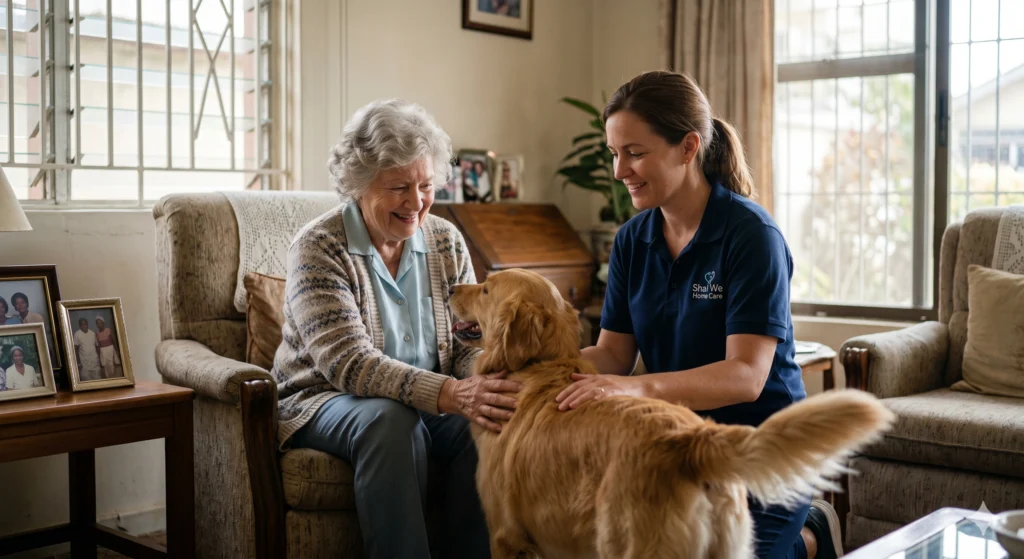
Contact Shal We Home Care today. Let our pet-friendly caregivers provide the support needed to keep your whole family safe and happy at home in Southwest Florida.