
Does your aging parent have dementia, or are they suffering from severe depression? Learn how to spot “pseudodementia” and why treating isolation can restore memory.
When a senior suddenly exhibits severe memory loss, confusion, and cognitive decline, families often assume it is Alzheimer’s disease. However, these are also the exact symptoms of “pseudodementia,” a cognitive impairment caused by severe, untreated clinical depression. Unlike irreversible Alzheimer’s, pseudodementia is entirely treatable. Caregivers can distinguish between the two by noting the speed of onset (depression happens rapidly, dementia is slow) and the senior’s reaction to memory tests. Curing the underlying isolation through professional companion care and medical intervention often fully restores the senior’s cognitive abilities.
When an adult child visits their aging parent in Fort Myers or Naples and notices the house is a mess, the mail is piling up, and their parent is struggling to remember simple words or recent events, panic sets in immediately.
The immediate, terrifying assumption is Alzheimer’s disease or a related dementia. The family begins looking into memory care facilities, assumes the worst, and prepares for a long, heartbreaking decline.
But what if the brain isn’t dying? What if the brain is simply shutting down due to overwhelming emotional pain?
In the geriatric medical community, there is a phenomenon where severe clinical depression perfectly mimics the cognitive decline of Alzheimer’s disease. If families do not know how to spot the difference, a senior may be incorrectly labeled as “demented,” placed in a facility, and left to languish from a highly treatable mood disorder.
“Pseudodementia” is not a formal diagnosis; it is a clinical term used to describe cognitive impairment that is secondary to a psychiatric illness most commonly, severe depression.
When a younger person gets depressed, they usually express feelings of sadness, cry frequently, and talk about their emotional pain. When an elderly person gets depressed, it often manifests biologically rather than emotionally. Their executive function (the ability to plan and organize) collapses. Their brain becomes so bogged down by the heavy “fog” of depression that it stops processing short-term memories. They appear confused, apathetic, and cognitively impaired exactly like an Alzheimer’s patient.
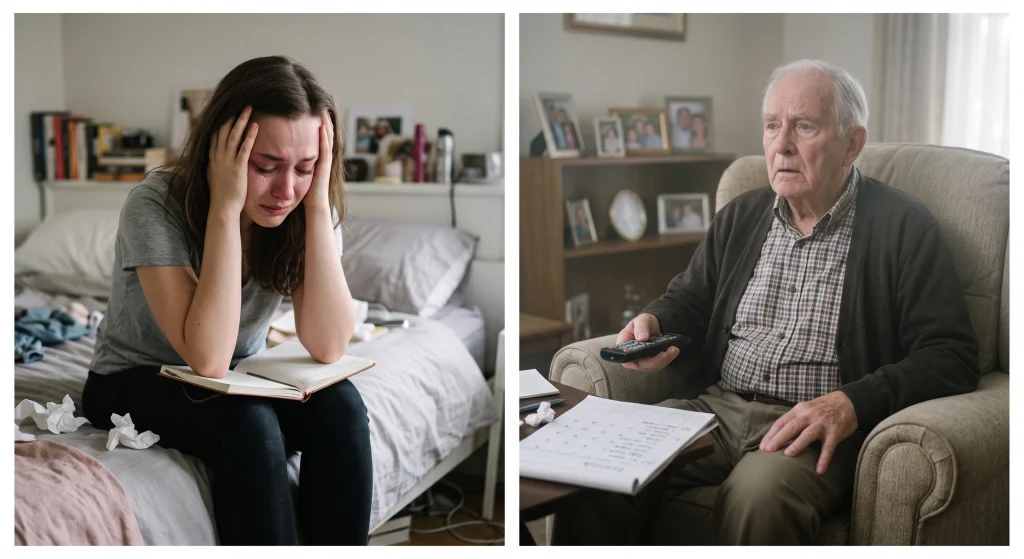
Because the symptoms look identical to the untrained eye, you must act as a behavioral detective. Neurologists look for three key differences to distinguish between a dying brain and a depressed brain:
Why is pseudodementia so common? The answer is profound social isolation.
In Southwest Florida, many seniors live thousands of miles away from their extended families. When a spouse passes away, or when they lose the physical mobility required to leave the house, their social circle vanishes overnight. Human beings are not biologically wired for prolonged isolation.
Without human interaction, the senior’s world shrinks to the size of their living room. This lack of social and cognitive stimulation starves the brain, triggering a deep, clinical depression that eventually shuts down their cognitive processing.
If pseudodementia goes untreated, the apathy deepens. The senior will stop eating, leading to severe malnutrition and dehydration. They will stop taking their life-saving medications.
Even more dangerously, recent neurological studies suggest that prolonged, untreated depression in the elderly actually causes physical changes in the brain that significantly increase their risk of developing actual Alzheimer’s disease later on. You must intervene.
If you suspect your parent is suffering from depression rather than dementia, you must act quickly.
- Demand a Comprehensive Geriatric Assessment: Do not accept a quick 10-minute diagnosis from a general practitioner. Request an evaluation from a geriatric psychiatrist or a neurologist. They will perform a “Geriatric Depression Scale” test alongside cognitive testing.
- Medical Intervention: If diagnosed with depression, the doctor may prescribe specialized, senior-safe antidepressants. Because senior metabolisms are different, finding the right medication takes time and careful monitoring.
- Cure the Root Cause: Medication is only a band-aid if the senior returns to a dark, empty house. You must actively cure the isolation that caused the depression in the first place.
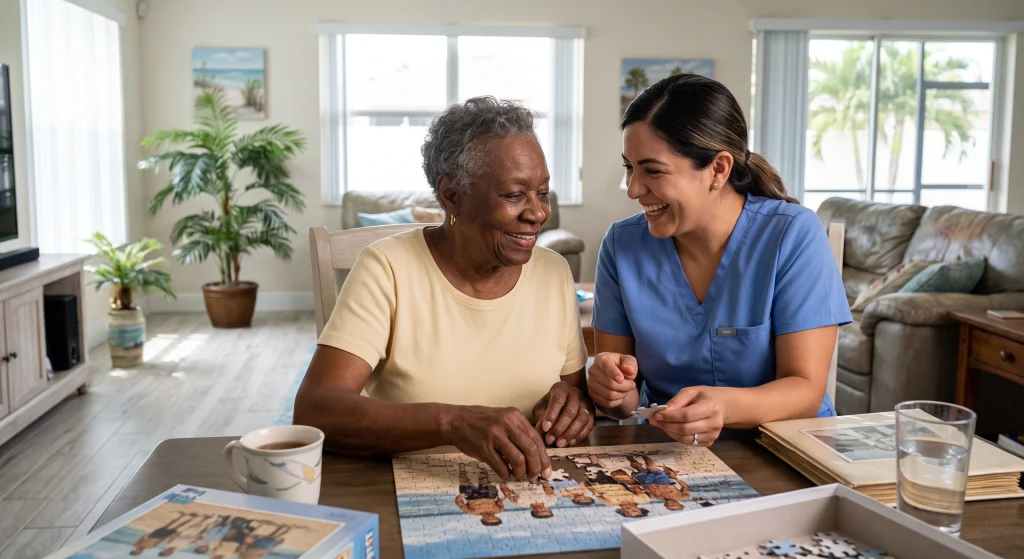
The most powerful antidote to senior isolation is consistent, warm, and meaningful human connection.
At Shal We Home Care, serving Lee, Collier, and Hendry counties, we provide much more than just physical safety; we provide a lifeline to the outside world.
- Active Companionship: Our caregivers don’t just sit and watch TV. We engage seniors in conversation, play their favorite games, and encourage them to reminisce, which acts as a powerful cognitive workout.
- Restoring Purpose: We encourage seniors to participate in meal prep or light household tasks alongside us, giving them back a sense of daily purpose and accomplishment.
- The Turnaround: It is incredibly common for our caregivers to start working with a client who is withdrawn and confused, only to see them “wake up” and become sharp, witty, and joyful after just a few weeks of dedicated social interaction.
- It’s Not Always Alzheimer’s: Severe depression in seniors perfectly mimics dementia, causing confusion, memory loss, and apathy.
- Watch the Timeline: A rapid, sudden onset of cognitive decline points toward depression or infection, not Alzheimer’s.
- Look for Apathy: Depressed seniors will simply say “I don’t know” and give up on memory tests, whereas dementia patients will try to guess or hide their mistakes.
- Isolation is Toxic: Prolonged loneliness physically shuts down an aging brain’s executive function.
- Connection is the Cure: Utilizing a professional companion caregiver provides the daily social stimulation required to lift the fog of depression and restore cognition.
Is your loved one fading away in an empty house? Don’t let isolation steal their mind.
Contact Shal We Home Care today to learn how our compassionate, active companion care services can bring joy, conversation, and cognitive vitality back to your parent in Southwest Florida.