
Diabetes in seniors requires daily vigilance. Learn how to manage dangerous blood sugar swings, protect against diabetic foot neuropathy, and ensure healthy meal prep in Florida.
Managing Type 2 Diabetes in seniors at home requires strict daily routines. Caregivers must monitor for symptoms of hypoglycemia (dizziness, confusion), which can mimic dementia; ensure precise meal timing to stabilize blood sugar; and perform daily foot inspections to prevent undetected wounds caused by diabetic neuropathy. Utilizing in-home care services for specialized diabetic meal preparation and medication reminders significantly reduces the risk of emergency hospitalizations for diabetic seniors.
Type 2 diabetes is one of the most common chronic conditions among older adults. In fact, many seniors have lived with it for decades, managing it successfully with a simple daily pill and a balanced diet.
However, as a senior ages, managing diabetes becomes exponentially more difficult and more dangerous. The systems that used to work flawlessly begin to fail. A senior with mild memory loss may forget if they took their insulin, leading to a fatal double dose. A senior with arthritis may lose the dexterity required to check their blood sugar with a lancet.
If you are a family caregiver for a diabetic parent in Southwest Florida, you must recognize that diabetes is a disease that affects the entire body: the brain, the eyes, the heart, and the feet. It requires daily, meticulous vigilance to prevent severe complications.
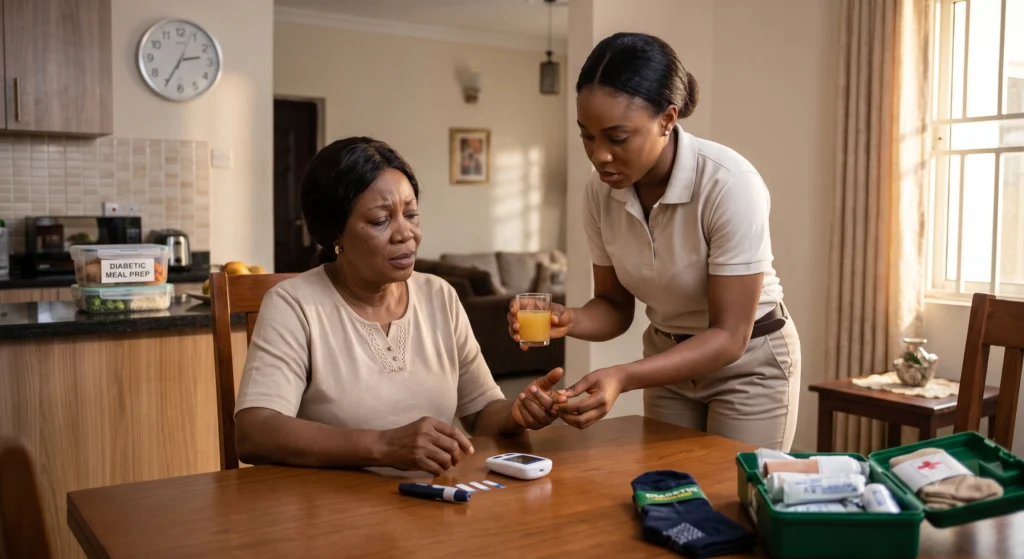
One of the greatest immediate risks for a senior with diabetes is hypoglycemia (dangerously low blood sugar).
This happens when a senior takes their diabetes medication but forgets to eat or eats too little. The brain requires glucose to function. When blood sugar drops rapidly, the brain begins to shut down.
- The Symptoms: Sweating, shaking, pale skin, extreme dizziness, and profound confusion or slurred speech.
- The Misdiagnosis: Family members often misinterpret this sudden, severe confusion as a stroke or a sudden worsening of dementia.
- The Action Plan: You must always have fast-acting glucose on hand. Keep juice boxes, glucose tablets, or hard candies in the kitchen, the bedroom, and the car. If they are conscious but confused, administer 15 grams of fast-acting carbs and wait 15 minutes.
Over time, high blood sugar damages the capillary blood vessels that feed the nerves, particularly in the extremities. This results in diabetic neuropathy, a loss of feeling in the feet and toes.
For a senior living in Florida, this is a catastrophic risk.
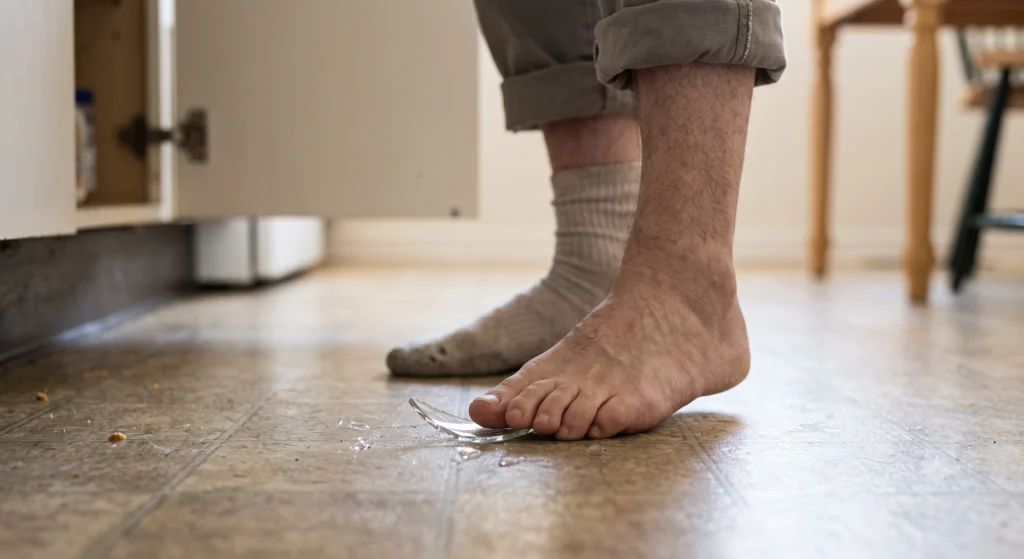
- The Danger: A senior might step on a sharp seashell in the driveway or a piece of glass in the kitchen. Because of neuropathy, they will not feel it. The wound goes unnoticed. Because diabetes also impairs blood circulation, the wound does not heal. Within days, it becomes a severe, gangrenous ulcer that can lead to amputation.
- The Daily Protocol: A caregiver must physically inspect the senior’s feet every single day. Check between the toes for cuts, redness, or blisters.
- Footwear: Never allow a diabetic senior to walk barefoot, even inside the house. They must wear supportive, closed-toe slippers or specialized diabetic shoes at all times to protect their skin.
Diabetes damages the blood vessels in the retina, leading to blurry vision, dark spots, and eventual blindness.
As vision fails, managing the logistics of the disease becomes incredibly hazardous. A senior with failing eyesight cannot accurately read the numbers on an insulin syringe, nor can they read the tiny print on their medication bottles.
- The Fix: Transition them to continuous glucose monitors (CGMs) like the FreeStyle Libre, which can send blood sugar readings directly to a smartphone with a large font or audible alerts. Ensure pill organizers are color-coded and feature massive, bold lettering.
Nutrition is the frontline defense against blood sugar spikes, but seniors living alone often resort to the “Tea and Toast” diet, a highly processed, simple carbohydrate that instantly spikes glucose levels.
- Timing is Everything: A diabetic senior cannot skip meals. They must eat on a strict, predictable schedule to align with their medication.
- The Plate Method: Ensure every meal follows the diabetic plate method: 50% non-starchy vegetables (spinach, broccoli), 25% lean protein (chicken, fish), and 25% complex carbohydrates (brown rice, sweet potatoes).
- Remove the Temptation: Clear the pantry of high-sugar, low-nutrition snacks. If they crave sweets, replace cookies with fresh berries or sugar-free gelatin.
In Lee, Collier, and Hendry counties, the summer heat poses an extra threat.
When blood sugar levels run high, the kidneys work overtime to flush the excess sugar out through urine. This frequent urination rapidly drains the body of water. Combine this with the intense Florida humidity, and a diabetic senior can reach a state of severe dehydration in a matter of hours. Dehydration, in turn, makes the blood sugar even more concentrated, creating a vicious cycle.
- Monitor Intake: Seniors must drink water consistently throughout the day, long before they feel thirsty. (Avoid sugary fruit juices or regular sodas, which will spike their glucose).
Managing meal timing, foot inspections, and medication adherence for a diabetic parent is incredibly stressful for an adult child working a full-time job.
At Shal We Home Care, we provide the rigorous daily support required to keep diabetic seniors safe and healthy.
- Diabetic Meal Preparation: Our caregivers prepare fresh, nutrient-dense, low-glycemic meals tailored to your loved one’s dietary needs, ensuring they eat at the exact right times to stabilize their blood sugar.
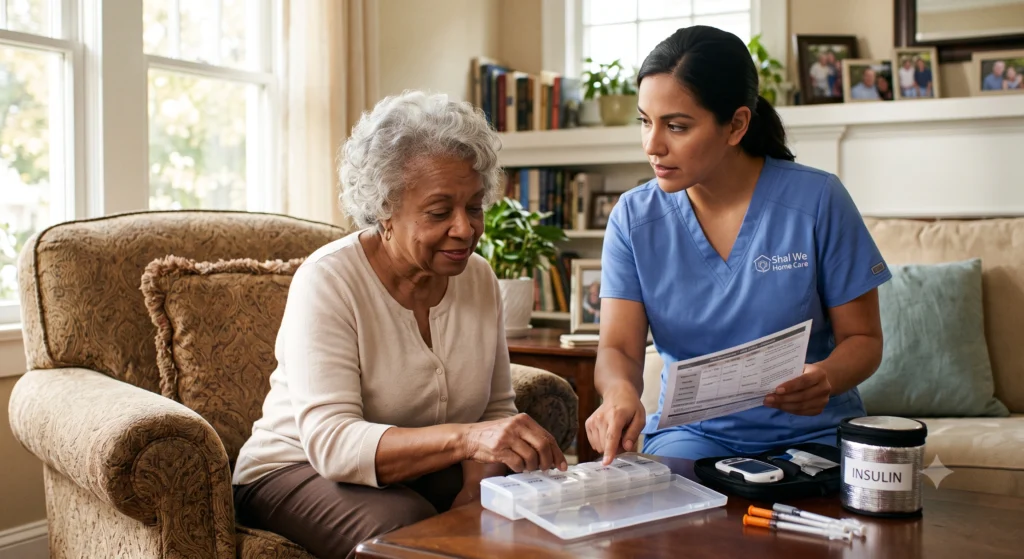
- Medication Reminders: We provide strict reminders, ensuring they take their oral medications or prepare for insulin on schedule.
- Daily Vigilance: Our caregivers assist with bathing and dressing, allowing us to perform visual inspections of their feet and skin to catch any hidden wounds before they become life-threatening infections.
- Watch for “Fake” Dementia: Sudden confusion is a hallmark sign of severe low blood sugar (hypoglycemia); always keep fast-acting glucose on hand.
- Never Go Barefoot: Diabetic neuropathy prevents seniors from feeling cuts. Inspect their feet daily and enforce indoor footwear.
- Upgrade the Tech: Utilize continuous glucose monitors (CGMs) if failing eyesight makes traditional finger-prick testing dangerous.
- Schedule the Meals: Strict meal timing and low-glycemic diets are mandatory to prevent dangerous glucose spikes.
- Get Daily Support: Utilize a professional home care agency to manage complex meal prep, hydration, and medication reminders.
Is managing your parent’s diabetes becoming overwhelming? You don’t have to navigate this complex disease alone.
Contact Shal We Home Care today. Let our trained professionals provide the daily nutrition, safety, and vigilance your loved one needs in Southwest Florida.