
Stuck on the Florida APD iBudget waitlist? Learn how the 7 prioritization categories work, how to advocate for crisis status, and how to survive the wait in SWFL.
Navigating the Florida Agency for Persons with Disabilities (APD) iBudget waiver waitlist requires proactive advocacy. Because waits can last a decade, families must keep their contact information updated, rigorously document all behavioral and medical changes to prove a “crisis” status (which expedites funding), explore interim Medicaid state plan services, and utilize private respite care or localized grants while waiting for full waiver funding to activate.
If you are raising a child or caring for an adult with autism, cerebral palsy, Down syndrome, or another intellectual/developmental disability (IDD) in Florida, you are likely intimately familiar with three letters: APD (Agency for Persons with Disabilities).
When your loved one is first diagnosed, doctors and social workers tell you to “apply for APD immediately.” You fill out the mountain of paperwork, submit the medical evaluations, and receive a letter stating you are eligible.
And then… nothing happens.
You are placed on the waitlist. In the state of Florida, the APD waitlist (officially known as the pre-enrollment category) is notoriously long. There are currently tens of thousands of individuals waiting for funding. It is not uncommon for families in Lee, Collier, and Hendry counties to wait 7 to 10 years before receiving a single dollar of state support.
For exhausted parents dealing with aggressive meltdowns, elopement risks, and severe caregiver burnout, waiting a decade is not an option. You cannot simply sit passively on the list; you must actively navigate the system. Here is your survival guide.
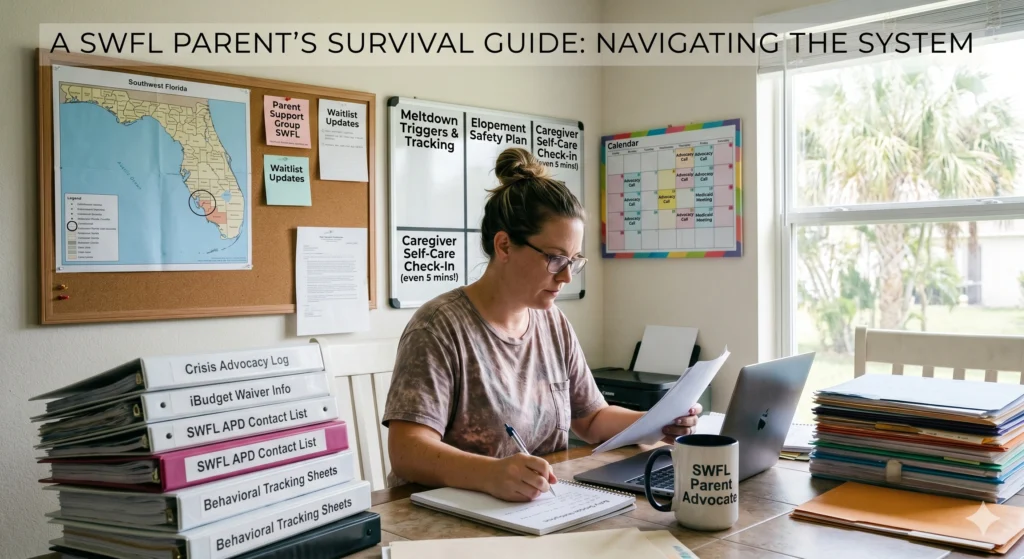
To understand the wait, you have to understand the prize. The APD administers the iBudget Florida Waiver (a Medicaid Home and Community-Based Services waiver).
If and when you get off the waitlist, this waiver provides substantial funding to keep individuals with developmental disabilities out of institutions and integrated into their communities. It pays for life-changing services, including the following:
- Adult day training programs.
- Supported employment coaching.
- Consumable medical supplies (like adult incontinence briefs).
- In-Home Respite Care and Personal Care Assistance.
The waiver is an absolute lifeline, but the state legislature limits the funding available each year, creating the massive bottleneck.
The Florida APD waitlist is not a “first-come, first-served” line. It is a triage system based on urgency. The state divides applicants into 7 distinct categories. If you are placed in Category 6 or 7, you will likely wait for years. If you are moved to Category 1 or 2, you may receive funding within months.
- Category 1 (Crisis): The individual is currently homeless, living in an unsafe environment, or the primary caregiver is utterly unable to provide care due to their own severe illness or death.
- Category 2 (Children in Welfare): Children transitioning out of the foster care system.
- Category 3 (Intensive Needs): Individuals requiring intense medical or behavioral intervention to prevent institutionalization.
- Category 4 (Transitioning Students): Individuals aged 18-22 who are graduating from the school system and need adult services to maintain skills.
- Category 5 (Aging Caregivers): The primary caregiver is age 70 or older.
- Category 6 (Age 21+): Adults 21 and over who do not meet criteria for categories 1-5.
- Category 7 (Under Age 21): Children under 21 who do not meet criteria for categories 1-5 (usually because the school system is currently mandated to provide for their daytime needs).
If your situation degrades, you must inform APD immediately to request a category change. They will not know you are in crisis unless you aggressively document it.
- Caregiver Illness: If you, the primary caregiver, are diagnosed with cancer, require major surgery, or suffer a physical injury that prevents you from lifting or caring for your child, contact your local APD office immediately. Submit doctors’ notes proving your incapacitation. This can move you to Category 1.
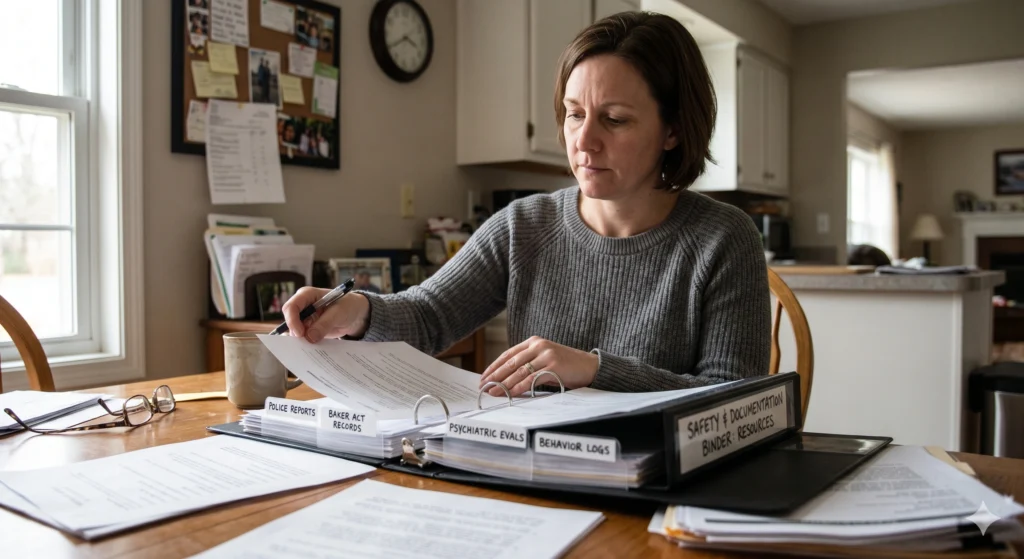
- Escalating Behaviors: If your autistic teenager has grown larger than you and is exhibiting violent meltdowns or severe elopement (wandering) that the police have had to respond to, document it. Keep a binder with police reports, Baker Act records, and psychiatric evaluations to prove the home environment has become unsafe.
- The Squeaky Wheel: Stay in constant, polite contact with your APD liaison. Request a “Crisis Application” if you believe you meet the criteria.
While waiting for the golden ticket of the iBudget waiver, you must protect your position.
- Never Miss a Letter: APD conducts periodic “Waitlist Questionnaires” to confirm you still need services. If they mail this to an old address and you do not reply, you will be removed from the waitlist. Update your address with the APD office every time you move.
- Maintain Medicaid: The iBudget waiver is a Medicaid program. If your child loses their Florida Medicaid eligibility (due to a failure to recertify or income changes), they will be booted from the waiver waitlist.
- Explore the “Medicaid State Plan”: While waiting for the waiver, children under 21 who have regular Medicaid can often access “State Plan” services, which may cover some basic personal care or behavioral therapies (ABA) in the interim.
You cannot survive a decade without a break. You must find interim solutions to prevent family burnout.
- School District Resources: Maximize what the public school system provides (IEPs, speech, occupational therapy, and extended school year programs).
- Local Non-Profits: Organizations like the Autism Speaks local chapters or the Center for Independent Living in Southwest Florida sometimes offer micro-grants to help families pay for a few hours of emergency respite.
- Private Pay Respite: While paying out-of-pocket is a financial burden, prioritizing just 4 to 8 hours of private-pay respite care a week can be the difference between preserving a marriage and total caregiver collapse.
At Shal We Home Care, we see the exhaustion in the eyes of special needs parents waiting for state funding in Lee, Collier, and Hendry counties.
We offer highly specialized, private-pay special needs respite care.
- We don’t send standard babysitters; we send professionals trained in de-escalation, sensory management, and routine adherence.
- While you fight the bureaucratic battles of the APD waitlist, we can step in to give you a few hours to sleep, grocery shop, or spend quality time with your neurotypical children.
- Once your iBudget waiver is eventually approved, you will already have a trusted agency relationship established to smoothly transition into funded care.
- It is a triage system: The APD waitlist is prioritized by crisis and age, not by how long you have been waiting.
- Document Everything: If a caregiver becomes sick or behaviors become dangerous, submit medical and police documentation immediately to request Category 1 crisis status.
- Keep Contact Info Current: Respond to all APD mail immediately to avoid being purged from the list.
- Utilize Medicaid: Look into standard Medicaid State Plan services while waiting for the waiver.
- Seek Private Respite: Protect your mental health by hiring private respite care to survive the waitlist years.
Are you exhausted from waiting for state help? You don’t have to carry the burden alone while the system grinds on.
Contact Shal We Home Care today to discuss our specialized, private-pay respite care options for special needs families in Southwest Florida.