
Bringing a parent home after a stroke is overwhelming. Learn how to manage hemiparesis, post-stroke fatigue, aphasia, and rehabilitation during the critical first 90 days.
The first 90 days of stroke recovery at home are the most critical window for neuroplasticity (brain healing). Family caregivers must ensure strict adherence to physical and occupational therapy exercises, modify the home to prevent falls due to one-sided weakness (hemiparesis), monitor heavily for post-stroke depression, and provide immense patience for aphasia (speech loss). Because the physical demands of stroke care are massive, families frequently require professional in-home care for safe transfers, bathing, and supervision.
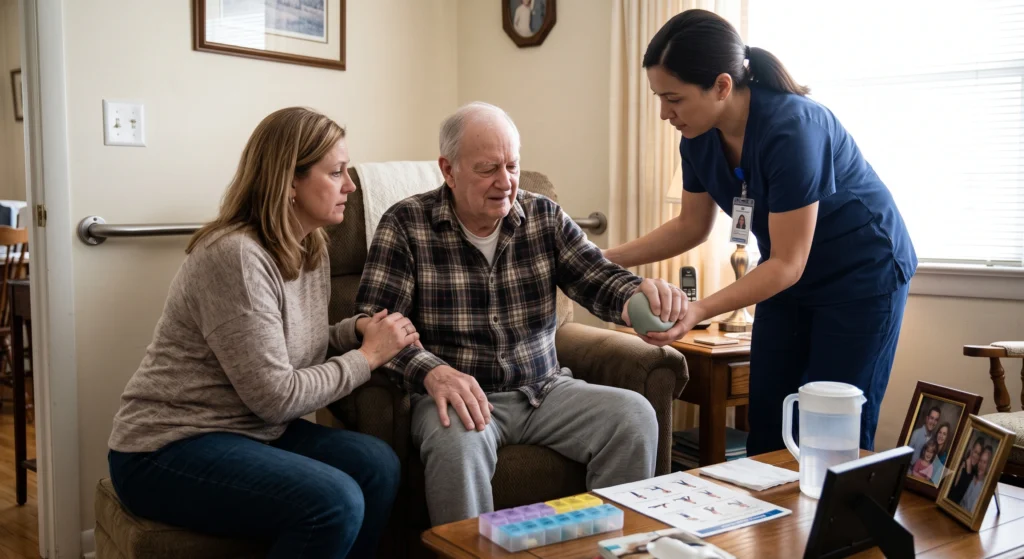
A stroke changes a family’s life in an instant. One day, your parent is entirely independent; the next, they are lying in a hospital bed, fighting to regain basic motor functions.
When the hospital or inpatient rehab facility finally discharges a stroke survivor to their home in Southwest Florida, families initially feel immense relief. But that relief is almost instantly replaced by sheer panic. You walk through the front door and realize that the house is not a hospital. There are no nurses at the push of a button, no adjustable beds, and no wide, sterile hallways.
Recovering from a stroke at home is a marathon, not a sprint. The physical and cognitive demands placed on the family caregiver are astronomical. To navigate this successfully and ensure your loved one regains maximum functionality, you need a clinical, structured approach to the first 90 days.
Neurologists often refer to the first 3 to 6 months after a stroke as the “Golden Window.”
During this time, the brain is in a state of heightened neuroplasticity. The brain is actively trying to rewire itself, bypassing the dead tissue damaged by the stroke and creating new neural pathways to relearn how to walk, talk, and swallow.
- Use It or Lose It: Neuroplasticity requires relentless repetition. If the physical therapist prescribes exercises to be done three times a day, they must be done three times a day. If you allow the senior to simply sit in a recliner all day out of pity or exhaustion, the brain will not rewire, and the loss of function will become permanent.
The most common physical aftermath of a stroke is hemiparesis (weakness on one side of the body) or hemiplegia (paralysis on one side).
This one-sided weakness completely destroys a senior’s center of gravity, making them an extreme fall risk.
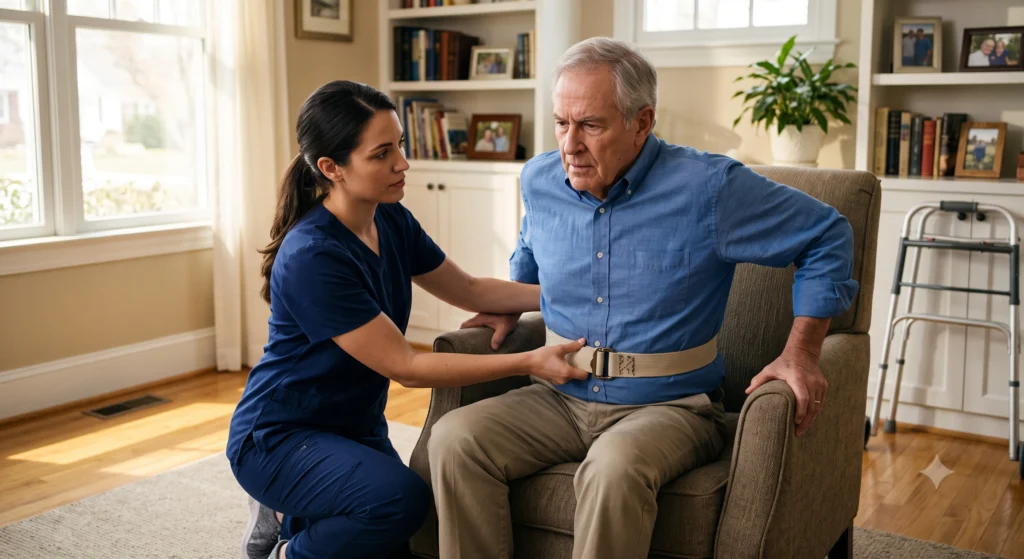
- Transfer Safety: Never pull a stroke survivor by their weak arm to help them stand; you can easily dislocate their shoulder. Learn how to use a gait belt around their waist to support their core while they use their strong side to push up.
- Home Modifications: You must clear the home of all tripping hazards. Place sturdy grab bars in the bathroom specifically positioned so the senior can reach them with their strong hand.
- Dressing: Teach them to dress their weak side first and undress their strong side first. This prevents them from getting stuck in their clothing.
Family caregivers are often alarmed by how much a stroke survivor sleeps. They may sleep 14 hours a day and still feel exhausted.
Post-stroke fatigue is not laziness. A healthy brain uses about 20% of the body’s energy. A brain trying to heal from a massive trauma uses exponentially more. The sheer mental effort required to command a weak leg to take a single step is exhausting.
- Pacing the Day: Do not schedule a doctor’s appointment, physical therapy, and a family visit all on the same day.
- Scheduled Rest: Enforce strict, quiet resting periods (without television or loud conversations) in a dark room to allow the brain to recover from sensory overload.
If the stroke occurred in the left hemisphere of the brain, the senior will likely suffer from aphasia, the impairment of language.
They may know exactly what they want to say, but the wrong words come out, or no words come out at all. This is incredibly frustrating for the survivor and often leads to severe depression and anger.
- Patience is Mandatory: Never rush them or finish their sentences for them unless they ask for help. Give them a full 10 to 15 seconds to process a question and formulate an answer.
- Simplify Choices: Do not ask open-ended questions like, “What do you want for lunch?” Ask yes/no questions, or offer two visual choices: “Do you want the turkey sandwich or the soup?” while pointing to both.
- Non-Verbal Cues: Rely heavily on thumbs up/thumbs down, facial expressions, and communication boards (whiteboards with pictures of common needs like “water,” “bathroom,” or “pain”).
The risk of having a second stroke is highest in the first 90 days following the initial event. Caregivers must be hyper-vigilant medical monitors.
- Medication Adherence: The patient will be on a strict regimen of blood thinners, blood pressure medications, or statins. Missing a single dose can trigger a clot. A foolproof pill organizer system is required.
- Watch the Diet: If they have dysphagia (difficulty swallowing), ensure their food is properly pureed and liquids are thickened as prescribed by the speech therapist to prevent fatal aspiration pneumonia.
- Monitor the F.A.S.T. Signs: Always watch for Face drooping, Arm weakness, Speech difficulty, and Time to call 911. If any old symptoms suddenly worsen, go back to the ER immediately.
Family members are daughters, sons, and spouses; they are not physical therapists or nurses. The physical strain of lifting a stroke survivor and the emotional strain of aphasia cause rapid caregiver burnout.
At Shal We Home Care, we provide the heavy lifting required for successful post-stroke rehabilitation in Lee, Collier, and Hendry counties.
- Stand-By Assist: Our caregivers ensure safe mobility, using proper body mechanics to assist your loved one from the bed to the bathroom without falling.
- Therapy Cheerleaders: While we don’t prescribe the physical therapy, we ensure the “homework” gets done. We motivate the survivor to do their daily exercises, capitalizing on that golden window of neuroplasticity.
- Respite for the Family: We manage the grueling personal care tasks, like bathing, toileting, and feeding, so the family caregiver can rest, preserve their own health, and provide emotional support rather than just physical labor.
- Use It or Lose It: The first 90 days are critical for brain healing. Daily physical therapy exercises are non-negotiable.
- Protect the Weak Side: Never pull a stroke survivor by their affected arm, and teach them to dress the weak side first.
- Expect Extreme Fatigue: The brain requires massive energy to heal; schedule mandatory, quiet rest periods every afternoon.
- Simplify Language: When dealing with aphasia, use simple, yes/no questions and allow 10+ seconds for a response.
- Get Physical Backup: The physical demands of stroke care will break a single family caregiver. Hire professional home care for safe transfers, bathing, and vital respite.
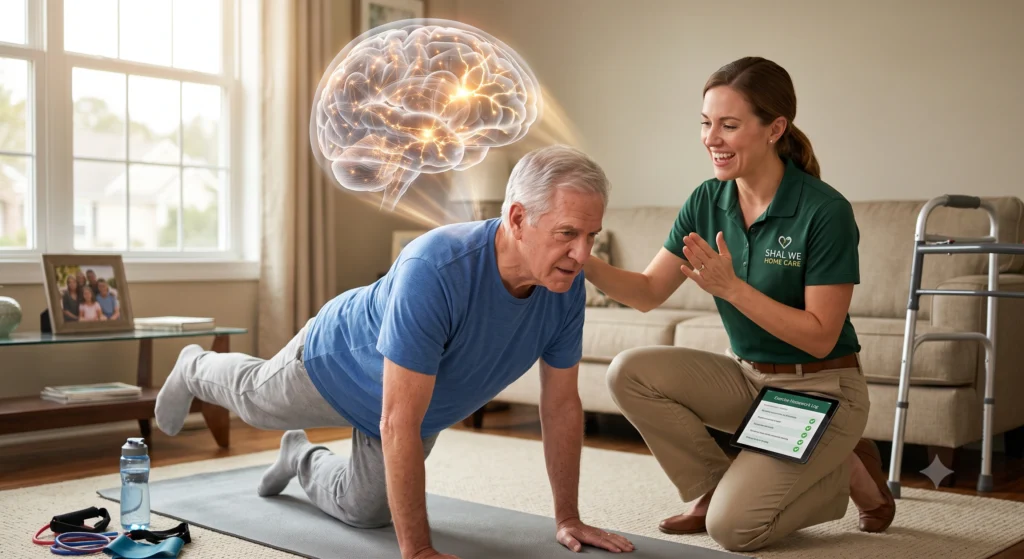
Are you bringing a stroke survivor home from the hospital? You need a team to make the recovery successful.
Contact Shal We Home Care today to learn how our specialized caregivers provide the safe, daily support necessary for maximum stroke rehabilitation in Southwest Florida.