
Receiving an Alzheimer’s diagnosis is terrifying. Use our detailed guide to the 7 Stages of Alzheimer’s (the FAST scale) to understand what to expect and how to prepare.
Alzheimer’s disease progresses through 7 distinct clinical stages, often measured by the FAST (Functional Assessment Staging Test) scale. Stages 1-3 involve pre-clinical or mild cognitive decline (often mistaken for normal aging). Stages 4-5 represent moderate decline, where seniors lose the ability to manage finances, drive, and eventually dress appropriately. Stages 6-7 mark severe decline, where individuals require 24/7 care, lose the ability to speak coherently, and ultimately lose basic motor functions like swallowing and walking.

When a doctor in Southwest Florida sits across from you and confirms that your parent has Alzheimer’s disease, the immediate reaction is profound shock and grief. But very quickly, that grief is followed by intense fear of the unknown.
What happens next? How fast will they decline? Will they still know who I am next Christmas? When will I have to take their car keys away?

Alzheimer’s is a terminal, progressive disease. It does not look the same on Day 1 as it does on Year 5. For family caregivers, trying to navigate this journey without a map leads to constant crisis management. To survive the marathon of caregiving, you must understand the clinical trajectory of the disease so you can prepare legally, financially, and emotionally for what is coming.
At Shal We Home Care, we guide families through every single phase of this journey in Lee, Collier, and Hendry counties. Here is a clear, compassionate roadmap outlining the 7 stages of Alzheimer’s disease.
Medical professionals commonly use the Functional Assessment Staging Test (FAST) to track the progression of Alzheimer’s. Rather than just looking at memory tests, the FAST scale evaluates functionality what a person can and cannot do independently. Understanding these stages helps families know exactly when to step in and when to hire professional home care.
Note: Every senior is different. Some may stay in Stage 4 for several years, while others may progress from Stage 5 to 6 in a matter of months.

These early stages are insidious because the symptoms are usually dismissed by the family and even the senior as “just normal aging.”
- Stage 1 (Normal Adult): No cognitive decline is evident. Brain changes may be happening microscopically, but there are absolutely no outward symptoms.
- Stage 2 (Normal Older Adult): The senior experiences very mild forgetfulness, such as occasionally forgetting a name or where they placed their keys. These are lapses that happen to everyone and do not impact their daily life or independence.
- Stage 3 (Early Alzheimer’s / Mild Cognitive Impairment): This is when family members typically start to notice something is slightly “off.”
- Symptoms: The senior may get lost driving to a familiar location in Fort Myers. They may struggle to find the right word in a conversation, or experience a noticeable drop in performance at work or in complex hobbies. They may begin reading a book but retain very little of it.
- Caregiver Action: This is the time to finalize all legal paperwork (Power of Attorney, living wills) while the senior still has the legal capacity to sign them.

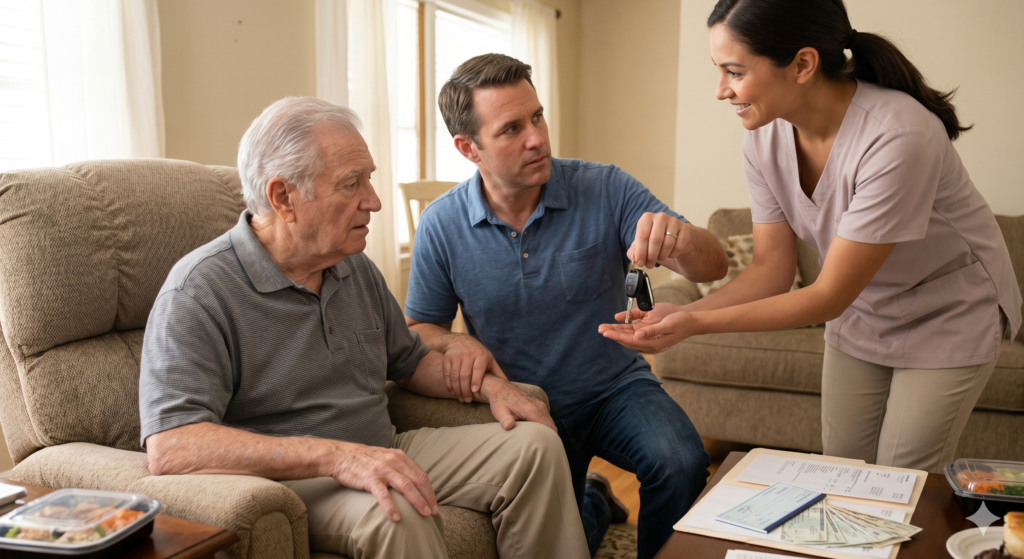
Stage 4 is a major turning point. The cognitive deficits are now obvious and undeniable. This is the stage where most seniors finally receive an official medical diagnosis.
- Symptoms: The individual struggles significantly with complex tasks, often called Instrumental Activities of Daily Living (IADLs). They can no longer manage their checkbook, pay bills accurately, or plan a dinner for guests. They may withdraw from social situations because following conversations has become too mentally exhausting. Their memory of recent events is very poor.
- Caregiver Action: This is the stage where independent living becomes dangerous. The family must take over the finances immediately. Driving must stop, as reaction times and spatial awareness are failing. This is the ideal time to introduce part-time companion care from an agency like Shalwe to help with driving, meal prep, and supervision.
In Stage 5, the senior can no longer survive safely without some daily assistance. Major memory gaps emerge.
- Symptoms: The senior may forget their own address, their phone number, or where they graduated from high school. They often become confused about the time, date, or season.
- The “Dressing” Hurdle: A key marker of Stage 5 is the inability to dress appropriately. A senior living in Florida might put on a heavy winter coat in July or put their clothes on backward.
- Caregiver Action: They require hands-on help laying out clothing and preparing meals. However, they usually still retain the ability to use the toilet independently and know their own name and the names of their closest family members.
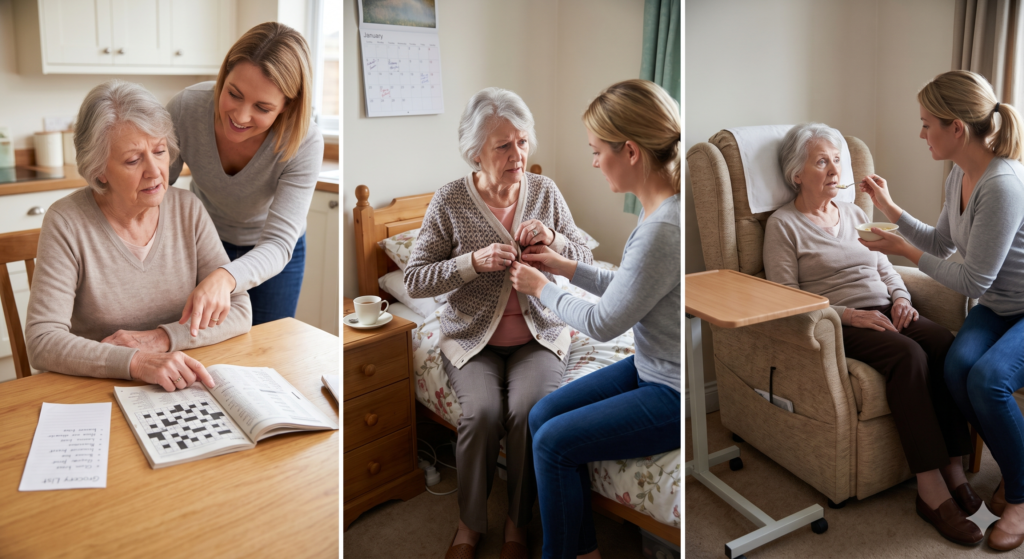
Stage 6 is the most physically and emotionally exhausting phase for family caregivers. The senior requires substantial, hands-on assistance for almost every activity of daily living.
- Symptoms: Memory continues to degrade severely. They may mistake their wife for their mother, or forget the names of their children entirely.
- Physical Decline: They require physical assistance to bathe, and they frequently develop urinary and fecal incontinence.
- Behavioral Changes: This is the stage where extreme personality changes occur. You may see intense paranoia, hallucinations, severe sundowning (evening agitation), wandering, and compulsive, repetitive behaviors (like wringing their hands or tearing tissues).
- Caregiver Action: 24/7 supervision is now an absolute medical necessity. Family caregivers who attempt to manage Stage 6 entirely alone almost always suffer from severe physical and mental burnout. Professional in-home memory care or overnight awake care is required to ensure safety.

In the final stage of Alzheimer’s, the disease destroys the brain’s ability to control the physical body.
- Symptoms: The senior loses the ability to respond to their environment. They may only speak a few unrecognizable words or stop speaking entirely.
- Motor Loss: They lose the ability to walk independently, sit up without support, and eventually, they lose the ability to smile or hold their head up. The muscles become rigid. Most critically, they lose the neurological reflex required to swallow food and liquids safely.
- Caregiver Action: Care shifts entirely to preserving dignity, managing pain, and preventing secondary complications (like bedsores or aspiration pneumonia). This stage often involves collaboration with specialized hospice care teams to provide palliative, end-of-life comfort in the home.
Alzheimer’s care is not static. What works in Stage 3 will not work in Stage 6.
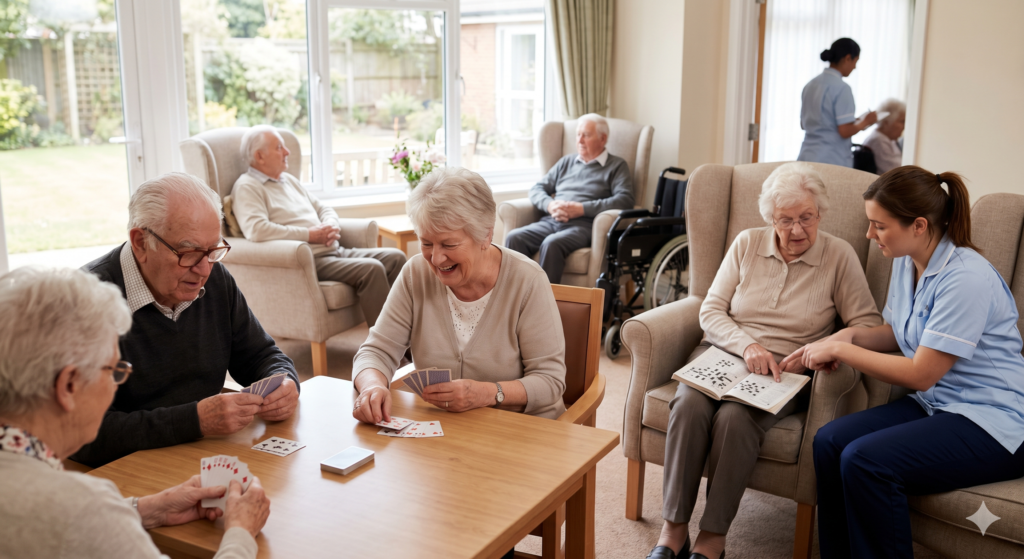
At Shal We Home Care, we provide “Progressive Memory Care.”
- In Stages 3 & 4: We act as companions and drivers, focusing on cognitive stimulation and preserving their dignity while they grieve the loss of their independence.
- In Stages 5 & 6: We step in to manage the heavy lifting. Our trained caregivers manage incontinence care, de-escalate aggressive behaviors, prevent wandering, and provide the massive respite family caregivers need to survive this grueling phase.
- In Stage 7: We provide gentle, compassionate personal care, ensuring the senior is clean, comfortable, and treated with absolute reverence in their final months.
- Early Stages (1-3): Subtle memory loss occurs. This is the critical window to secure legal and financial paperwork.
- Middle Stages (4-5): The loss of complex skills (finances, driving, appropriate dressing). Part-time home care becomes highly recommended.
- Severe Stage (6): Personality changes, incontinence, and wandering emerge. 24/7 supervision is required.
- Late Stage (7): Loss of speech and physical motor skills, including swallowing. Care shifts to total comfort and hospice collaboration.
- Adapt the Plan: Your caregiving strategy must evolve as the disease progresses to protect both the senior’s safety and your own health.
Are you overwhelmed by an Alzheimer’s diagnosis? You don’t have to face the future alone.
Contact Shal We Home Care today for a compassionate consultation. We can help you understand exactly what stage your loved one is in and build a care plan that supports your entire family through the journey.