
Debating between aging in place and moving to an assisted living facility in Florida? Compare the hidden costs, financial benefits, and emotional impacts her
Aging in place with the help of in-home care is frequently more cost-effective than downsizing to an assisted living facility. While Florida facilities charge a base rent of $4,500 to $7,000+ per month plus high fees for tiered care levels, aging in place allows seniors to leverage a paid-off mortgage and pay only for the exact hours of in-home care they need, preserving their wealth, independence, and emotional well-being.
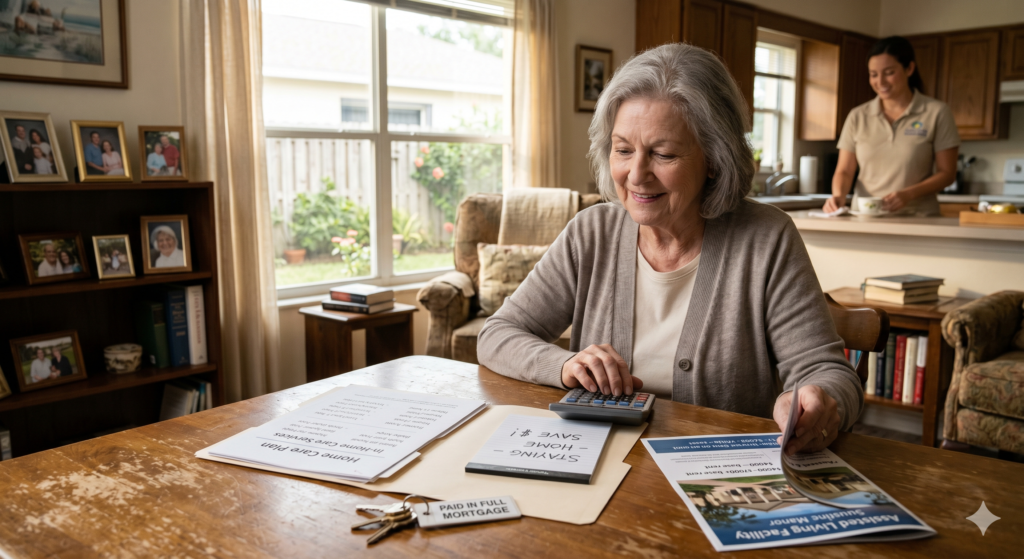
For decades, the standard narrative for aging in America was straightforward: when you retire, you stay in your house until it becomes “too much,” and then you sell the house and move into an Assisted Living Facility (ALF) or a nursing home.
But today, the landscape has changed drastically. According to AARP, nearly 90% of adults over the age of 65 want to remain in their current homes for as long as possible a concept known as “aging in place.”
However, when an aging parent in Southwest Florida begins to struggle with mobility, memory, or daily chores, adult children often panic. They assume that keeping Mom or Dad at home is a luxury they cannot afford, and that a facility is the only financially responsible choice.
This assumption is often entirely backward. When you break down the true, hidden costs of downsizing versus the scalable costs of in-home care, aging in place is often the most financially protective decision a family can make.
Florida is a premium retirement destination, and facility prices reflect that demand. In Lee and Collier counties (Fort Myers, Cape Coral, Naples), the cost of assisted living is significant.
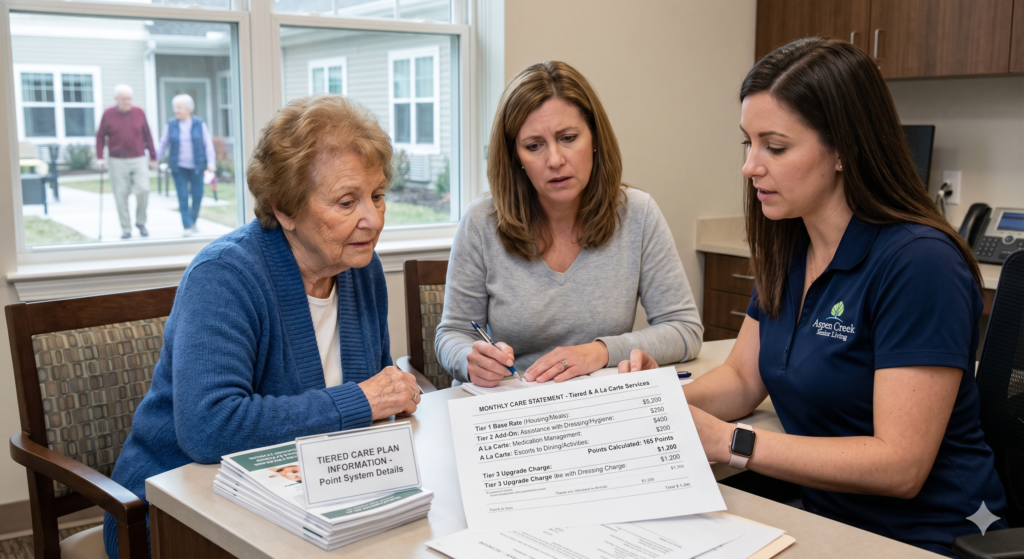
When you tour a beautiful facility, they will often quote you a “base rate.” For a standard one-bedroom apartment in a reputable Southwest Florida facility, this base rate typically ranges from $4,500 to $6,500 per month.
However, this base rate is often just the cost of “room and board.” It covers the apartment, three meals a day in the dining room, utilities, and access to group activities. It does not cover hands-on medical or personal care.
The true cost of a facility emerges when your loved one actually needs help. Most modern ALFs use a “Tiered Care” or “A La Carte” pricing model. You are charged extra points or fees for every individual service the staff provides.
- Medication Management: Need a nurse to hand your dad his pills twice a day? That is often an extra $300 to $500 a month.
- Bathing and Dressing Assistance: Need an aide to help Mom shower safely three times a week? Add another $400 to $600 a month.
- Escort Services: If your loved one needs to be pushed in a wheelchair from their room to the dining hall, the facility may charge an escort fee.
- Incontinence Management: If they require help changing adult briefs, costs skyrocket, sometimes pushing the resident into a “Memory Care” tier, which can start at $7,000 to $9,000+ per month.
Suddenly, that affordable $4,500 base rate has ballooned to $7,500 a month, and it will continue to rise every year as their needs increase.
Now, let’s look at the financial structure of staying home.
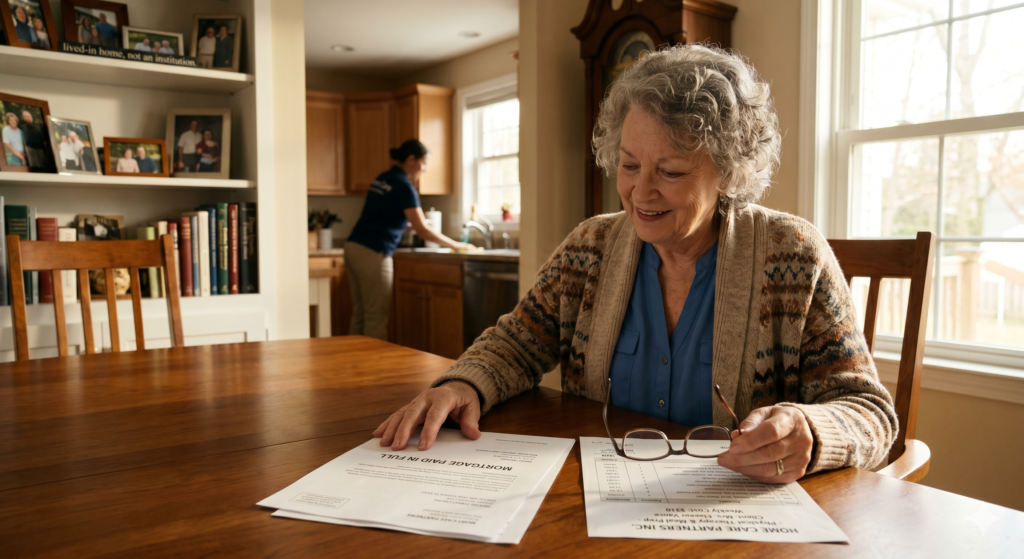
If your parent has lived in their Florida home for decades, there is a very high probability that their mortgage is completely paid off. Their only housing expenses are property taxes, insurance, utilities, and groceries.
When you choose to age in place, you decouple housing costs from care costs. You are not paying a facility $5,000 a month just for the right to sleep in their building. You are utilizing a free (or very low-cost) housing asset, allowing you to spend your budget exclusively on the specific care you need.
In-home care is highly scalable. You are in total control of the budget.
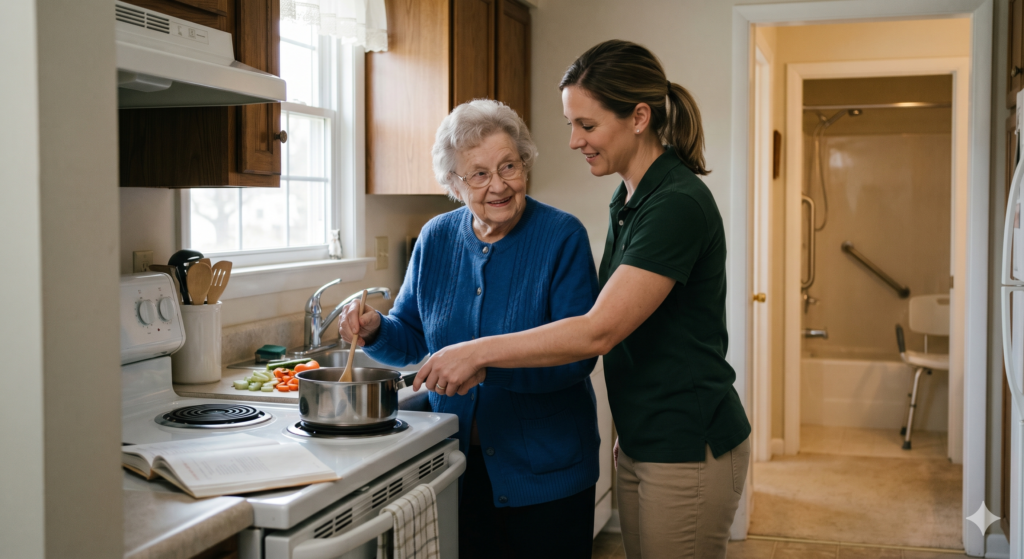
Let’s assume your mother is struggling to cook, needs help showering safely, and shouldn’t be driving anymore. She does not need someone staring at her while she sleeps; she just needs daytime support.
The Home Care Scenario:
- You hire an agency like Shal We Home Care for 4 hours a day, 5 days a week (20 hours total).
- At an estimated average rate of $32/hour, the cost is $640 a week.
- Total Monthly Cost: ~$2,700.
Compare that $2,700 to the $6,000+ total cost of an assisted living facility. By aging in place, the family saves nearly $40,000 a year, preserving the senior’s nest egg and the family inheritance.
Finances are only half the equation. The hidden “cost” of moving to a facility is often paid in the senior’s physical and mental health.
Moving an elderly person especially one with mild cognitive impairment or early-stage dementia—triggers what geriatricians call Relocation Stress Syndrome (or Transfer Trauma).
- Stripping a senior of their familiar surroundings, their neighbors, their garden, and their daily routines causes massive spikes in anxiety and depression.
- This stress frequently leads to a rapid, noticeable decline in cognitive abilities and physical health in the months immediately following a move.
- By aging in place, you avoid this trauma entirely. They get to sleep in their own bed, look at their own photos, and keep their beloved pets.
If liquid savings are tight, staying in the home provides a powerful financial tool that moving destroys: Home Equity.

Florida property values have soared. If a senior wishes to stay home but needs funds to pay for Shalwe Home Care, they can utilize a Reverse Mortgage (HECM). This allows them to convert a portion of their home’s equity into tax-free cash (either as a monthly payout or a line of credit) to pay for caregivers, without ever having to make a monthly mortgage payment or sell the house while they are living in it.
At Shal We Home Care, we do not believe in forcing families into rigid care packages. We serve Lee, Collier, and Hendry counties with absolute flexibility.
- Minimum Effective Dose: We help you determine the exact minimum hours needed to ensure safety and happiness, keeping your budget intact.
- Cost Predictability: You only pay for the hours we are there. There are no surprise “tier increases” or hidden a la carte fees.
- Preventing the Move: By proactively managing fall risks, medication schedules, and nutrition, our caregivers actively prevent the crises that typically force families to move their loved ones into a nursing home.
- Uncouple the Costs: Aging in place allows you to separate the cost of housing from the cost of care, saving thousands.
- Beware Facility Add-Ons: Assisted living base rates rarely include the hands-on care (like bathing or medication management) your parent actually needs.
- Home Care is Scalable: You can hire an in-home caregiver for just a few hours a week, tailoring the cost directly to your budget.
- Avoid Transfer Trauma: Keeping a senior in their own home protects their mental health and prevents the rapid decline associated with moving.
- Leverage the Asset: A paid-off home is a massive financial asset that can be leveraged (via a reverse mortgage) to fund in-home care if necessary.
Are you weighing the heavy cost of senior care options? You don’t have to sell the family home just yet.
Contact Shal We Home Care today for a free, transparent consultation. We will help you run the numbers and design a customized, budget-friendly care plan that keeps your loved one right where they belong.