
Bedsores are incredibly painful, fast-forming, and potentially fatal for bedbound seniors. Learn the 4 stages of pressure ulcers and expert home care prevention strategies.
Bedsores, or pressure ulcers, are serious skin injuries caused by prolonged pressure on the skin, typically occurring over bony areas like the heels, tailbone, and hips in bedbound or wheelchair-bound seniors. To prevent bedsores at home, caregivers must strictly follow the “2-Hour Turning Rule” to relieve pressure, utilize specialized pressure-relieving mattresses, maintain rigorous skin hygiene to keep the area clean and dry, and provide high-protein nutrition to support skin integrity. If a red spot on the skin does not turn white when pressed, a bedsore has already begun forming.
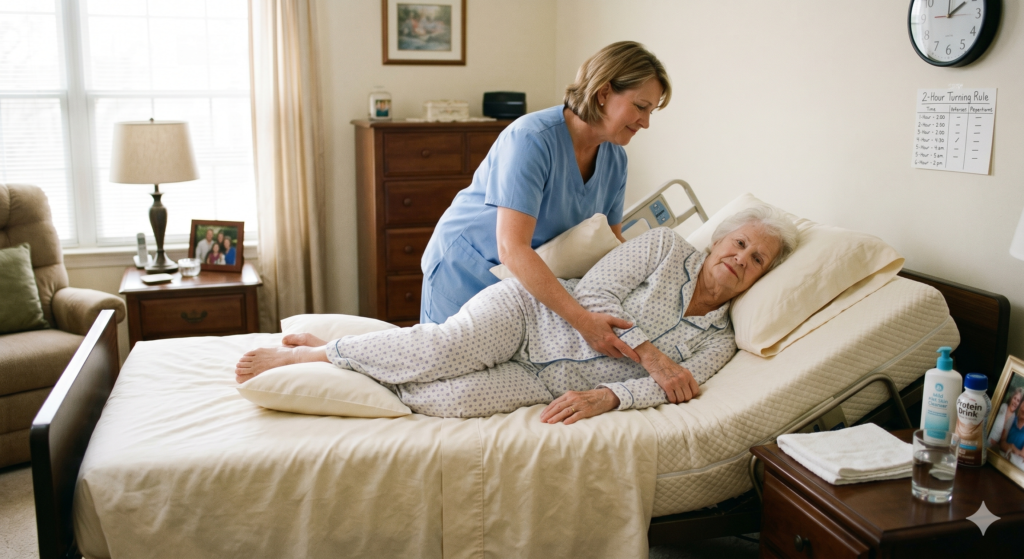
When an aging parent in Southwest Florida experiences a major health event such as a severe stroke, a fractured hip, or advanced dementia they often spend the vast majority of their day sitting in a recliner or lying in bed.
While resting seems safe, immobility introduces one of the most painful, dangerous, and rapidly developing complications in senior healthcare: Bedsores (medically known as Pressure Ulcers or Decubitus Ulcers).
If left unchecked, a bedsore can develop from a mild red spot into a massive, deep wound exposing bone and muscle in a matter of days. These wounds are highly susceptible to infection, and in frail seniors, infected bedsores frequently lead to fatal sepsis.
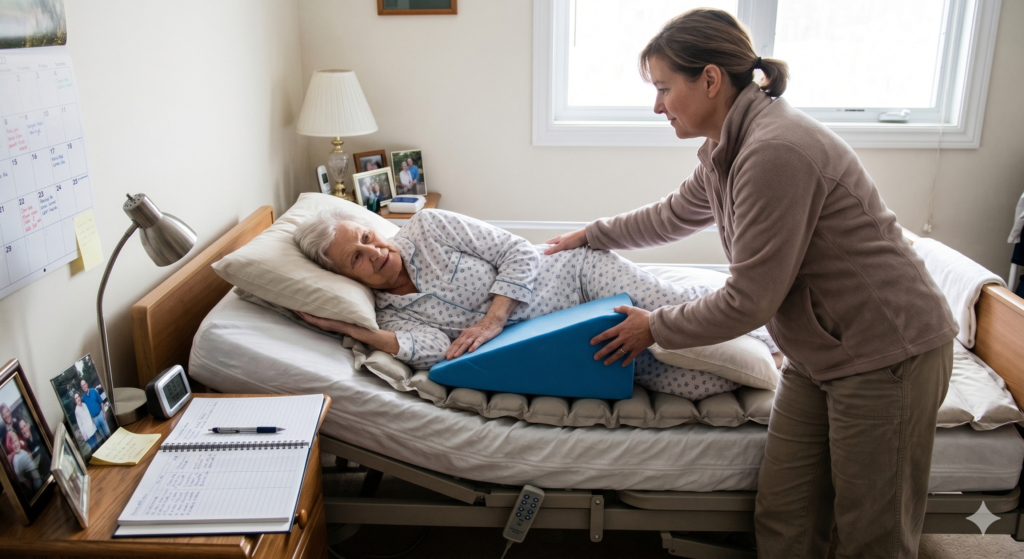
Preventing bedsores is a 24/7 job. It requires vigilance, specialized equipment, and a strict physical routine. Here is what every family caregiver must know to protect their bedbound or wheelchair-bound loved one.
Bedsores are localized injuries to the skin and underlying tissue. They are caused by one primary culprit: Unrelieved Pressure.
When a senior lies in the same position for too long, the weight of their own body presses against the mattress or chair. This pressure compresses the tiny blood vessels that supply oxygen and nutrients to the skin. Without blood flow, the skin cells and underlying tissues literally begin to starve and die. Once the tissue dies, the skin breaks open, creating a crater-like wound.
Aging skin makes this process happen much faster. Because senior skin is paper-thin and lacks elasticity, it requires far less pressure and less time to break down than younger skin.
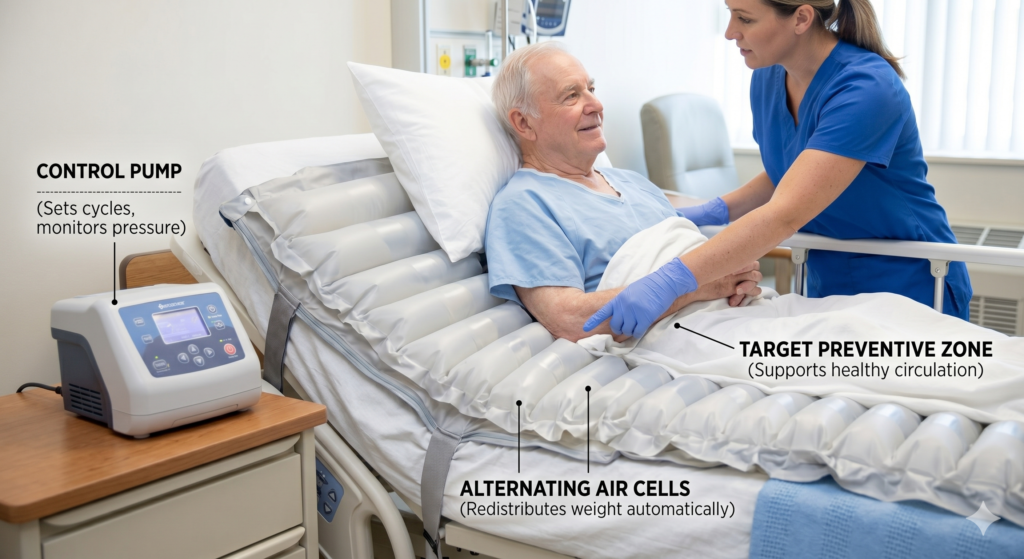
Bedsores do not happen randomly; they occur where bones are closest to the skin with the least amount of fat padding. Caregivers must inspect these “Danger Zones” every single day:
- The Back of the Head (if consistently lying flat).
- Shoulder Blades and Spine.
- The Tailbone and Buttocks (The most common site for seniors who spend hours in a recliner).
- The Hips (When lying on their side).
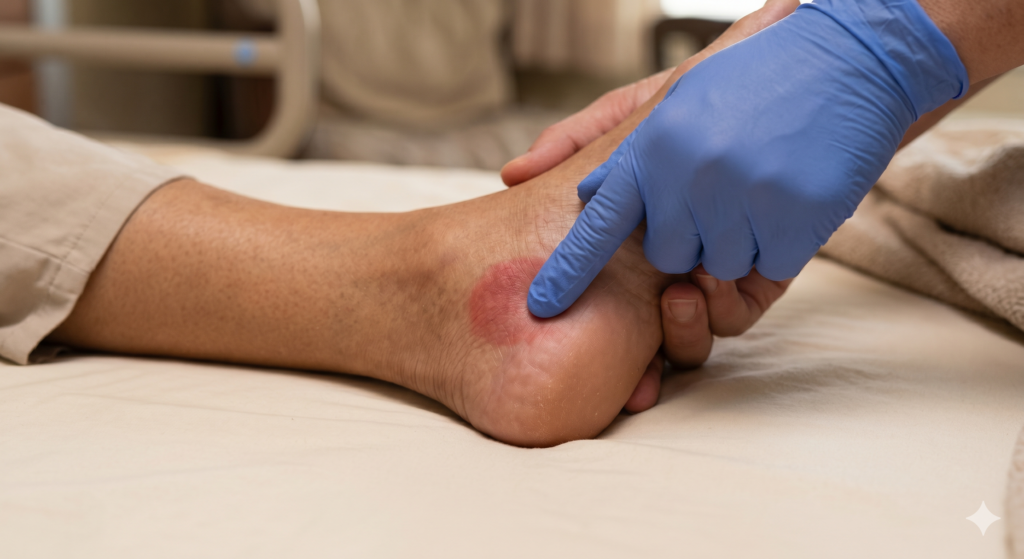
- The Heels and Ankles (The weight of the foot resting on the bed is enough to cause severe heel ulcers).
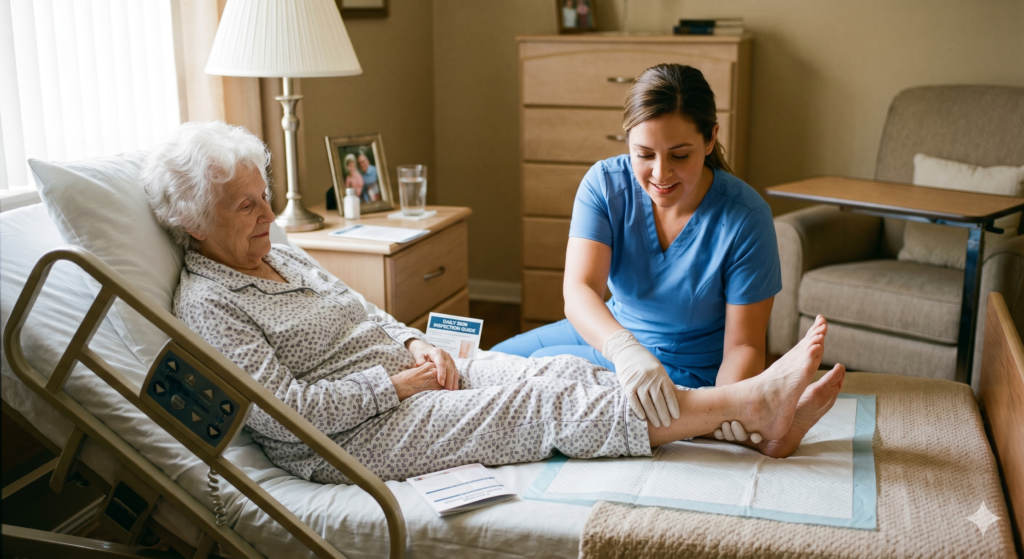
Understanding the progression of a bedsore allows you to intervene before it becomes a medical emergency.
- Stage 1 (The Warning): The skin is intact but appears red (or purplish/blue on darker skin tones). The Test: Press your finger firmly on the red spot. If it does not turn white (blanch) when you press it, tissue damage has begun. The area may feel warm, firm, or painful.
- Stage 2 (The Open Wound): The top layer of skin breaks open. It looks like a shallow, pinkish-red crater, a scraped knee, or an intact fluid-filled blister.
- Stage 3 (Deep Tissue Damage): The wound deepens significantly, extending through the skin into the layer of fat below. It looks like a deep crater, and yellowish dead tissue (slough) may be present.
- Stage 4 (Severe Damage): The ulcer is massively deep, exposing muscle, tendons, or even bone. Black, dead tissue (eschar) is common. This is a life-threatening medical emergency requiring surgical intervention.
The single most effective way to prevent bedsores is to eliminate the pressure before the blood vessels collapse.
- The 2-Hour Rule: A bedbound senior must be physically repositioned at least every two hours, around the clock. If they are lying on their back at noon, they must be shifted to their left side at 2:00 PM, and their right side at 4:00 PM.
- The 1-Hour Rule for Wheelchairs: If the senior is sitting in a wheelchair or a recliner, the pressure is concentrated on a smaller area (the tailbone). They must shift their weight or be repositioned every 15 to 60 minutes.
- Floating the Heels: Never let the heels rest directly on the mattress. Place a pillow under the calves so the heels are “floating” in the air.

Pressure is the primary cause, but moisture and friction rapidly accelerate the skin’s destruction.
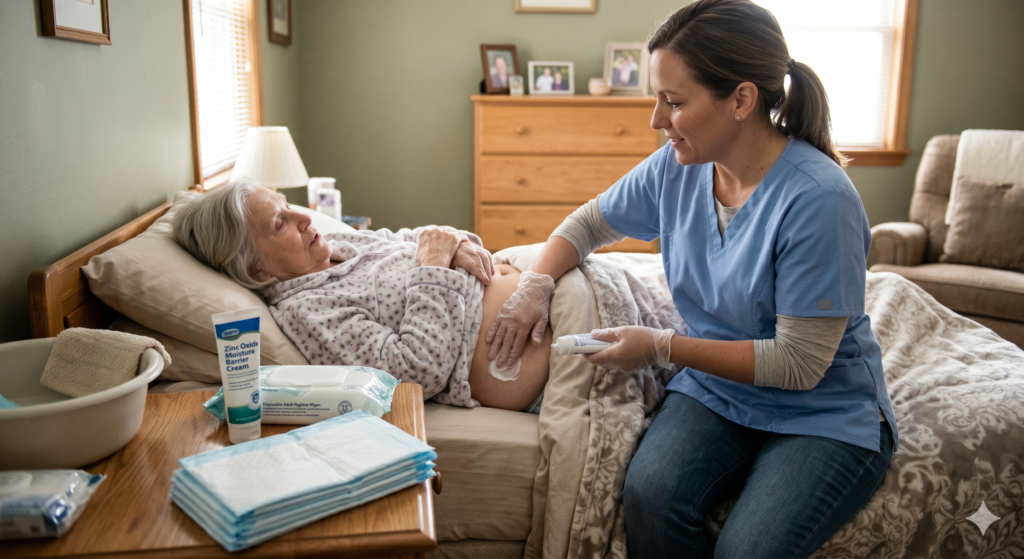
In the humid climate of Southwest Florida, seniors who sweat heavily, or those managing incontinence, are at massive risk. If the skin is wet from sweat or urine, it becomes macerated (soft and wrinkled, like when you stay in the bath too long). Macerated skin tears away with the slightest friction.
- Keep it Dry: Incontinent seniors must be changed and dried immediately. Apply moisture barrier creams (like zinc oxide) to protect the skin from acidic urine.
- Avoid Friction (Shearing): When pulling a senior up in bed, do not drag them by the armpits across the sheets. The friction of the sheets will tear their fragile skin (shearing). Always use a “draw sheet” or a slide pad under them to lift and move their body weight cleanly.
You cannot build a strong wall without bricks, and the body cannot maintain strong skin without protein.
Frail seniors with poor appetites lack the vital nutrients needed to keep their skin elastic and robust. If a senior is immobile, they require a diet incredibly high in Protein, Vitamin C, and Zinc to promote tissue repair. Ensure they are drinking high-protein nutritional shakes and staying aggressively hydrated so their skin doesn’t become dry and brittle.
Managing an immobile loved one at home is terrifying and physically exhausting for family caregivers. Trying to turn a fully grown adult in bed every two hours including the middle of the night leads to severe caregiver back injuries and total sleep deprivation.

At Shal We Home Care, we provide the heavy lifting and expert vigilance required to keep bedbound seniors safe in Lee, Collier, and Hendry counties.
- Overnight Turning: Our awake overnight caregivers manage the strict 2-hour turning schedules, allowing the family to sleep soundly.
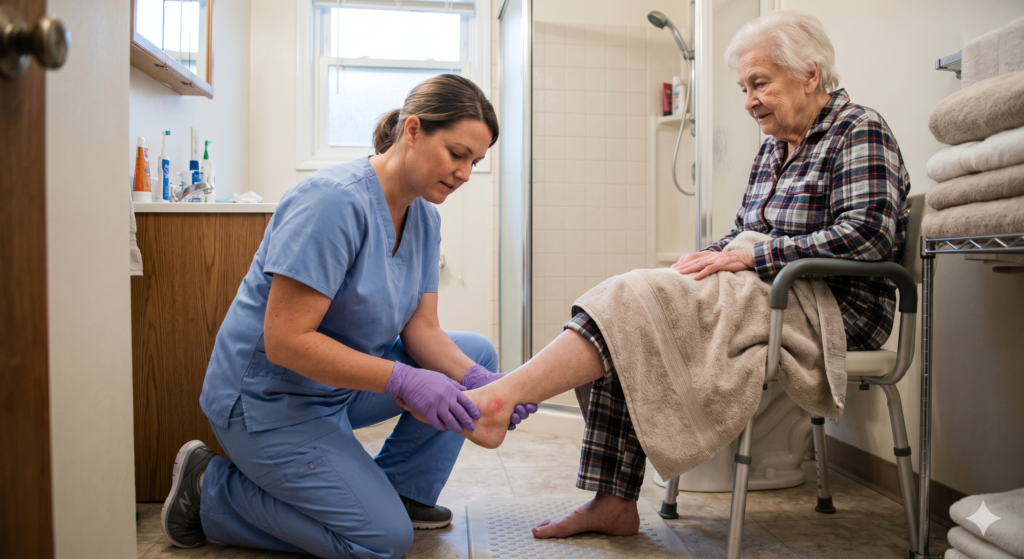
- Skin Inspections: During daily bathing and incontinence care, our trained HHAs perform full-body skin checks, alerting nurses or family members at the very first sign of a Stage 1 red spot.
- Safe Transfers: We utilize proper body mechanics and draw sheets to move your loved one safely, preventing friction tears and shearing.
- Pressure is the Enemy: Bedsores are caused by a lack of blood flow; pressure must be relieved constantly.
- Turn Every 2 Hours: Bedbound seniors must be repositioned on a strict schedule, 24/7.
- Float the Heels: Use pillows under the calves to keep the fragile heels completely off the mattress.
- Manage Moisture: Keep the skin meticulously clean and dry to prevent softening and tearing.
- Get Physical Backup: Hire professional caregivers to manage the heavy lifting of repositioning and overnight turning schedules.
Are you struggling to move an immobile loved one? Don’t risk their skin or your own back.
Contact Shal We Home Care today. Let our trained professionals manage the turning schedules and personal hygiene required to prevent dangerous bedsores.