
Foot pain is a leading cause of senior falls and mobility loss. Discover why daily foot inspections, proper shoes, and professional nail care are vital for Florida seniors.
Proper senior foot care is critical for fall prevention because untreated pain, overgrown nails, and neuropathy alter a senior’s gait, leading to imbalance. Caregivers should ensure daily foot inspections (especially for diabetics), assist with moisturizing to prevent cracked skin, replace worn-out slippers with supportive, non-slip footwear, and utilize professional podiatrists to manage thickened, difficult-to-cut toenails safely.
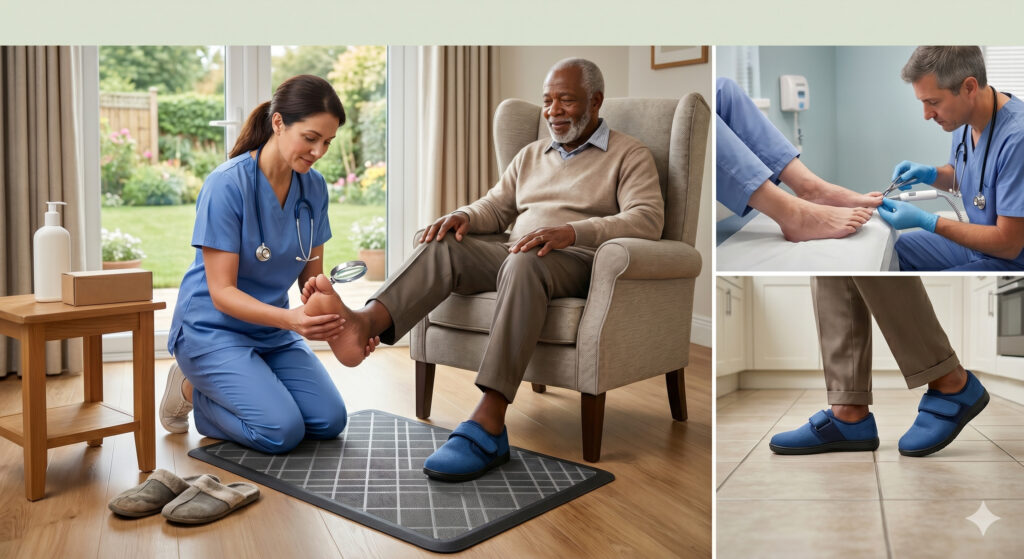
When we talk about “fall prevention” for seniors in Southwest Florida, the conversation usually focuses on the environment: removing throw rugs, installing grab bars, and improving lighting.
But we often ignore the actual equipment interacting with the floor: The Feet.
Your feet are the foundation of your mobility. If a senior is experiencing foot pain, they will instinctively change how they walk to avoid the pain. They might limp, shuffle, or lean heavily to one side. This unnatural gait throws off their center of gravity, drastically increasing the risk of a catastrophic fall.
Ignoring foot care doesn’t just cause discomfort; it directly threatens a senior’s ability to walk, drive, and live independently.
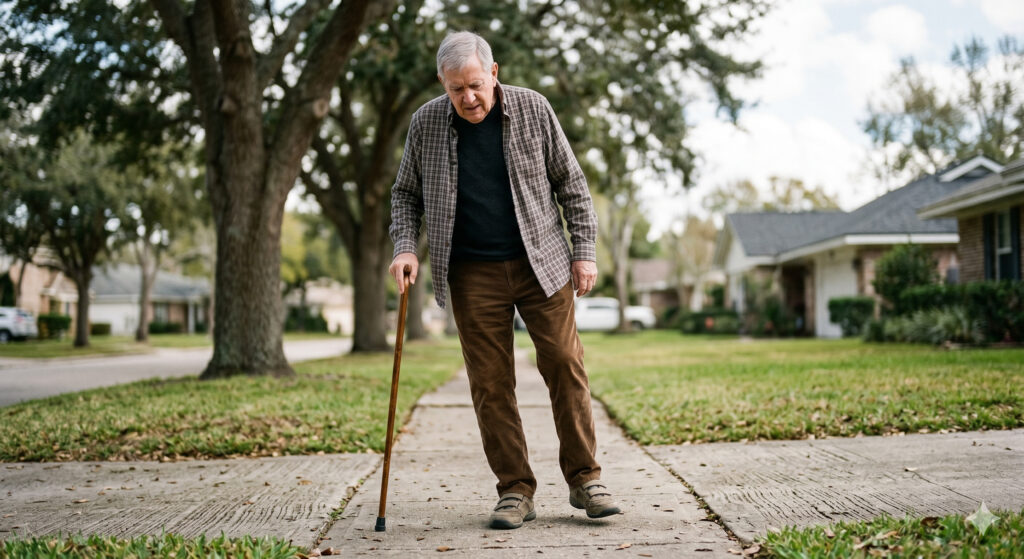
By the time a person reaches 70 years old, their feet have carried them the equivalent of several times around the globe. This wear and tear changes the physical structure of the foot:
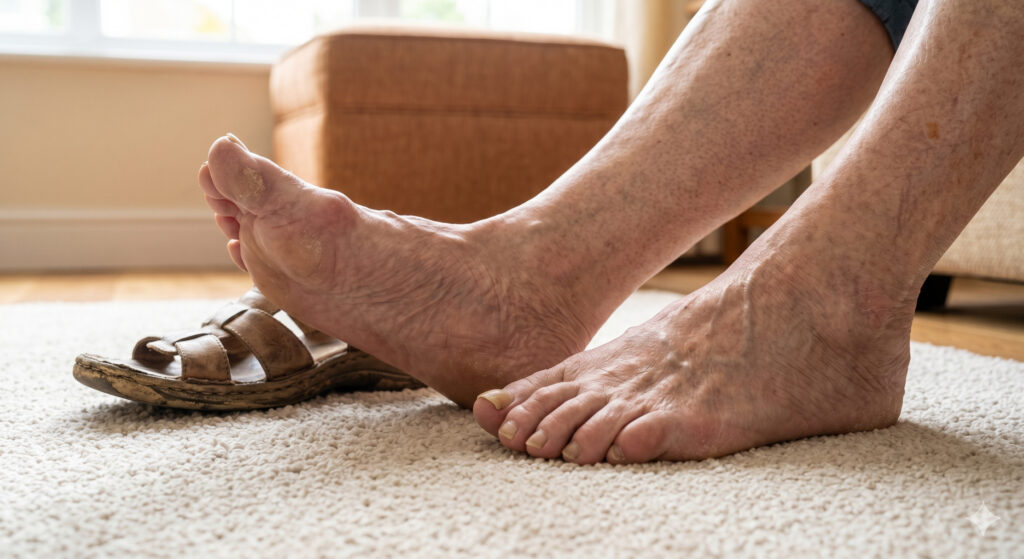
- Loss of Padding: The natural fat pads on the bottom of the heels and the balls of the feet thin out with age, making walking on hard Florida tile incredibly painful.
- Circulation Issues: Aging hearts pump less efficiently, meaning the extremities (the feet) receive less blood flow. This causes cold feet, slower healing of cuts, and dry, cracked skin.
- Arthritis: Osteoarthritis frequently strikes the joints of the toes and ankles, making the foot stiff and inflexible.
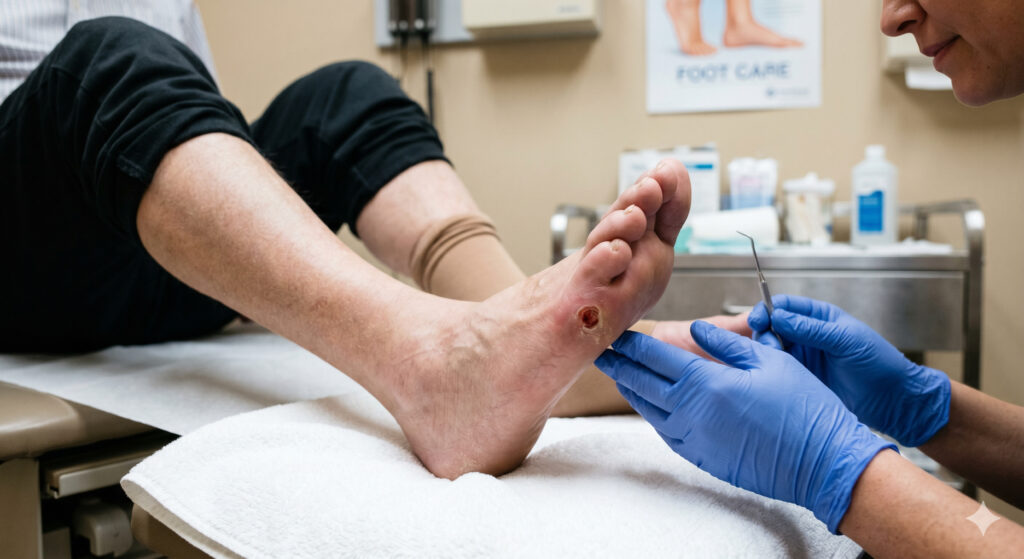
For seniors with diabetes, foot care is not just about mobility; it is about preventing amputation.
Diabetes often causes Peripheral Neuropathy, which is nerve damage that results in numbness or a tingling sensation in the feet.
- The Risk: A senior with neuropathy might step on a sharp piece of glass or develop a severe blister from a tight shoe and feel absolutely no pain.
- Because circulation is poor, that unnoticed cut can quickly turn into an infected ulcer. Diabetic foot ulcers are a leading cause of hospitalization and amputation among the elderly.
As we age, toenails tend to grow thicker, harder, and more brittle, often curving inward (ingrown toenails) or developing fungal infections.
- The Physical Barrier: Seniors with arthritis, back pain, or poor vision simply cannot reach their toes to trim their nails safely.
- The Danger: Overgrown, thick nails act like a rock inside the shoe. Every step drives the nail into the neighboring toe, causing severe pain and altering the senior’s walking pattern to avoid the pressure.
- The Solution: Adult children and non-medical caregivers should never attempt to cut severely thickened or diabetic toenails with standard clippers. This requires a professional Podiatrist to prevent accidental injury and infection.
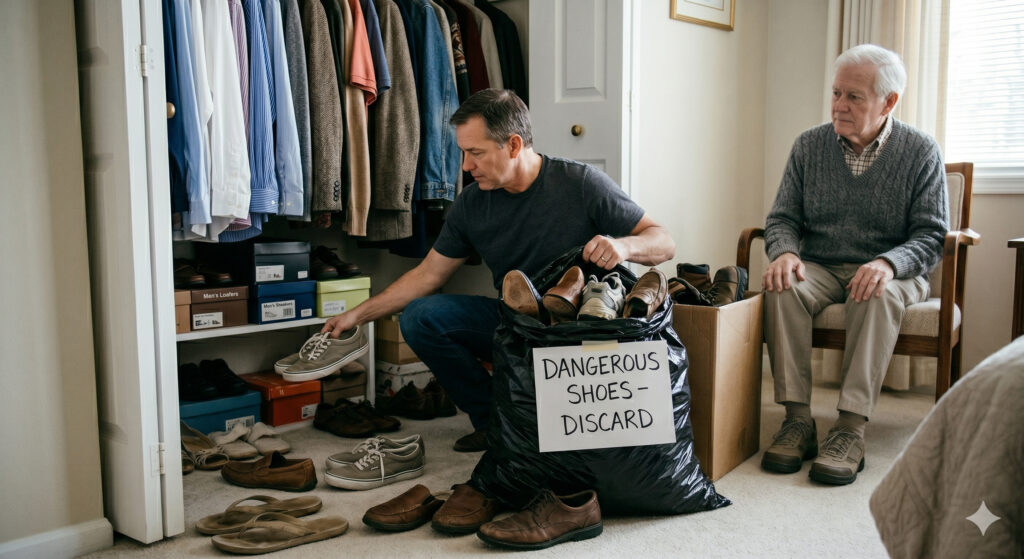
A senior’s choice of footwear can either prevent a fall or cause one. It is time to go through your loved one’s closet and aggressively purge dangerous shoes.
- Ditch the “Slip-Ons”: Backless slippers, flip-flops, and slides require the toes to “grip” the shoe to keep it on. This alters the gait and is a massive tripping hazard.
- The Ideal Indoor Shoe: Seniors should wear lightweight, breathable sneakers indoors with a firm, enclosed heel and a non-skid rubber sole. Velcro closures are ideal for swollen or arthritic feet.
- Check the Soles: If the tread on the bottom of their favorite shoes is worn smooth, throw them away immediately. They offer zero traction on wet surfaces.
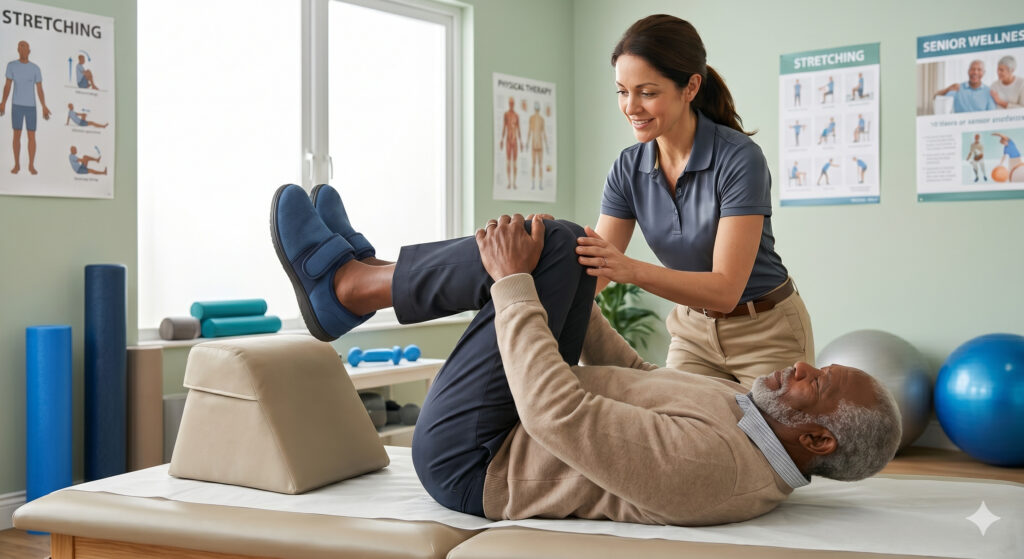
Incorporating a simple, 5-minute foot care routine into the day can prevent major medical emergencies.
- The Daily Inspection: Every evening, physically look at the bottom of the feet (using a hand mirror if necessary). Look for red spots, cuts, blisters, or swelling.
- Wash and Dry Completely: Wash feet daily with warm (not hot) water. Crucially, dry meticulously between the toes. Moisture trapped between the toes breeds fungal infections.
- Moisturize Safely: Apply a thick lotion to the heels and soles to prevent the skin from cracking and bleeding. Never apply lotion between the toes.
It is difficult for an aging parent to practice proper foot care when they can’t see or reach past their knees.
At Shal We Home Care, serving Lee, Collier, and Hendry counties, our caregivers seamlessly integrate this vital health check into the daily personal care routine.
- The Watchful Eye: While assisting with bathing and dressing, our caregivers visually inspect the feet, alerting family members instantly if a red spot or blister appears.
- Daily Hydration: We assist with applying soothing lotions to the heels to prevent painful cracking.
- Shoe Management: We ensure that the senior is wearing their safe, enclosed shoes before they ever attempt to walk across the kitchen or head out the door.
- Pain Changes Gait: Untreated foot pain causes seniors to walk unnaturally, drastically increasing fall risk.
- Inspect Diabetic Feet: Seniors with neuropathy cannot feel cuts or blisters; their feet must be visually inspected every single day.
- See a Podiatrist: Never attempt to cut thick, hard, or diabetic toenails at home. Leave it to a medical professional.
- Ban Backless Shoes: Throw away all flip-flops and slip-on slippers in favor of enclosed, non-skid velcro shoes.
- Keep Them Dry and Moisturized: Dry meticulously between the toes to prevent fungus, and moisturize the heels to prevent cracking.
Are your loved one’s mobility issues starting from the ground up? Contact Shal We Home Care today. Our personalized care plans ensure that every aspect of your loved one’s health from their head to their toes is monitored and supported safely in Southwest Florida.