
Is your aging parent’s clutter actually a hoarding disorder? Learn the psychological difference between collecting and hoarding and how to intervene safely in Florida.
While a “collector” is proud of their organized items, senior “hoarding” is a complex mental health disorder characterized by severe anxiety at the thought of discarding items, leading to chaotic, unsanitary, and dangerous living conditions. To intervene safely, family members must not secretly throw items away (which destroys trust and triggers trauma). Instead, use a “harm reduction” strategy to slowly clear main walking paths and fire exits, validate their emotional attachment to the items, and utilize a neutral, professional in-home caregiver to gently assist with daily organization and maintenance.

Many adult children who live out of state assume their parents are doing fine based on weekly phone calls. “Everything is great here, dear!” Mom says. But when you fly down to Fort Myers or Naples for the holidays and unlock the front door, you are met with a shocking reality.
There are stacks of old newspapers reaching the ceiling. The dining room table hasn’t been visible in years. There are pathways barely a foot wide snaking through the living room, and the refrigerator is packed with expired, molding food.
Your immediate instinct is anger, followed swiftly by fear. How could they live like this?
Dealing with severe clutter in an aging parent’s home is one of the most emotionally explosive challenges a family can face. It pits your desperate need to keep them safe against their desperate psychological need to hold onto their possessions. To navigate this crisis, you must understand the clinical difference between a messy house and a hoarding disorder.
We casually throw around the word “hoarder,” but clinically, hoarding disorder is a recognized psychiatric condition.
The Collector:
- Organized: A collector might have 500 vintage teacups, but they are displayed on shelves, dusted, and cataloged.
- Proud: They want to show you their collection and talk about it.
- Safe: Their collection does not impede the functional use of their home. You can still cook in their kitchen and sleep in their bed.
The Cluttered Senior:
- Overwhelmed: They don’t have an emotional attachment to the junk mail; they just lack the physical energy or executive function to deal with it. If you offer to take out the recycling, they will gladly let you.
The Hoarder:
- Chaotic: Items are piled haphazardly with no organization. Valuable items are mixed with actual garbage.
- Ashamed: They rarely let anyone into the house (often refusing repairmen, leading to broken AC units or plumbing) because they feel deep shame, yet they cannot stop the behavior.
- Dysfunctional: The home loses its purpose. The oven is covered in boxes, so they cannot cook. The bathtub is filled with clothes, so they cannot bathe.
- Distressed: The mere thought of throwing away an empty cereal box causes them severe, visible panic and emotional anguish.
To treat the problem, you have to treat the mind. Hoarding rarely happens overnight; it is usually triggered or exacerbated by aging.
- Trauma and Loss: Hoarding is frequently triggered by a profound loss, the death of a spouse, the loss of mobility, or retirement. When seniors lose the people or the identity they love, they fill the emotional void with physical objects. Objects don’t die, and objects don’t leave.
- Dementia and Paranoia: In the early stages of dementia, the brain’s executive function fails. They lose the ability to categorize items (e.g., deciding what is trash and what is a bill). Paranoia also sets in; they believe they will “need this someday” or that people are trying to steal from them.
- The Depression-Era Mentality: Seniors raised by parents of the Great Depression were hardwired to believe that throwing anything away is a moral failure and financially reckless.
In Southwest Florida, hoarding creates a uniquely lethal environment.
- Catastrophic Fall Risk: Seniors with mobility issues have zero reaction time. Tripping over a stack of magazines often results in a shattered hip. Furthermore, EMTs cannot get a stretcher down a cluttered hallway in an emergency.
- Fire Hazards: Stacks of paper near outlets or space heaters are tinderboxes.
- The Florida Climate (Biohazards): With our heat and humidity, hoarding attracts severe pest infestations (roaches, rats) and rapid, toxic mold growth if food or moisture is trapped beneath piles of belongings.
- Social Isolation: The shame of the hoard ensures they die lonely. They stop inviting friends over, accelerating cognitive decline.
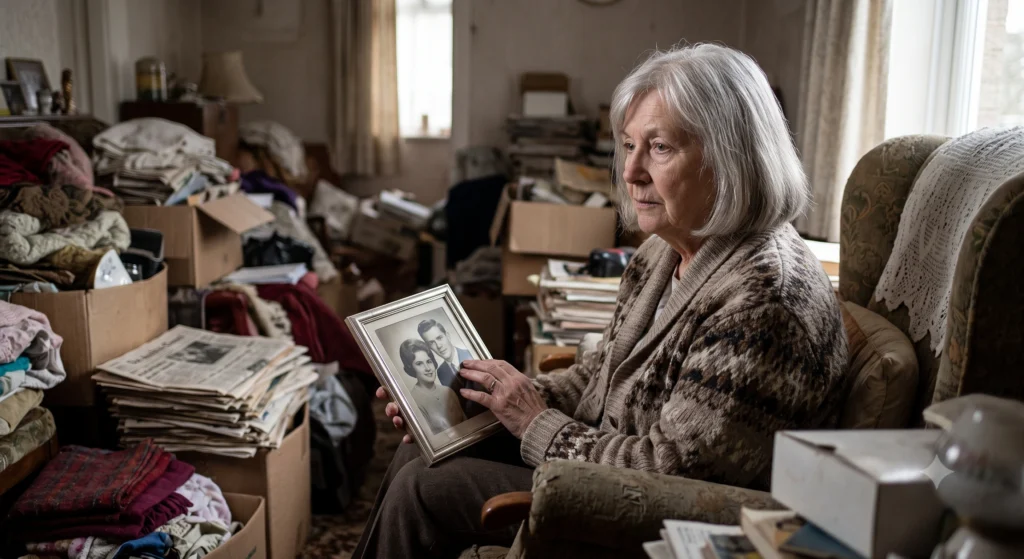
When adult children see a hoard, their first reaction is often to rent a dumpster, wait until their parent is at the doctor, and throw everything away.
Do not do this. It is a psychological disaster.
For someone with hoarding disorder, doing a “clean sweep” without their permission is the emotional equivalent of an assault. It will destroy their trust in you permanently. Furthermore, studies show that if you clear out a hoarder’s home without addressing the psychological root, the house will be completely filled with junk again within six months.
You are not going to turn their home into a minimalist magazine cover. Your only goal is safety and sanitation. This is called “Harm Reduction.”
- Focus on the “Arteries”: Tell your parent, “I am not going to throw away your memories. I just need to make sure the paramedics can get to your bed if you get sick.” Focus only on clearing a 36-inch-wide path from the bed to the bathroom and from the bathroom to the front door.
- Restore Functionality: Negotiate to clear just the stove so they can eat safely or just the bathtub so they can wash. Leave the spare bedroom alone; pick your battles.
- Categorize Objectively: Create rules they can agree on. “Can we agree that any food past its expiration date can go in the trash? Can we agree that any mail older than 5 years can be shredded?”
- The Touch Rule: Have them touch the item and decide. If you hold it up and ask, they will feel threatened. Let them be the ones to place it in the “donate” box.
Decluttering with an adult child brings 40 years of family baggage into the room. Arguments escalate quickly.
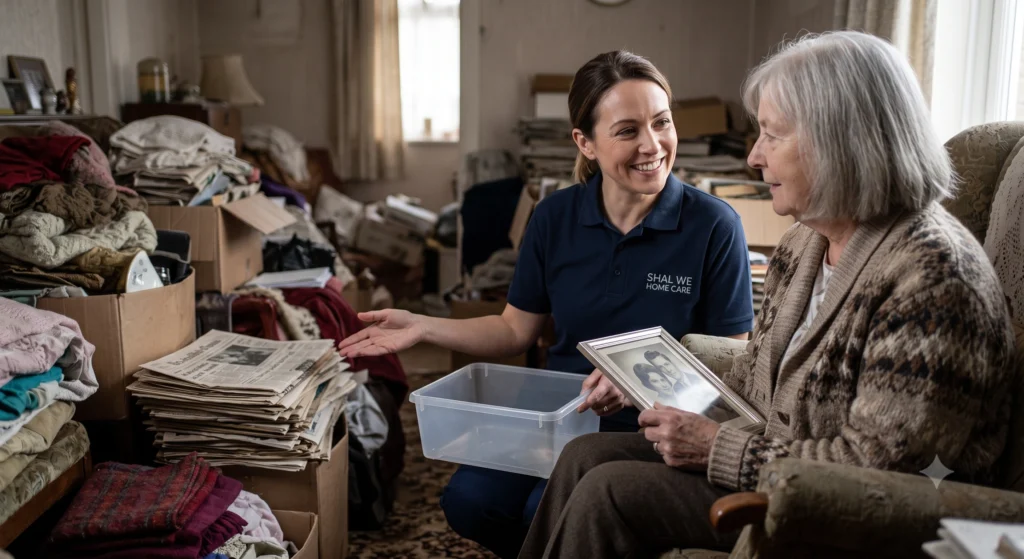
This is why introducing a professional caregiver from Shal We Home Care is highly effective.
- The Neutral Third Party: A Shal we caregiver is a friendly, objective professional. Seniors are often much more cooperative and less defensive when a cheerful professional asks, “Mr. Smith, would you like me to help you organize these newspapers today?”
- Daily Maintenance: Hoarding requires daily intervention, not a once-a-year weekend purge. Our caregivers provide light housekeeping. By quietly taking out the trash, bringing in the mail, and doing the dishes every single day, we prevent the hoard from rebuilding.
- Building Trust: We do not judge. Our caregivers build deep, trusting relationships over time, eventually allowing them to gently guide the senior toward a safer, cleaner environment.
- It is a disorder, not laziness: Recognize that severe hoarding is driven by trauma, anxiety, and a loss of control.
- Never Secretly Throw Things Away: A “clean sweep” without their permission will trigger massive trauma and destroy family trust.
- Use Harm Reduction: Don’t aim for perfection. Aim only for functional safety: clear walking paths, a usable toilet, and a fire-safe kitchen.
- Set Objective Rules: Agree to throw away items based on facts (e.g., expiration dates) rather than arguing over value.
- Hire a Professional Buffer: Use an in-home caregiver to act as a neutral party to maintain daily cleanliness without the emotional baggage of a family argument.
Is your loved one’s home becoming a danger zone? You don’t have to fight this battle alone.
Contact Shal We Home Care today. Let us help you navigate this delicate situation with compassion and consistency, ensuring your parent remains safe in Southwest Florida.