
Failing eyesight makes a familiar home incredibly dangerous. Discover how high-contrast colors, glare reduction, and smart lighting keep visually impaired seniors safe.
To make a home safe for seniors with vision loss (due to macular degeneration, glaucoma, or cataracts), caregivers must maximize lighting and use high-contrast colors. Enhance safety by placing brightly colored tape on the edges of stairs, serving food on plates that contrast with the table, removing trip hazards, reducing glare from uncovered windows, and keeping furniture arrangements strictly predictable so the senior can navigate using muscle memory.
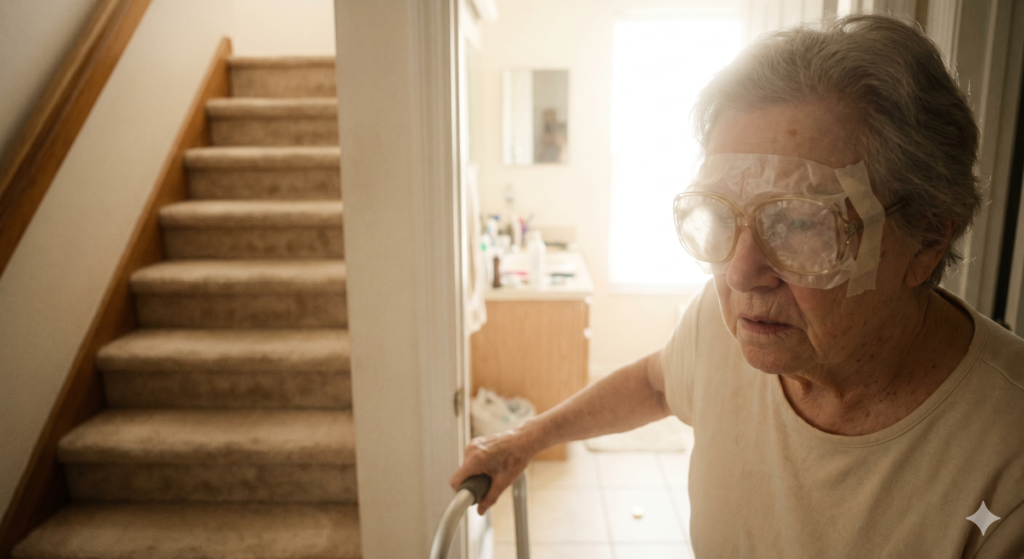
Imagine walking through your house with a thick layer of wax paper over your glasses. The edges of the stairs disappear into the carpet. The white pill you dropped blends invisibly into the white bathroom tile. The bright Florida sun coming through the window doesn’t illuminate the room; it just creates a blinding, painful glare.
This is the daily reality for millions of seniors experiencing age-related vision loss.
As eyesight fails, a home that a senior has navigated safely for 30 years suddenly becomes an obstacle course. Vision loss destroys depth perception, contrast sensitivity, and spatial awareness, making it one of the leading underlying causes of catastrophic falls in older adults.
If your aging parent in Southwest Florida is struggling with their sight, standard home safety tips aren’t enough. You must actively modify their environment to accommodate their changing eyes.
Vision loss is not just “blurriness.” Different eye diseases change the world in different ways. Understanding your parent’s specific diagnosis helps you tailor their home.
- Cataracts: The lens of the eye becomes cloudy. Everything looks foggy, colors appear faded or yellowish, and they become incredibly sensitive to glare from bright lights or the sun.
- Glaucoma: This disease damages the optic nerve, causing a loss of peripheral (side) vision. Seniors with glaucoma experience “tunnel vision,” meaning they cannot see objects on the floor or approaching from the side, making tripping highly likely.
- Age-Related Macular Degeneration (AMD): AMD destroys the sharp, central vision needed for reading, recognizing faces, or seeing the food on a plate. Their peripheral vision remains intact, but looking directly at something reveals a dark, blurry spot.
Aging eyes need significantly more light to see clearly, often three to four times more light than a 20-year-old needs. However, simply putting brighter bulbs in the ceiling isn’t the answer.
- Task Lighting: Instead of relying solely on overhead lights, use targeted task lighting. Place bright, adjustable LED desk lamps directly over their reading chair, the kitchen counter, and next to the phone.
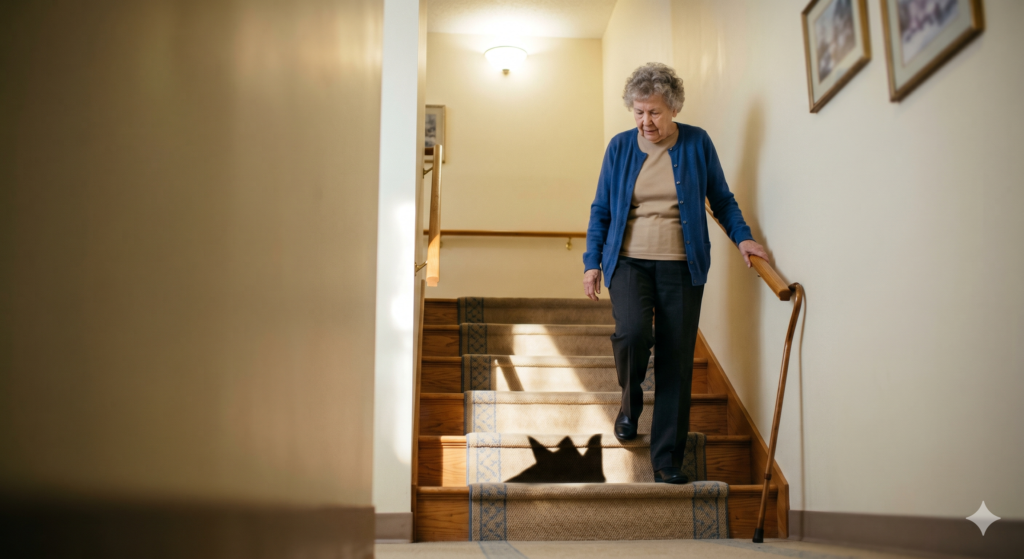
- Eliminate Shadows: Ensure hallways and stairwells are evenly lit. Shadows can look like physical objects or holes in the floor, causing seniors to stumble as they try to step “over” a shadow.
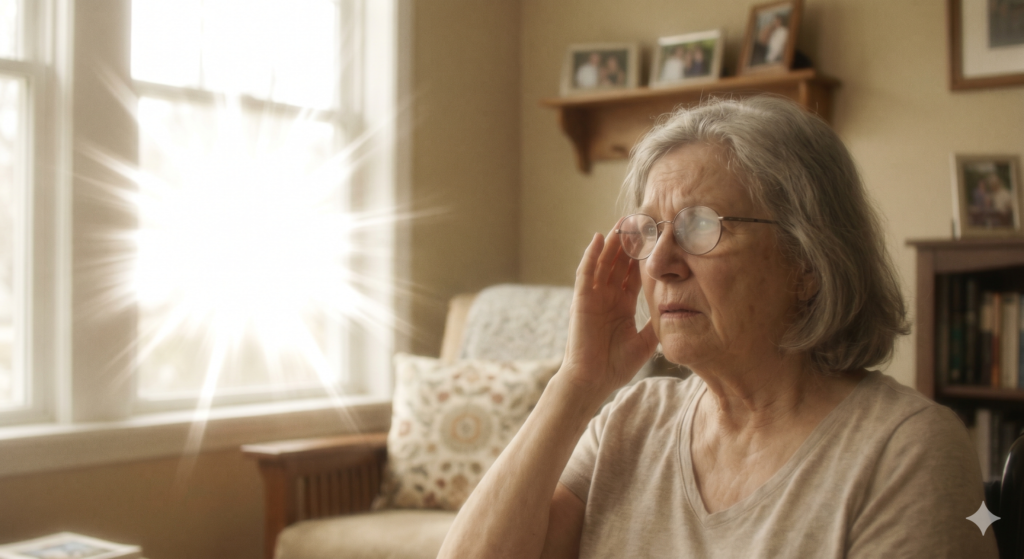
- Control the Florida Glare: The intense Southwest Florida sun is a major problem for seniors with cataracts. Bright sunlight reflecting off glossy tile floors, mirrors, or glass tables creates blinding glare. Use sheer curtains or adjustable blinds to diffuse natural light, and cover highly polished tables with matte-finish tablecloths.
When vision fades, the world becomes a washed-out sea of gray and beige. Seniors lose “contrast sensitivity,” meaning they cannot distinguish between two items of similar colors. You must use stark, high-contrast colors to help them navigate safely.
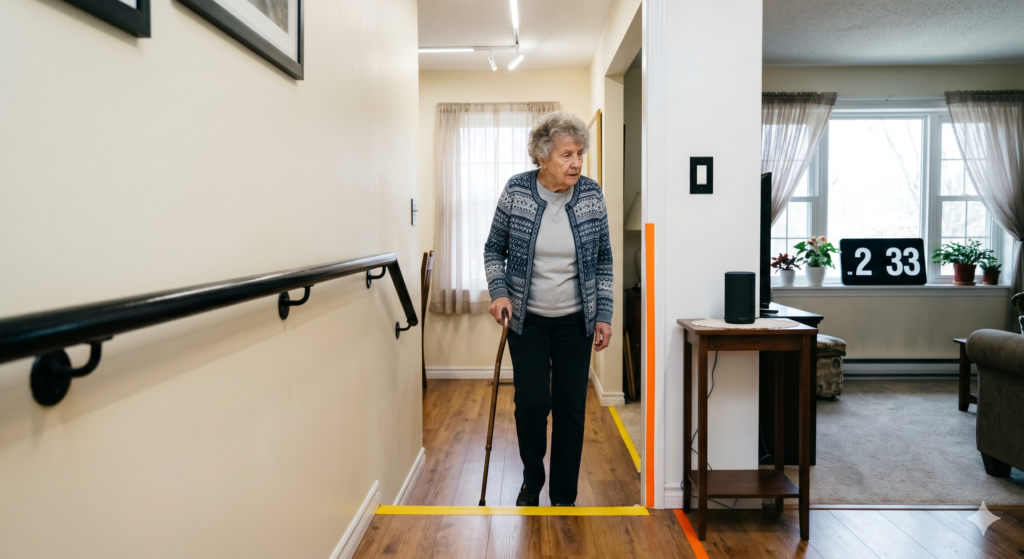
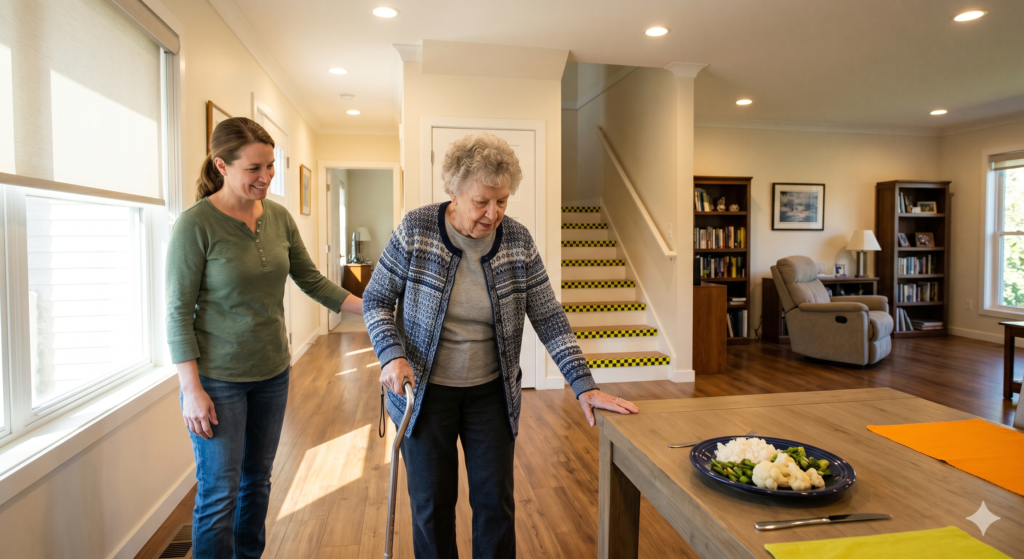
- Stairs and Steps: If the carpet on the stairs matches the carpet on the landing, the stairs become invisible. Place a strip of brightly colored, non-slip tape (like yellow or red) on the edge (nosing) of every single step.
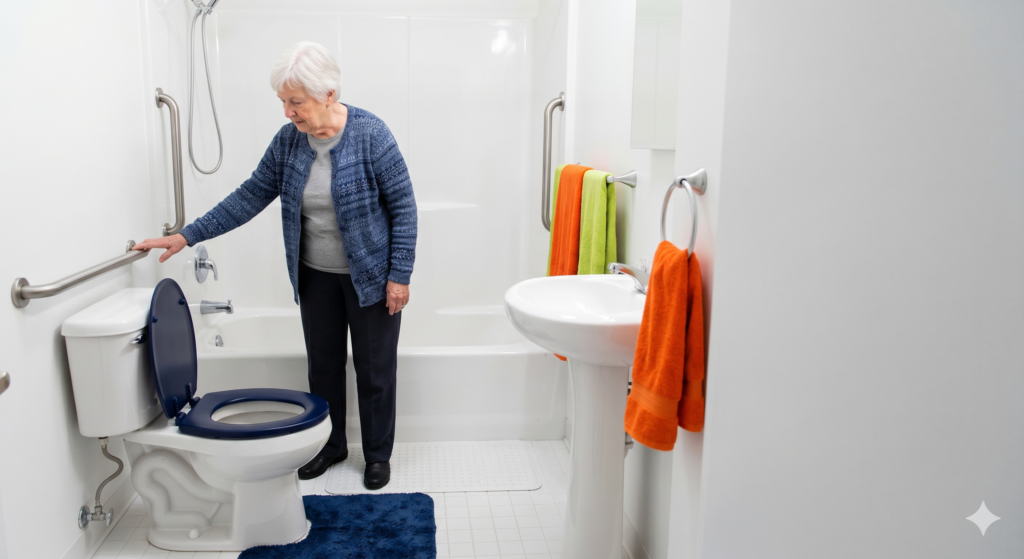
- The Bathroom: A white toilet against a white wall next to a white bathtub is a recipe for a fall. Install a dark-colored toilet seat (like navy blue) so it visually “pops” against the porcelain. Place brightly colored towels by the sink.
- Dining with Dignity: If you serve white fish and mashed potatoes on a white plate sitting on a white tablecloth, a senior with macular degeneration literally cannot see their food. Serve light-colored foods on dark plates, and place dark plates on light placemats. Pour water into colored cups rather than clear glasses, so they can see where the cup is and how full it is.
When seniors cannot rely on their eyes, they rely on memory and touch.
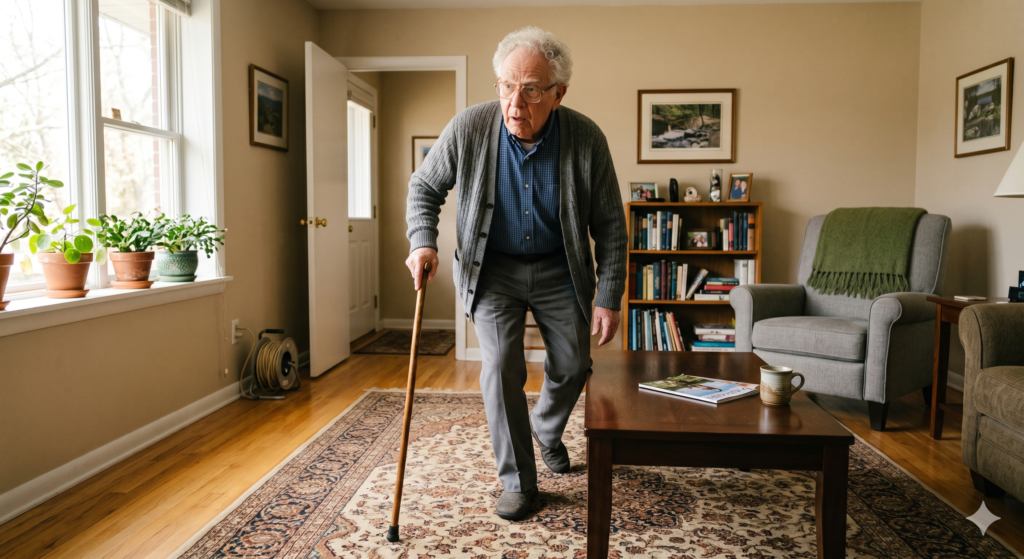
- Do Not Rearrange Furniture: Once a room is set up safely, leave it exactly as it is. A senior with vision loss creates a mental map of their home. If you move a coffee table two feet to the left, they will walk directly into it.
- The “Landing Pad”: Create a dedicated, brightly colored bowl or tray near the front door. This is the only place keys, wallets, and glasses are allowed to be set down.
- Keep Cabinet Doors Closed: An open cabinet door in the kitchen or bathroom is invisible to someone with tunnel vision (glaucoma) and causes severe head injuries.
Inexpensive tools can restore immense independence.
- Bump Dots: Purchase inexpensive, raised, brightly colored stickers (“bump dots”) from online retailers. Place a dot on the “Start” button of the microwave, the 350-degree mark on the oven dial, and the “Answer” button on the phone. This allows them to operate appliances entirely by touch.
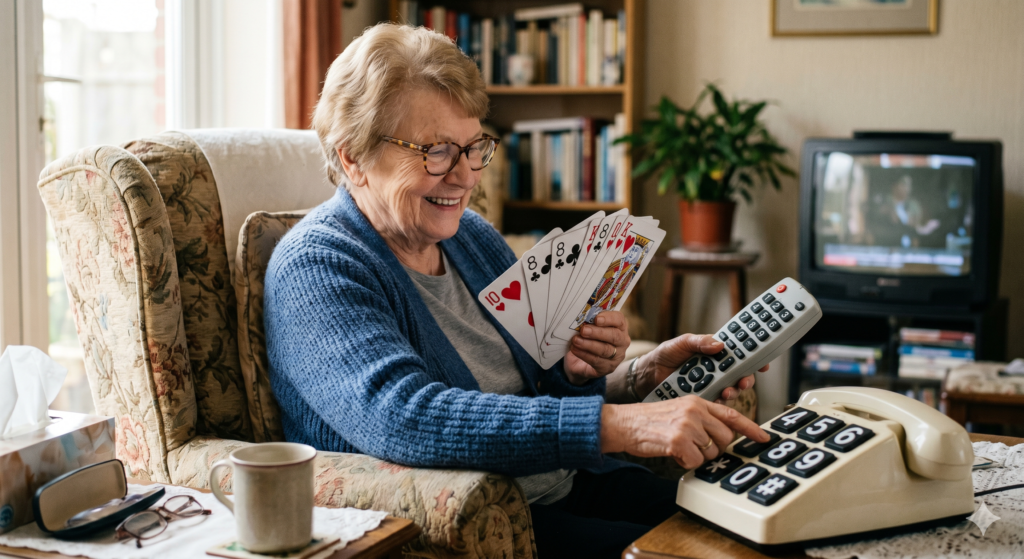
- Large Print Everything: Replace standard items with large-print alternatives: oversized TV remotes, large-print playing cards, and telephones with giant, high-contrast buttons.
Living alone with failing eyesight is terrifying. Seniors often stop cooking, reading, and leaving the house entirely.
At Shal We Home Care, our caregivers act as a trusted guide for visually impaired seniors in Lee, Collier, and Hendry counties.
- Reading Assistance: We read the mail, sort the bills, and read medication labels aloud to prevent dangerous dosing errors.
- Meal Prep and Sighted Guides: We handle the dangerous tasks in the kitchen (using sharp knives and hot stoves) and act as a “sighted guide” when walking in the neighborhood, ensuring they safely avoid curbs, branches, and uneven sidewalks.
- Preserving Dignity: We help them choose matching outfits and manage personal grooming that relies heavily on mirrors and sharp vision.
- Lighting Without Glare: Increase task lighting, but use sheer curtains to block blinding Florida sun glare on hard floors.
- Use High Contrast: Serve food on contrasting plates, use dark toilet seats, and mark the edges of stairs with bright tape.
- Don’t Move the Furniture: Keep the layout of the home strictly predictable so they can navigate via muscle memory.
- Use Tactile Markers: Place raised “bump dots” on important appliance buttons (like the microwave and telephone).
- Provide a Human Guide: Utilize a professional home caregiver to read mail, prep meals safely, and provide a steady arm during walks.
Is failing vision shrinking your loved one’s world? They don’t have to navigate the darkness alone.
Contact Shal We Home Care today to learn how our compassionate companion care can keep your visually impaired loved one safe, organized, and engaged in Southwest Florida.