
Caregiving often tears siblings apart due to unequal workloads. Learn how to hold family meetings, divide tasks by skill, and use home care to preserve family bonds.
Sharing caregiving duties among siblings frequently causes resentment because the workload naturally falls on the sibling living closest to the aging parent. To prevent family conflict, siblings must hold formal family meetings to assign specific roles based on skill sets (e.g., the out-of-state sibling handles finances, and the local sibling handles medical appointments). When physical care demands exceed the family’s capacity, hiring a professional home care agency acts as a neutral, objective buffer that equalizes the burden and preserves the sibling relationship.

When an aging parent in Southwest Florida begins to decline, a subtle, often unspoken shift occurs within the family dynamic. Very rarely do three siblings split the caregiving responsibilities evenly into neat, 33% slices.
Instead, caregiving almost always follows the 80/20 rule: One sibling assumes 80% of the physical, emotional, and logistical burden, while the other siblings contribute 20% (or less).
The “primary caregiver” sibling is usually the one who lives geographically closest to the parent or the one who is perceived to have the most “flexible” schedule (e.g., working part-time or retired). As weeks turn into months, and months into years, this unequal distribution of labor breeds a deep, toxic resentment. The primary caregiver feels abandoned and exhausted, while the secondary siblings feel guilty, defensive, or shut out of the decision-making process.
If left unaddressed, the stress of eldercare can permanently sever sibling relationships. To protect your family, you must approach caregiving as a team project requiring clear communication and designated roles.
The most common source of conflict stems from geography.
- The Local Sibling’s Reality: They are the ones getting the frantic 2:00 AM phone calls. They are the ones taking time off work to sit in the waiting room at Lee Memorial Hospital. They see the daily, grinding reality of their parent’s decline.
- The Out-of-Town Sibling’s Reality: They only see Mom or Dad a few times a year. When they visit, the parent often “rallies” and puts on a good show, appearing much healthier than they actually are. Because they don’t see the daily struggle, they often minimize the severity of the situation, telling the local sibling, “You’re overreacting; Dad seems fine!”
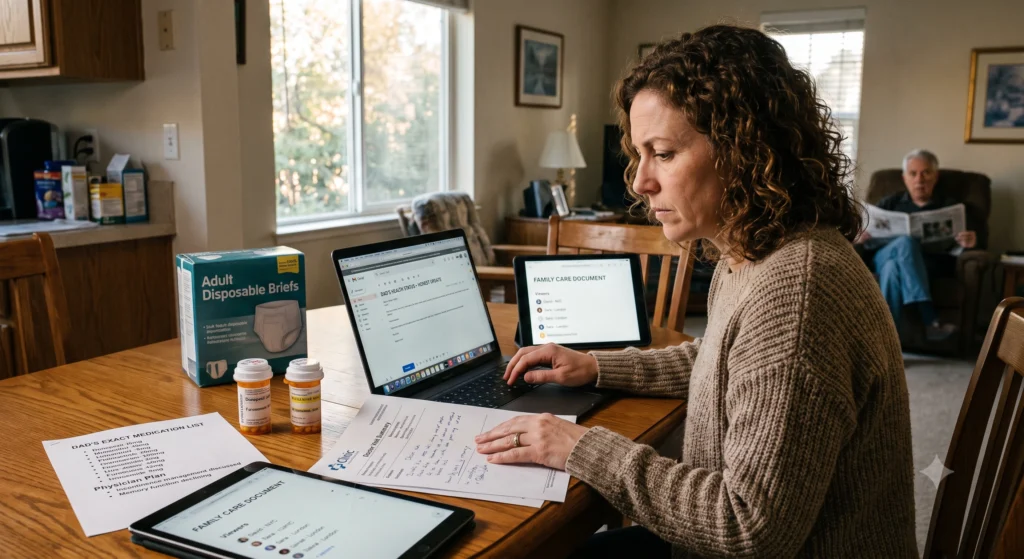
The Solution: The local sibling must stop shielding the out-of-town siblings from the truth. Share the burden of information. Send them post-doctor visit summaries, share the exact medication list, and be brutally honest about incontinence or memory lapses.
You cannot organize a care plan through passive-aggressive text messages. You must hold a formal family meeting.
- Set an Agenda: Treat this like a business meeting. The agenda should include current medical status, financial realities, immediate needs (grocery shopping, transportation), and future scenarios (what happens if Mom falls?).
- Exclude the Parent (Initially): The initial planning meeting should often be just the siblings. Parents naturally want to protect their children and may downplay their needs or manipulate the conversation if they feel their independence is threatened. Get on the same page before presenting the plan to your parent.
- Use a Mediator: If sibling relationships are already fraught with decades-old rivalries, hire a geriatric care manager or an elder law attorney to mediate the meeting. A neutral third party prevents the conversation from devolving into childhood grievances.

Resentment occurs when the out-of-town sibling says, “I live in New York; I can’t help.” This is false. Caregiving is not just physical lifting; it is massive administrative work. Divide tasks based on what people are actually good at.
- The Local Sibling: Manages the physical environment. They handle the grocery drop-offs, the immediate household safety checks, and the hands-on daily check-ins.
- The “Finance/Admin” Sibling (Can be Out-of-State): This sibling manages the checkbook. They pay Mom’s utility bills, handle the Medicare claims, negotiate with the health insurance company, and manage the long-term care policy.
- The “Medical Researcher” Sibling: This sibling coordinates with doctors. They do the deep-dive research into the new Parkinson’s diagnosis, order the medical supplies (like adult briefs or a shower chair) on Amazon to be shipped directly to the house, and manage the pharmacy auto-refills.
If one sibling is taking 15 hours a week off from their paying job to care for a parent, they are suffering a massive financial hit.
If out-of-town siblings cannot contribute time, they must contribute financially. This is where families must have uncomfortable but necessary conversations.
- Can the siblings pool money to hire a house cleaning service?
- Can the siblings split the cost of a private-pay home caregiver for 10 hours a week to give the local sibling a break?
- Financial equity is the fastest way to dissolve caregiver resentment.
A major pitfall is waiting for the aging parent to dictate the care plan. Seniors suffering from cognitive decline or pride will often say, “I don’t need help, and I don’t want strangers in my house.”
If siblings disagree on what to do, the parent’s stubbornness becomes a wedge. The local sibling knows help is needed, but the out-of-town sibling says, “Well, Mom says she doesn’t want home care, so we shouldn’t force her.”
Siblings must present a unified front. You must agree that safety trumps preference. If Mom is leaving the stove on, the siblings must collectively agree to bring in professional help, regardless of the parent’s initial resistance.
When siblings reach their physical and emotional limits, introducing a professional agency is the ultimate relationship-saver.
At Shal We Home Care, serving Lee, Collier, and Hendry counties, we act as the objective, neutral buffer your family desperately needs.
- Equalizing the Burden: We take over the heavy lifting (bathing, transportation, meal prep). This instantly relieves the local sibling’s exhaustion, allowing them to return to being a loving daughter or son rather than a resentful nurse.
- Objective Reporting: Out-of-town siblings no longer have to wonder if the local sibling is “exaggerating.” Our professional caregivers provide daily, objective care logs. Every sibling gets exactly the same accurate information about Mom’s health and daily routine.
- Ending the Guilt: Out-of-town siblings gain profound peace of mind knowing a vetted, trained professional is in the home, completely alleviating the guilt of living far away.
- Acknowledge the Imbalance: The 80/20 rule is real. Validate the exhaustion of the local primary caregiver.
- Hold Formal Meetings: Do not plan care via text. Have structured family meetings with clear agendas.
- Delegate by Skill: Out-of-town siblings must take over administrative, financial, and logistical research tasks to balance the workload.
- Present a Unified Front: Siblings must agree on safety interventions collectively, rather than letting a parent’s stubbornness divide them.
- Hire the Buffer: Utilize a professional home care agency to manage the physical care, restoring equity and preserving your sibling relationships for the future.
Is caregiving driving a wedge between you and your siblings? You don’t have to sacrifice your family bonds to keep your parents safe.
Contact Shal We Home Care today for a family consultation. Let us bear the physical burden of caregiving so you can focus on being a family.