
Sleep problems in the elderly, such as insomnia and frequent waking, are often caused by changes in circadian rhythms, medication side effects, or pain. To improve sleep, caregivers should establish a strict nighttime routine that includes lowering lights early, reducing evening fluid intake, avoiding late-afternoon naps, and ensuring the bedroom is cool, dark, and free of tripping hazards.
The Myth of the “Sleepless Senior
There is a persistent myth that as people get older, they simply need less sleep. This is entirely false.
While sleep patterns change as we age, the fundamental need for sleep remains the same: older adults still require 7 to 8 hours of quality sleep per night to maintain physical health and cognitive function.
However, achieving those 8 hours becomes increasingly difficult. For many seniors in Southwest Florida, nights are characterized by difficulty falling asleep, frequent waking to use the bathroom, or waking up at 3:00 AM and being unable to go back to sleep. This fragmented rest wreaks havoc on their daytime mood and safety.
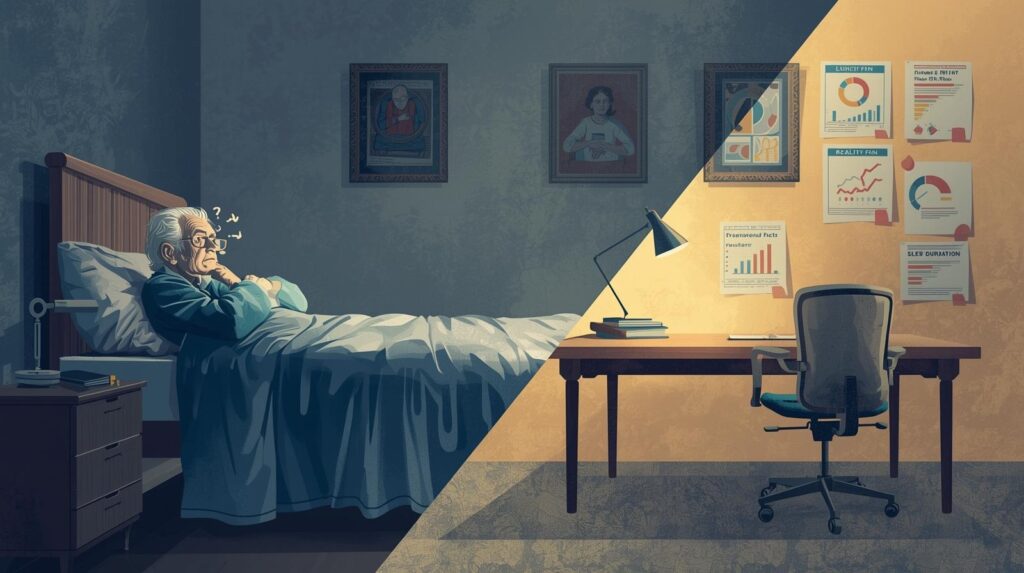
Why Does Sleep Change with Age?
Several biological and lifestyle factors conspire against senior sleep:
- Shift in Circadian Rhythms: The body’s internal clock shifts earlier with age. Seniors naturally feel tired earlier in the evening (e.g., 7:00 PM) and wake up earlier in the morning (e.g., 4:00 AM).
- Decreased Melatonin: The aging brain produces less melatonin, the hormone that regulates sleep.
- Medical Conditions & Pain: Arthritis, neuropathy, or acid reflux can make it impossible to find a comfortable sleeping position.
- Medication Side Effects: Diuretics (water pills) cause frequent nighttime bathroom trips, while some antidepressants or respiratory medications act as stimulants.
- Lack of Daytime Activity: Seniors who are sedentary or do not get outside into the Florida sun often lack the physical exhaustion and light exposure needed to build a strong “sleep drive.”

The Dangers of Sleep Deprivation in Seniors
Poor sleep is not just an inconvenience; it is a major health risk.
- Fall Risk: Groggy seniors are significantly more likely to lose their balance and fall during the day or during nighttime bathroom trips.
- Cognitive Decline: Sleep is when the brain clears out toxins. Chronic sleep deprivation mimics dementia symptoms, causing severe memory issues, confusion, and irritability.
- Weakened Immunity: Seniors who do not sleep well are more susceptible to infections and recover more slowly from illnesses.

Building a Bulletproof Nighttime Routine
A consistent routine signals to the brain that it is time to shut down.
1. The “Sunlight” Anchor:
Good sleep starts in the morning. Ensure your loved one gets at least 30 minutes of natural sunlight before 10:00 AM to anchor their circadian rhythm.
2. Manage the Naps:
Napping for 2 hours at 3:00 PM destroys nighttime sleep. Limit naps to 20-30 minutes, and never after 2:00 PM.
3. The 3-Hour Fluid Rule:
To combat nocturia (frequent nighttime urination), front-load hydration in the morning and early afternoon. Limit all fluids 3 hours before bedtime.
4. The Wind-Down Hour:
One hour before bed, begin the transition:
- Turn off the TV (especially the news) and all screens. The blue light suppresses melatonin.
- Dim the overhead lights.
- Engage in a calming activity: listening to a podcast, reading, or listening to soft music.
- Establish a consistent hygiene routine (brushing teeth, washing face) that the brain begins to associate with sleep.
Environmental Tweaks for the Bedroom
The bedroom should be a sanctuary optimized for rest and safety.
- Temperature: Keep the room cool. In Florida, setting the AC between 68-72 degrees is optimal for sleep.
- Darkness: Use blackout curtains to block streetlights and the early morning Florida sun.
- Safety Lighting: While the room should be dark, the path to the bathroom must be illuminated. Use motion-sensor nightlights under the bed or along the baseboards so they do not have to fumble for a switch if they wake up.
- Clear the Floor: Ensure absolutely no rugs or clutter are between the bed and the bathroom door to prevent catastrophic nighttime falls.
When to Talk to a Doctor
If you implement these lifestyle changes and the senior is still struggling, it is time for a medical evaluation.
- Check for Sleep Apnea (characterized by loud snoring and gasping for air), which is highly dangerous and requires a CPAP machine.
- Request a “Brown Bag” medication review to see if any prescriptions can be moved to the morning to avoid nighttime stimulation.
How In-Home Care Can Help Secure the Night
For family caregivers, a parent’s sleep problems quickly become your sleep problems. If you are waking up three times a night to help your mom to the bathroom, you are on the fast track to burnout.
At Shal We Home Care, we offer specific solutions for nighttime struggles:
- Evening “Tuck-In” Service: A caregiver arrives in the early evening to manage dinner, the wind-down routine, and safe transfer into bed.
- Overnight Awake Care: For seniors who wander or need frequent assistance, our caregivers stay awake all night, ensuring safety and allowing the family to finally get a full night’s sleep.
Key Takeaways
- Seniors Need 8 Hours: Aging does not decrease the need for sleep, only the ability to get it.
- Control Fluids: Limit liquids 3 hours before bed to reduce nighttime bathroom trips.
- Set the Clock: Use morning sunlight and avoid late-afternoon naps to build “sleep drive.”
- Optimize the Room: Keep the bedroom cool, dark, and equipped with motion-sensor safety lights.
- Protect the Caregiver: Utilize overnight home care if your loved one’s sleep issues are causing your own sleep deprivation.
Are you losing sleep worrying about your loved one?
Contact Shal We Home Care today. Let us discuss how our evening and overnight care services can bring safe, restorative sleep back to your entire household in Lee, Collier, and Hendry counties.