
Six in ten people with dementia will wander, often triggered by a desire to fulfill past routines (like going to work) or escaping anxiety. To secure your home, camouflage exit doors with curtains, install deadbolts out of the line of sight (high or low), use 120-decibel door alarms, equip your loved one with a GPS wearable, and inform local first responders of their condition.
The Silent Danger: Why Wandering Happens
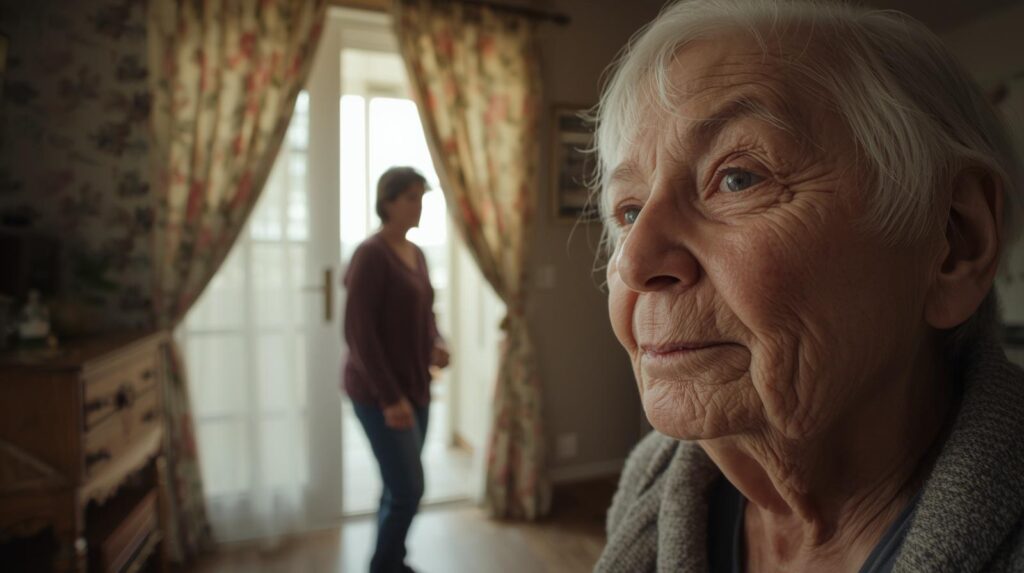
According to the Alzheimer’s Association, 60% of people with dementia will wander at least once. It is one of the most unpredictable and dangerous symptoms of memory loss.
In Southwest Florida, the stakes are incredibly high. A senior wandering away from home faces the extreme summer heat, busy multi-lane roads, and, most dangerously, an abundance of water features like canals, retention ponds, and swimming pools.
If your loved one has Alzheimer’s or a related dementia, you must assume that wandering will happen eventually. Hope is not a strategy; preparation is. You must physically secure your environment and understand the psychological triggers behind the behavior.

Identifying the “Wandering Triggers
Seniors with dementia rarely wander aimlessly. In their mind, they are on a mission. Their brain is telling them they have a vital task to complete, but the “map” in their head is broken.
Common Triggers Include:
- Past Routines: They may be trying to “go to work,” “pick up the kids from school,” or “go to church,” reverting to a routine they practiced decades ago.
- Searching for “Home”: They may be standing in their own living room but feel deeply unsettled. They wander out the door looking for the “home” they remember from their childhood.
- Basic Needs: They might be hungry, thirsty, or looking for a bathroom, but become disoriented in their own house and accidentally exit the front door.
- Boredom or Agitation: Lack of daytime engagement can lead to pacing, which turns into wandering. Similarly, loud noises or arguing can cause them to flee the house to escape the stress.
Physical Home Modifications (Camouflage and Locks)
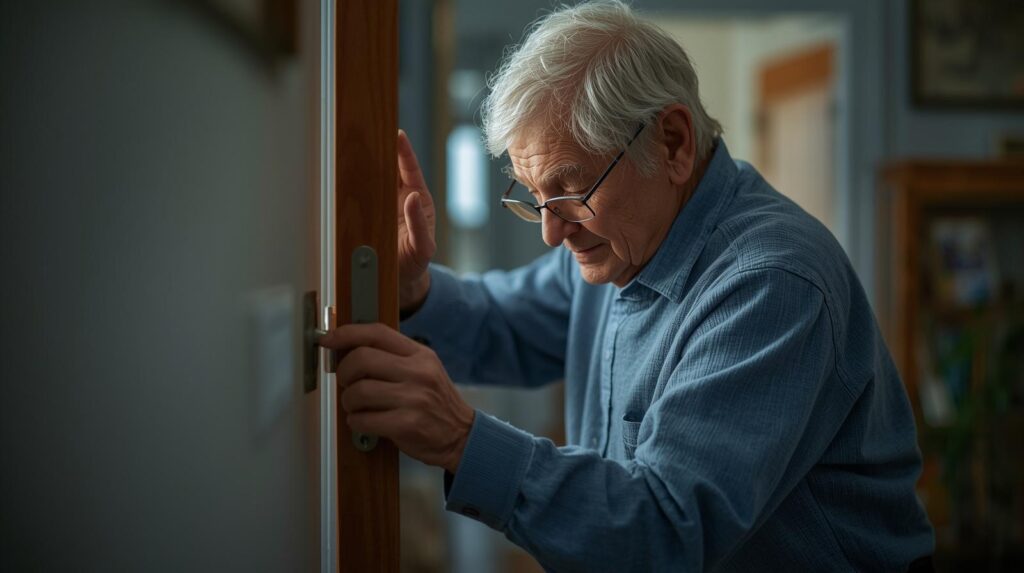
Your goal is to make the exit doors “disappear” or make them too complicated to operate.
1. The Art of Camouflage
Dementia affects depth perception and visual processing. You can use this to your advantage.
- Paint the Door: Paint the exit door and the doorknob the exact same color as the surrounding walls. It blends in, and the brain stops recognizing it as an exit.
- Curtains and Posters: Hang a floor-to-length curtain over the front door. Alternatively, place a large “STOP” sign or a poster of a bookshelf directly over the door.
- Black Mats: Place a large, solid black mat on the floor directly in front of the exit door. To a senior with depth perception issues, a black mat often looks like a bottomless hole, and they will refuse to step on it.

2. Move the Locks
Seniors rely on muscle memory to open doors.
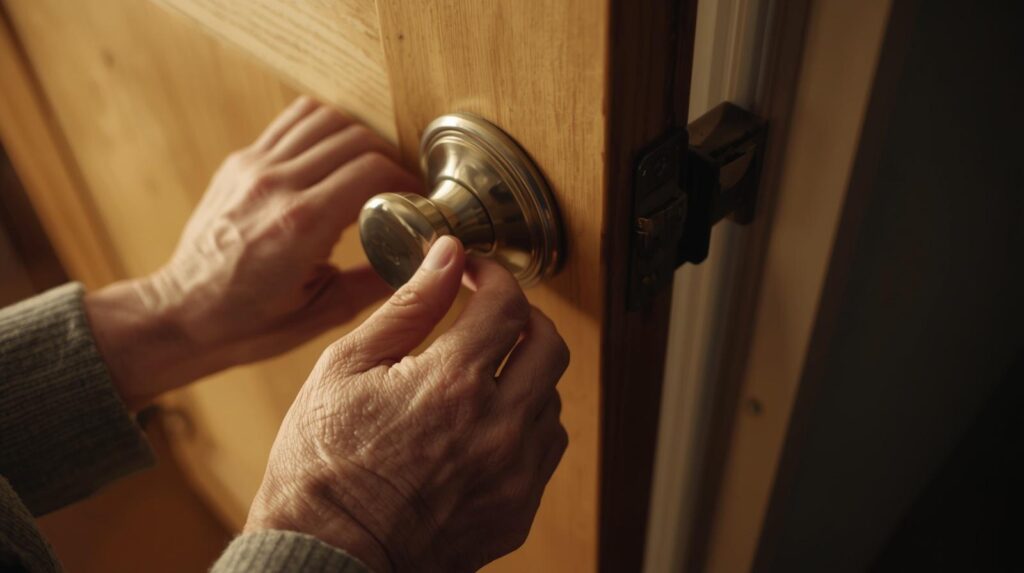
- Install a slide-bolt or a secondary deadbolt either at the very top of the door frame or down near the floorboard. Because the lock is completely out of their normal line of sight, they will try the standard knob, find it locked, and usually give up. (Note: Ensure adults in the home can easily access these in case of a fire).
The Role of Technology and GPS Tracking
You cannot have your eyes on your loved one 24/7. Technology is your alarm bell.
- Door Chimes: Install simple, loud battery-operated alarms on every exterior door and window. If the door opens at 2:00 AM, the 120-decibel alarm will wake you instantly.
- GPS Tracking: Time is the enemy when a senior wanders. Equip them with a GPS tracker. If they won’t wear a smartwatch or pendant, look for GPS insoles that slip directly into their favorite pair of walking shoes, or trackers that can be sewn into the hem of their jacket.

The Community Safety Net
Do not hide your loved one’s diagnosis. The safety of your parent depends on the awareness of your neighbors.
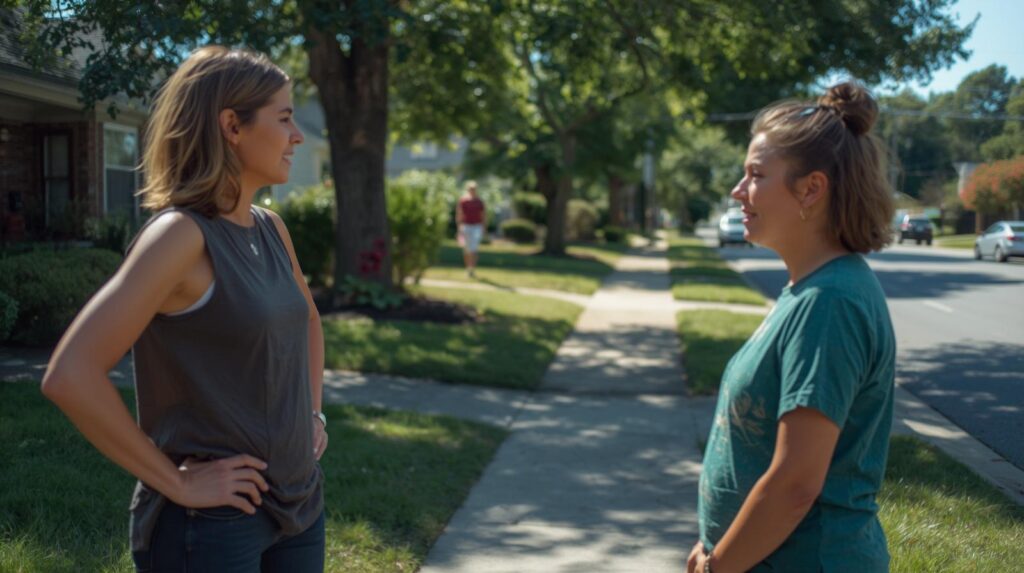
- Alert the Neighbors: Knock on the doors of your immediate neighbors. Explain that your parent has dementia. Ask them to call you immediately if they ever see your parent walking down the street alone.
- Silver Alert Programs: Contact your local sheriff’s office in Lee, Collier, or Hendry county. Many have specialized registries where you can submit a current photo, physical description, and a list of your parent’s past addresses or old workplaces (where they are likely to try and walk to).
- Keep Clothing Ready: Always have a recent, full-body photo of your loved one on your phone. Make a mental note every morning of exactly what they are wearing.
Why 24/7 Supervision Becomes Necessary
The fear of wandering destroys the family caregiver’s ability to sleep. When you are sleeping with one eye open, listening for the sound of the front door, you rapidly descend into severe burnout.
If your loved one is an active wanderer, especially at night, occasional care is no longer enough. This is the stage where Overnight Care or Live-in Care becomes a medical necessity for the caregiver’s survival.
At Shal We Home Care, our dementia-trained professionals provide awake, overnight supervision.
- We sit in the home while you sleep securely in your room.
- If your loved one wakes up and tries to leave, we gently redirect them, offer them a snack, or engage them in a quiet activity until they are ready to return to bed.
- We provide the physical barrier between your parent and the danger outside.

Key Takeaways
- Assume It Will Happen: 60% of dementia patients wander. Prepare your home before the first incident occurs.
- Camouflage Exits: Paint doors the color of the walls or use curtains to hide exit points from view.
- Relocate Locks: Place slide locks high or low, completely out of the standard line of sight.
- Utilize Technology: Door alarms and GPS shoe inserts are non-negotiable investments.
- Get Backup at Night: Don’t sacrifice your own health. Hire overnight caregivers to supervise the home while you sleep.
Are you exhausted from monitoring the front door?
You need to sleep to be a good caregiver. Contact Shal We Home Care today to learn how our specialized dementia care team can secure your home and provide reliable overnight supervision in Southwest Florida.