
Is your healthy parent refusing to hire help for your ailing parent? Learn why spouses resist home care, the hidden dangers of spousal burnout, and how to change their mind.
When a healthy spouse refuses to hire home care for their ailing partner, the resistance is usually rooted in marital vows (“in sickness and in health”), a fear of losing privacy, or financial anxiety. To overcome this, adult children should stop focusing on the sick parent’s deficits and instead frame home care as a tool to protect the healthy spouse’s life. Emphasize that hiring a professional for heavy lifting and hygiene preserves their role as a loving husband or wife, rather than an exhausted nurse.
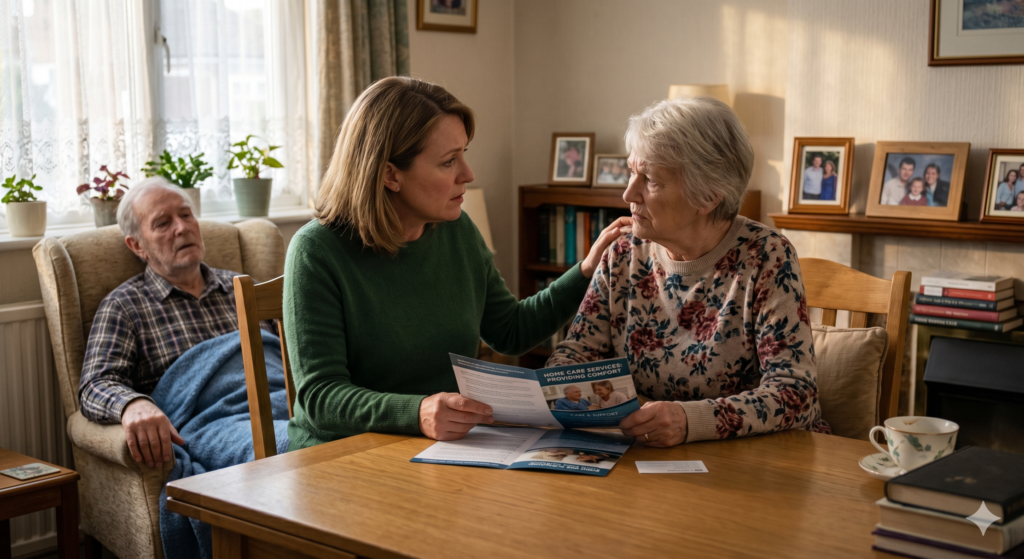
It is a scenario that plays out endlessly across Southwest Florida’s retirement communities. You visit your parents’ home in Naples or Cape Coral and realize that your father’s dementia has progressed significantly or your mother’s mobility has severely declined.
But the parent who is sick isn’t the primary problem; it’s the parent who is healthy.
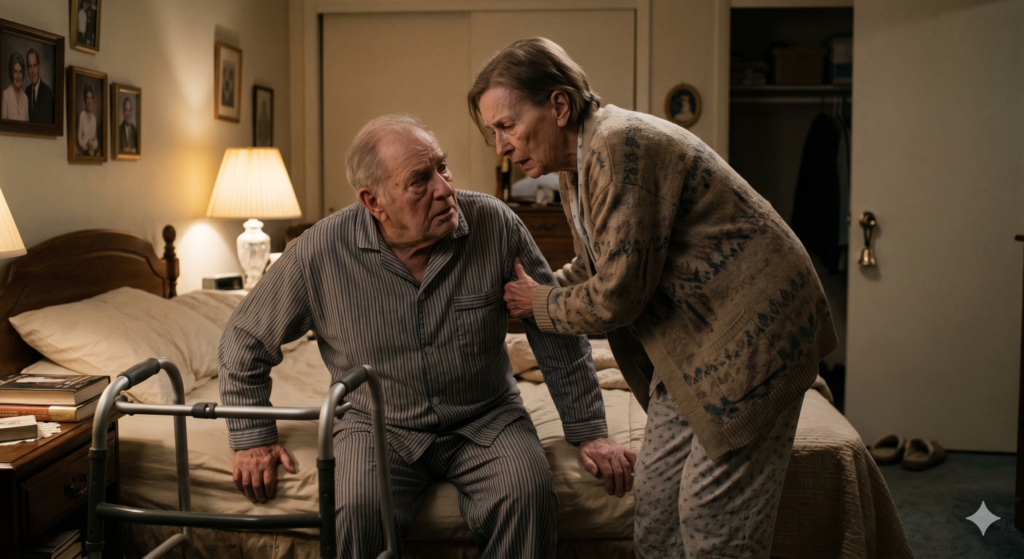
Your 80-year-old mother is exhausting herself trying to lift your 200-pound father out of bed. Your 82-year-old father hasn’t slept in weeks because he is guarding the door to ensure your mother doesn’t wander.
When you beg them to hire a professional in-home caregiver, the healthy spouse immediately shuts you down: “I can handle it. I promised to take care of her. I don’t want strangers in our house.”
For adult children, watching a healthy parent destroy their own health to care for an ailing spouse is agonizing. To break through this stubborn resistance, you must understand the deep psychological roots of spousal caregiving.
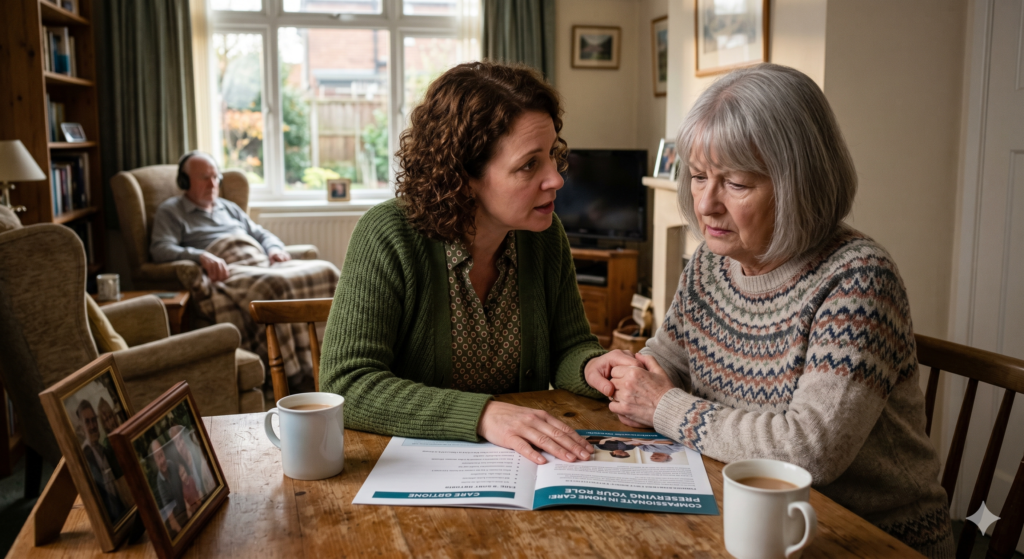
When a spouse refuses help, it is rarely due to ignorance. It is driven by a complex mix of love, pride, and fear.
- The Marital Vow: They stood at an altar 50 years ago and promised “in sickness and in health.” To them, hiring someone else to change their spouse’s brief or feed them feels like a profound betrayal of that sacred vow.
- Loss of Privacy: Their home is their sanctuary. The idea of a “stranger” walking into their kitchen, seeing their messy bedroom, or witnessing their spouse in a vulnerable state feels highly invasive.
- The “Nobody Does It Better” Syndrome: After 50 years of marriage, the healthy spouse knows exactly how their partner likes their coffee, how they like their pillows fluffed, and how to calm them down. They genuinely believe a professional caregiver will do a worse job.
- Financial Fear: Seniors on fixed incomes are often terrified of running out of money. They view paying for home care as a luxury they cannot afford, rather than a medical necessity.
Here is the terrifying statistical reality that adult children must gently communicate to their parents: The healthy caregiver spouse is highly likely to die first.
According to studies on caregiver stress, elderly spousal caregivers who experience caregiving-related stress have a 63% higher mortality rate than non-caregivers of the same age.
- Physical Danger: An 80-year-old woman lifting her husband out of a wheelchair is one slip away from a shattered pelvis.
- Medical Neglect: The healthy spouse becomes so consumed with doctor appointments for their partner that they skip their own mammograms, colonoscopies, and cardiology check-ups.
- Exhaustion: Chronic sleep deprivation weakens the immune system, making the healthy spouse susceptible to severe infections and heart attacks.
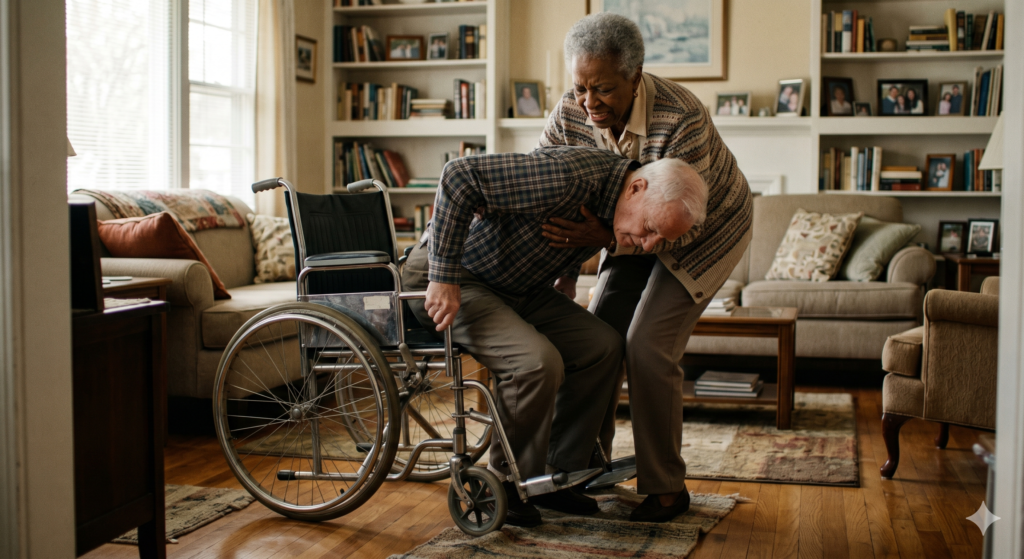
If the healthy spouse collapses, the ailing spouse will almost certainly be placed in a nursing facility immediately.
When you try to convince the healthy spouse to hire help, your natural instinct is to point out the sick parent’s deficits. “Dad, Mom is too heavy for you to lift.”
This makes the healthy spouse defensive. You must flip the script. Make the conversation entirely about protecting the healthy spouse.
- The “Preservation” Script: “Dad, I know you take better care of Mom than anyone in the world. But if you blow out your back lifting her, you will both end up in a nursing home. I want you both to stay in this house forever. To do that, we have to protect your back. We need to hire someone just for the heavy lifting.”
- The “Husband/Wife” Script: “Mom, you are spending 10 hours a day acting as a nurse. When was the last time you just got to hold Dad’s hand and be his wife? If we hire someone to handle the showering and the laundry, you get to go back to just being his wife.”
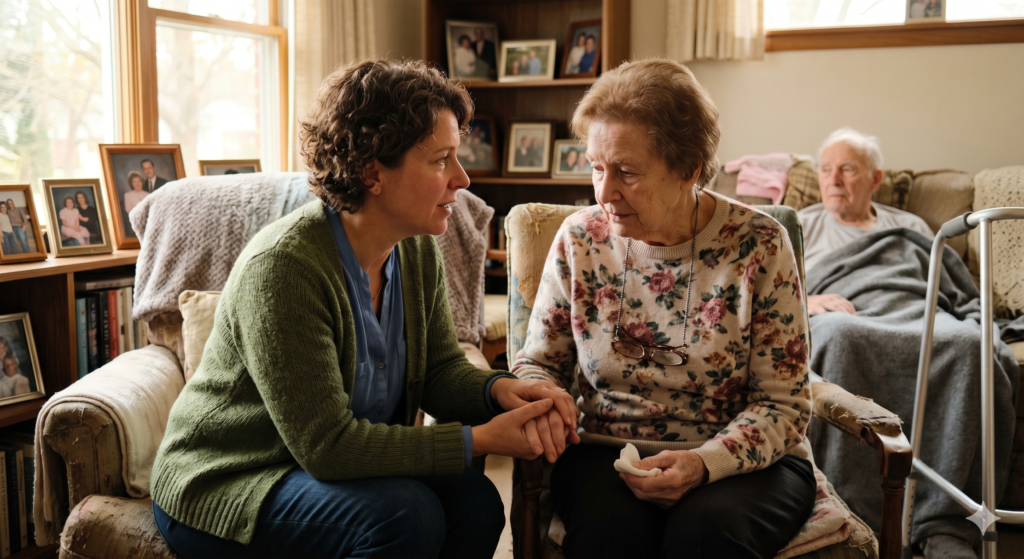
If asking for 20 hours a week of care is met with a firm “No,” you must start smaller. Introduce care through the backdoor.
- Hire a “Housekeeper”: Do not call them a caregiver. Hire a professional from an agency like Shal we under the guise of “light housekeeping and meal prep.” Say, “Mom, I hired a cleaning service so you don’t have to vacuum anymore.” Once a friendly, helpful person is in the home, the spouse usually warms up to them and allows them to take on personal care tasks.
- The “Respite” Trial: Ask for a trial run. “Dad, I bought you a gift certificate for a massage and a golf outing for your birthday. I am sending a professional caregiver over for 4 hours on Thursday so you can go use it. “Once they experience the relief of a break, they often want more.
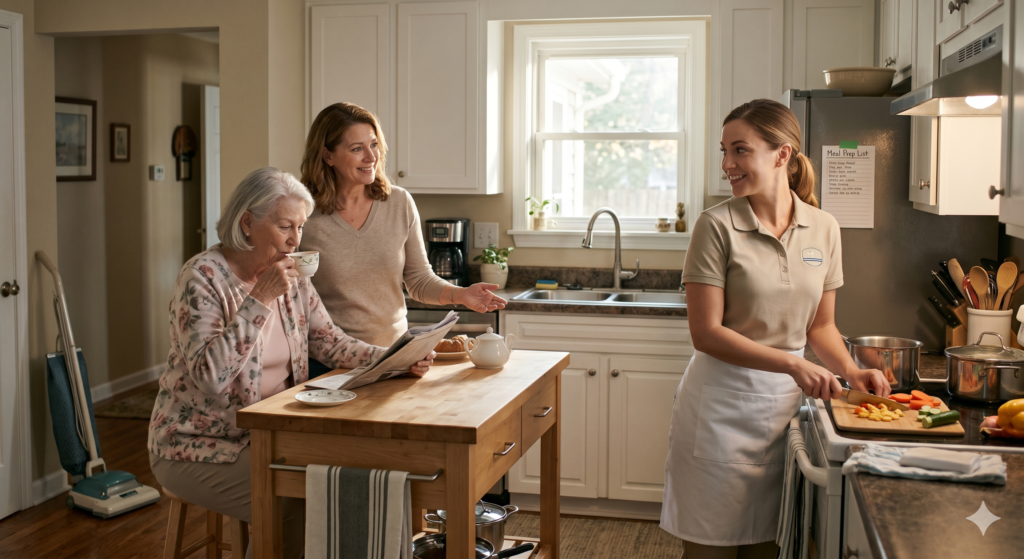
Spouses will often ignore the advice of their children, viewing them as “kids” who don’t understand the marriage.
If they won’t listen to you, bring in an authority figure.
- Have a private conversation with their primary care doctor, a cardiologist, or their pastor.
- Ask the doctor to look the healthy spouse in the eye and say, “Your blood pressure is dangerously high.” I am medically prescribing that you bring in home care for your wife two days a week to protect your own heart.” It is very difficult to argue with a doctor’s medical order.

At Shal We Home Care we understand that when we enter a home in Lee, Collier, or Hendry County, we are not just caring for the patient; we are supporting a marriage.
- Respecting the Hierarchy: Our caregivers are trained to defer to the healthy spouse. We do not walk in and take over. We ask the healthy spouse, “How do you usually like his breakfast prepared?” This shows respect for their 50 years of marriage.
- Customized Support: We handle the physically exhausting tasks like bathing, transferring, and overnight awake care so the healthy spouse can sleep through the night and wake up with the energy to enjoy their partner’s company.
- Respect the Vow: Understand that resistance is driven by deep love and a sense of marital duty.
- The Caregiver Dies First: Gently remind them that if the healthy spouse collapses from exhaustion, both parents lose their independence.
- Reframe the Goal: Frame home care as a tool to protect the healthy spouse’s physical health, not just a service for the sick spouse.
- Use the “Trojan Horse”: Start small by hiring “housekeeping” or “driving” assistance to get a professional in the door.
- Use Authority: Have a trusted doctor prescribe home care to bypass the family argument.

Is your healthy parent drowning in caregiving duties? Let us help you throw them a lifeline.
Contact Shal We Home Care today. We can help you navigate this delicate conversation and provide the respectful, unobtrusive support their marriage deserves.