
Up to 80% of individuals with autism suffer from chronic sleep issues. Discover how to build a sensory-friendly sleep hygiene routine to promote deep, restorative rest.
Neurodivergent individuals, particularly those with Autism Spectrum Disorder (ASD), frequently experience severe insomnia due to irregular melatonin production and extreme sensory sensitivities. To improve sleep, caregivers must establish a rigid “sleep hygiene” routine. This includes eliminating blue light screens two hours before bed, lowering room temperature, utilizing blackout curtains, introducing deep-pressure therapy (like weighted blankets), and relying on visual schedules to signal the brain that the transition to sleep has begun.
If you ask parents or caregivers of neurodivergent teens and adults what their biggest daily challenge is, the answer is rarely academics or social skills. The answer is almost always sleep.
Studies indicate that between 40% and 80% of individuals on the Autism Spectrum struggle with chronic sleep disorders. They have immense difficulty falling asleep, they wake up frequently throughout the night, or they operate on only 3 to 4 hours of sleep a night.
This chronic sleep deprivation is a massive trigger for daytime behavioral issues. When a neurodivergent brain is exhausted, the threshold for sensory overload plummets. Minor frustrations become full-blown meltdowns, aggression spikes, and learning stalls. Furthermore, the rest of the family suffers from profound sleep deprivation, leading to severe caregiver burnout.
Fixing sleep is the most critical intervention for the health of the entire household. It requires a dedicated, sensory-focused approach known as “sleep hygiene.”
Why is sleep so elusive for individuals with autism? It is largely biological.
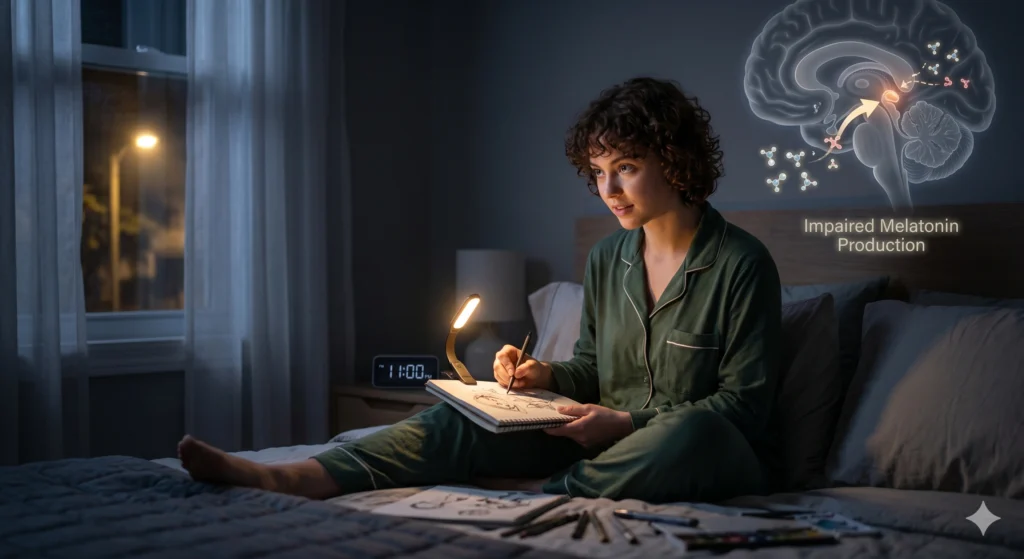
The human brain relies on a hormone called melatonin to regulate the sleep-wake cycle (the circadian rhythm). As the sun goes down and darkness sets in, the brain produces melatonin, signaling the body to get tired.
Research has shown that many individuals with autism have genetic mutations that impair the production of melatonin. Their brains simply do not produce enough of the hormone, or they produce it at the wrong times of the day. Without this chemical signal, their brain remains wide awake and alert at 11:00 PM.
Beyond neurochemistry, the physical environment often prevents sleep due to severe sensory processing differences.
To a neurotypical person, a bedroom at night seems quiet and dark. But to an autistic individual with hypersensitivity:
- The hum of the air conditioner sounds like a jet engine.
- The tiny blue glowing light on the TV or smoke detector is blinding.
- The texture of the bedsheets or the tag on their pajamas feels like sandpaper scratching their skin.
- Their own racing thoughts and internal anxiety create a mental “noise” they cannot turn off.
To conquer insomnia, the bedroom must be transformed into a sensory-neutral sanctuary.
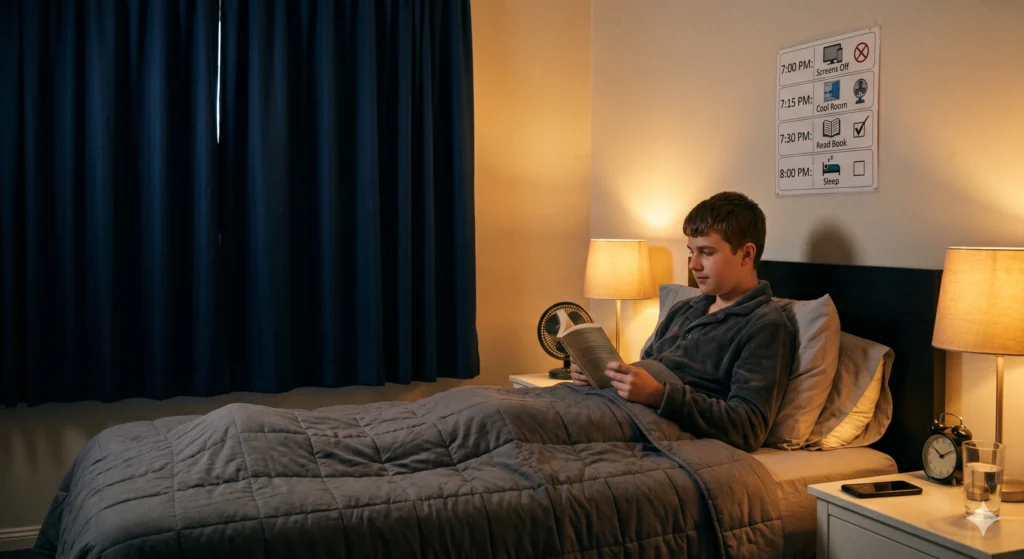
- Absolute Darkness: Use high-quality blackout curtains. Cover every single LED light in the room (on TVs, clocks, or power strips) with black electrical tape.
- Temperature Control: The body needs to drop in core temperature to sleep deeply. In Florida, keep the bedroom cool (between 65 and 68 degrees).
- Tactile Comfort: Remove all tags from pajamas. Ask the individual what texture they prefer. Some like cool, crisp percale cotton; others prefer soft, warm flannel.
- Deep Pressure Therapy: A restless, anxious nervous system craves proprioceptive input (deep pressure). A weighted blanket (typically 10% of their body weight) simulates a firm hug, releasing serotonin and calming the central nervous system.
- White Noise: If they are hyper-sensitive to random noises (like a dog barking down the street or a toilet flushing in the house), use a continuous white noise machine or a box fan to drown out unpredictable sounds.
Neurodivergent brains struggle heavily with transitions. Going from playing a highly stimulating video game directly to lying quietly in a dark bed is an impossible jump. You must build a bridge.
This bridge is the Wind-Down Routine, which must begin 1.5 to 2 hours before bed.
- The Screen Ban: iPads, phones, and TVs emit blue light, which actively destroys whatever little melatonin the brain is trying to produce. Screens must be turned off 2 hours before sleep.
- Visual Schedules: Create a visual schedule (a storyboard) of the nighttime routine.
- Example: 1. Turn off iPad. 2. Take a warm bath (raises body temp, and the subsequent cool-down induces sleep). 3. Put on pajamas. 4. Read a book/Listen to calm music. 5. Lights out.
- Consistency is Mandatory: This routine must happen in the exact same order, at the exact same time, 365 days a year. The brain learns to associate the sequence with sleep, essentially Pavlovian-conditioning the body to get tired.
Because of the biological lack of melatonin, many pediatricians and neurologists recommend over-the-counter melatonin supplements for autistic individuals.
- The Caveat: More is not better. Often, a very small microdose (0.5 mg to 1 mg) is more effective than a massive 10 mg dose, which can cause vivid nightmares or grogginess the next day.
- Always consult your child’s physician or a sleep specialist before introducing melatonin or prescription sleep aids, as they can interact with other medications.
Even with perfect sleep hygiene, some neurodivergent adults will still wake up at 2:00 AM and begin pacing the house or attempting to wander outside (elopement).
For parents, sleeping with “one eye open” for 15 years leads to devastating physical and mental health consequences.
At Shal We Home Care, serving Lee, Collier, and Hendry Counties, we provide specialized awake overnight care for special needs families.
- The Night Watch: Our trained caregivers stay awake in the home all night. If your loved one wakes up, we gently redirect them, engage them in quiet, low-stimulation activities, and ensure they do not wander out the front door.
- Restoring the Parents: Knowing that a professional, alert caregiver is managing the night allows parents to close their doors and finally achieve 8 uninterrupted hours of restorative sleep, giving them the energy to be patient and loving the next morning.
- It’s Biology, Not Behavior: Autistic individuals often lack the natural melatonin production required to fall asleep.
- Eliminate Sensory Distractions: Blackout curtains, white noise, and tag-less pajamas remove the physical irritants keeping them awake.
- Use Deep Pressure: Weighted blankets calm the nervous system and reduce nighttime anxiety.
- Ban Blue Light: Turn off all screens 2 hours before bed to protect natural melatonin production.
- Hire the Night Watch: Utilize a professional overnight caregiver to manage nighttime wakings, allowing family caregivers to sleep safely.

Are you exhausted from years of sleep deprivation? You cannot pour from an empty cup.
Contact Shal We Home Care today. Let us discuss how our specialized overnight respite care can bring safe, restorative sleep back to your entire household in Southwest Florida.